Service 04 of 04 · Chandler, AZ
Irrigation Repair in Chandler, AZ
Last updated
You have a soggy spot, a dry patch or a water bill that jumped. Tell us what you see in the yard, and someone from our team will call you back to sort out the heads, the valves or the drip line.
See price rangesIrrigation repair in Chandler starts with finding out which zone is wasting water, then fixing the cause instead of the symptom. Repairs cover sprinkler heads, drip lines, valves, controllers and the pressure problems that make all of them behave badly.
01Water
What does irrigation repair include in Chandler?
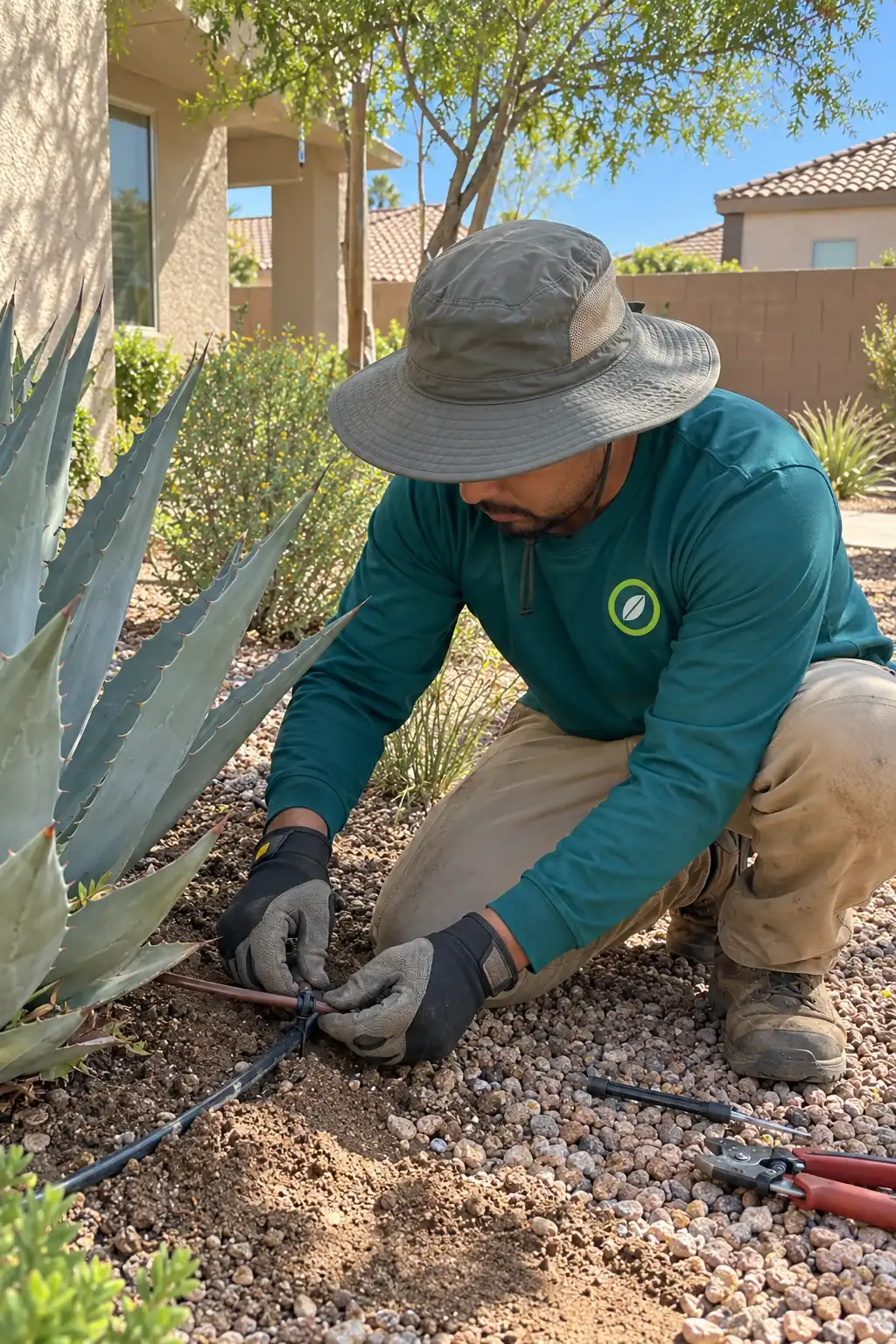
A repair visit covers the whole zone, not just the part that looks broken. The controller is run through every station to see what each one does, then the heads are checked for pattern, tilt and blockage. The zone is checked for wet spots, sunken soil and water at the base of a wall, which are common signs of a broken lateral line. Valves get tested for a stuck diaphragm or a solenoid that will not close, and the pressure at the hose bib gets measured, because high pressure turns a good head into a mist that the wind takes away. Drip lines get flushed and the emitters checked for clogging. Then the controller is set to a schedule that matches the plant type and the season.
02Costs
What does irrigation repair cost in Chandler?
Published national data puts sprinkler repair at an average of $278, with most repairs between $137 and $422, per a national cost guide, 2026, from 36,233 projects. A single head or a cracked riser sits at the bottom of that range. A valve replacement, a lateral line break under a walkway or a repair that needs digging through caliche sits higher. The number that moves the price most is whether the leak is easy to reach, since a break under a patio or a driveway takes cutting and patching. Diagnosis time is part of the job, and skipping it can mean replacing the wrong part. These are published national ranges, not a quote. The final price comes after someone sees the yard.
03Planning
What does the work look like start to finish?
The work starts at the controller: each station is run and what is actually watered gets mapped. The zone is walked, with you or without, the broken or misdirected heads are flagged, and the wet spots are marked. Pressure is checked before any part is swapped, because a new head on bad pressure fails the same way the old one did. The repair itself is dug, flushed and fitted, and the line is run again to confirm the fix holds. Heads are set to the right pattern and height, and the drip lines are flushed at the end of the run. The last step is the controller, where the schedule is set for the season and the cycle and soak feature is turned on. Call (747) 243-2089 to ask about a diagnostic visit.
04Water
What is different about irrigation in Chandler?
The city sets a watering schedule and the soil makes it hard to follow. Chandler asks for established grass no more than 2 to 3 times each week and most plants once a week, with cycle and soak to prevent runoff (Chandler water schedule (opens in a new tab)). On caliche, water can move sideways instead of down, so a long single run can run off the surface and down the street. Cycle and soak breaks the run into short bursts so the ground can take it. Summer heat and a light freeze both stress the same parts: the 2023 USDA map puts Chandler in zone 9b with 25 to 30 F extremes (USDA plant hardiness map (opens in a new tab)), so the backflow and the exposed piping have to survive a cold night as well as a hot week.
05Planning
What should I have ready before the first visit?
Know the controller brand and have a photo of the dial or the app screen, since the schedule is the first thing to check. Have the water bill handy for the meter size and the recent use, which shows whether the loss is steady or sudden. Write down which zones stay wet, which ones never come on and whether the water runs down the street after a cycle. A rough sketch of the yard with the valve boxes marked saves time, and so does clearing the plants and the rock away from the boxes. Mention any recent digging, trenching or tree removal, because a cut line is a common cause. Make sure the gate is open and someone is home to point out the problem areas.
06Mistakes
What goes wrong if a repair is done badly?
A bad repair usually shows up as water in the street. A head swapped without checking pressure mists into the wind, and the zone runs longer to compensate. A valve replaced without flushing the line pulls grit into the new diaphragm and sticks again. A leak patched at the wet spot without finding the actual break leaves water under the slab. A controller left on a summer schedule in December overwaters through the winter. A drip line converted from spray without changing the run time starves the plants. A common one is a system that is turned up instead of fixed, which raises the bill and hides the real problem for another season. A zone that is turned up to compensate for a bad head also washes out the soil around the valve box, which adds a second repair.
07Timeline
How long does an irrigation repair take?
It depends on whether the problem is at the head, the line or the valve, and on what is buried above it. A broken head or a cracked riser is quick work once the zone is found. A lateral line break takes longer, because the break has to be located and dug out, and the line flushed before it is closed. A valve that has to be rebuilt or replaced takes longer again, and a leak under a paver patio or a driveway adds cutting and patching to the job. Diagnosis comes first, so the first hour is often spent running zones rather than turning wrenches. What was found is explained before the repair starts, and the scope is confirmed then.
08Good to know
What maintenance does a system need after?
A system that is checked twice a year lasts longer and wastes less water. Run each zone and look at the heads, since a tilted head or a clogged nozzle shows up before the plants do. Clean the filter at the valve and check the pressure regulator, because grit and pressure are what kill diaphragms. Change the controller schedule at least twice a year, and use the seasonal adjust rather than reprogramming every station. Flush the drip lines in spring. After a freeze, check the backflow and any exposed pipe before the first run. If the water bill jumps and the yard looks the same, the loss is underground, and that is worth a diagnostic visit rather than a guess.
09Costs
Can repairs be done in stages to spread the cost?
Yes, and the sensible order is by water loss. Fix the leaks and the stuck valves first, because those waste water every day the system runs. Then replace the heads that are broken or mismatched, zone by zone, starting with the one you see from the kitchen window. The controller comes last, once the hardware is right, since a new schedule on a leaking system is money down the drain. If the plan includes taking out grass, the city rebate requires a Notice to Proceed before any grass comes out (Chandler rebate terms (opens in a new tab)), so schedule that approval before the demo, not during it. If the whole system is near the end of its life, replacing it zone by zone over 2 or 3 visits costs less up front than one large job, and it shows you which parts actually need changing.
10Costs
What is the difference between a repair and the cheaper version?
The cheaper version is a part swap without a diagnosis. Someone replaces the head that is spraying wrong, the zone still runs long, and the bill does not move. A repair starts with the zone test and the pressure reading, so the cause gets fixed. That might mean a new pressure regulator instead of a third set of heads, or a valve rebuild instead of a new controller. The published range of $137 to $422 for most repairs, per a national cost guide, covers both approaches, which is why the scope matters more than the price. What was tested matters as much as what was replaced. A diagnostic visit that ends with a written list of what is wrong is worth more than swapping parts until the water stops running down the street.
11Water
Which Chandler neighborhoods do you cover for irrigation?
We serve Chandler and the towns around it. That includes Ocotillo and south Chandler around ZIP codes 85248 and 85249 (Ocotillo), where lake frontage lots and golf course turf can run long schedules. On the west side are the older neighborhoods in 85224, 85225 and 85226 (West Chandler), where systems installed with the houses can be at the age when valves and lateral lines fail. Coverage also includes the historic blocks near the square (Downtown Chandler), Gilbert and Mesa. Outside Chandler, water rules are set by that city's water department and differ from Chandler's, so confirm the current schedule before changing a controller. If the address sits near a boundary, send the ZIP code, and someone from our team will call you back about which city's rules apply. Drip only systems are covered too, and so are mixed yards where turf and desert planting share a controller.
125 questions
Questions people ask
Still have a question? Call (747) 243-2089 and describe the yard.
01How often should I water my yard in Chandler?
The city asks for established grass no more than 2 to 3 times each week and most plants once a week, with cycle and soak to prevent runoff (Chandler water schedule (opens in a new tab)). The schedule changes with the season, so the controller needs a seasonal adjust rather than the same run time all year. Watch for runoff and shorten the run if water reaches the street.
02Why does my sprinkler run water down the street?
Water on the street means the ground is taking it in slower than the heads are putting it out. On caliche that happens fast. The fix is cycle and soak, which splits one long run into short bursts with a pause between them. A tilted or oversized head, a broken riser or high pressure can cause the same symptom, so the zone needs a look before the schedule is changed.
03Can I convert spray heads to drip myself?
It is possible, and it is easy to get wrong. Drip needs a filter and a pressure regulator at the valve, different run times, and emitters sized to the plants. A zone converted without those parts clogs or blows the line. If the planting is staying the same, a straight repair is simpler. If the beds are being redone, the conversion belongs in that plan.
04Why does my water bill jump in summer?
Summer bills rise for 2 reasons: the plants need more water, and a system that was already leaking loses more when it runs more. A steady increase that tracks the weather is normal. A jump that does not match the weather, or water that stays on after the cycle ends, points to a leak or a valve that will not close. Read the meter with everything off.
05Do I need a permit to repair irrigation?
A repair to an existing system is a different job from a new install. Chandler's homeowner building permit manual (opens in a new tab) says landscaping does not generally require a permit, but installing an irrigation system does, so an inspector can check the anti-siphon valve or backflow preventer and the electrical timer. If the work adds a backflow device, a new tap or a new timer circuit, ask the city first.