Service 02 of 04 · Chandler, AZ
Artificial Turf Installation in Chandler, AZ
Last updated
You are done with mowing, mud and brown patches. Tell us the size of the area and who uses it, kids or dogs, and someone from our team will call you back to plan the base, the drainage and the turf.
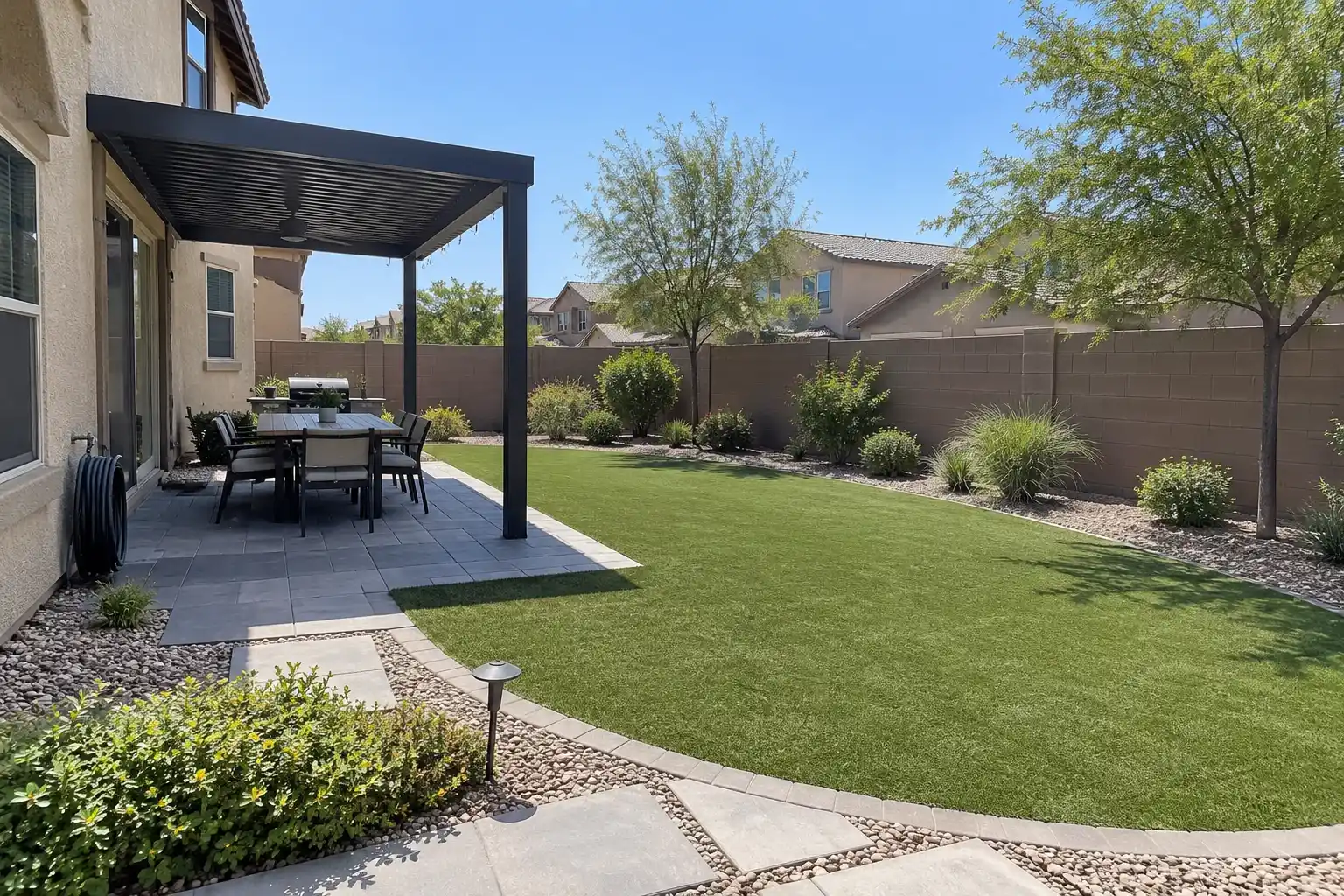
See price rangesArtificial turf in Chandler is a base construction job with a surface on top, and the base decides whether the yard holds up. Turf suits play areas, pet runs, putting greens and small lawns where mowing and watering no longer make sense.
01Turf
What does artificial turf installation include in Chandler?
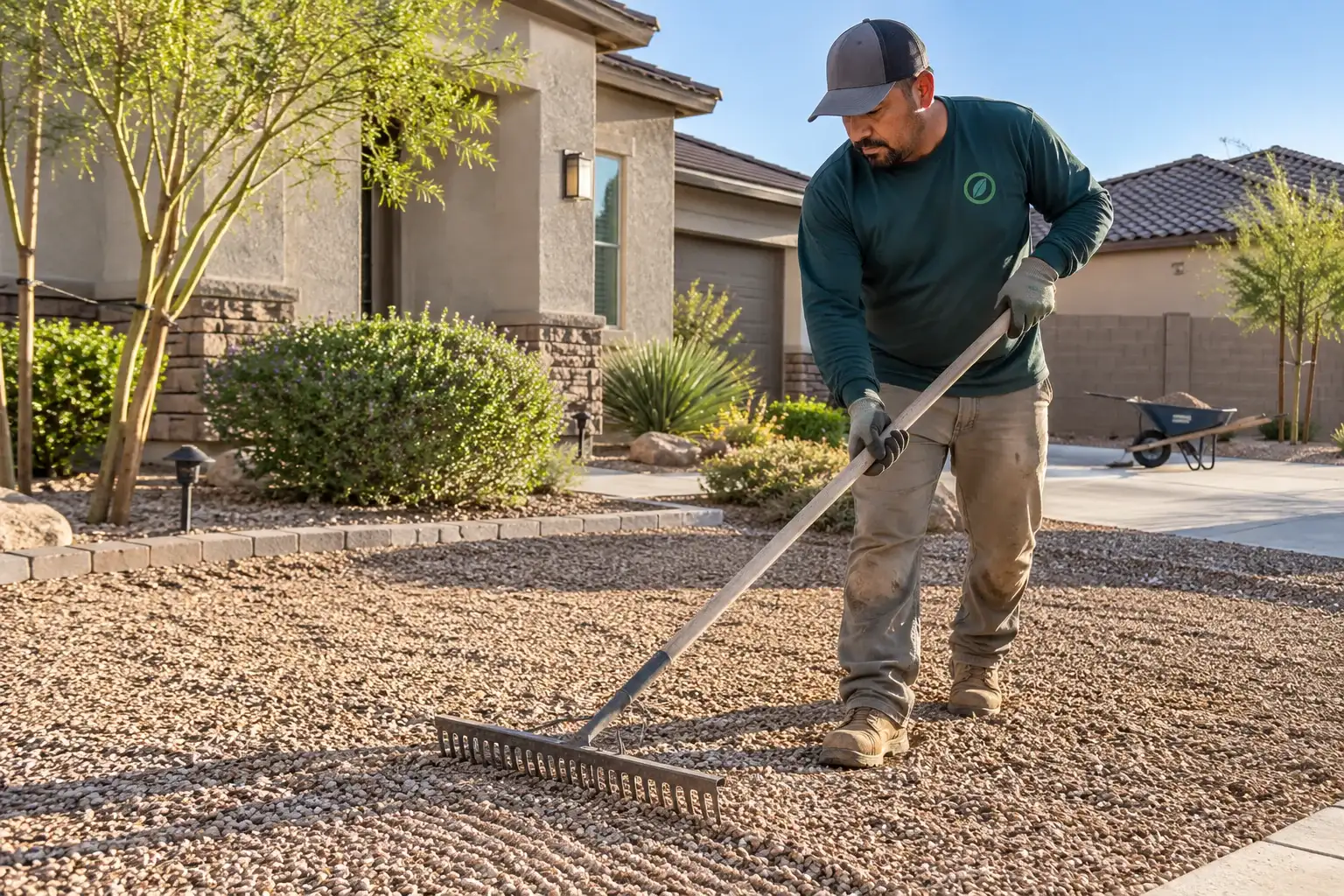
The install includes removing the old surface, excavating, bringing in and compacting a crushed rock base, and shaping the grade so water leaves the yard. A weed barrier goes over the base, then the turf is rolled out, stretched, cut and seamed, and the edges are pinned and restrained. On a pet area the base gets extra attention, because liquid has to move down and out instead of sitting in the rock. On a putting green the base is shaped to the breaks of the green before the surface goes down. The turf is set back from walls and fences so the material has room to move in the heat, and the finished grade is checked so it still drains away from the house. Artificial turf is not eligible for Chandler's Grass to Xeriscape Rebate (Chandler rebate terms (opens in a new tab)).
02Costs
What does artificial turf cost in Chandler?
Published national data puts artificial turf at an average of $5,783, with most projects between $3,244 and $8,714, per a national cost guide, 2026, from 2,284 projects. Materials alone run about $2 to $8 per square foot. The gap between the 2 numbers is the work you do not see: excavation, base rock, compaction, drainage, seaming and hauling the old surface away. Base work spreads over fewer square feet on a small pet run than on a large open lawn, so the per square foot number tends to run higher on small jobs. Putting greens sit at the top of the range because shaping the base and detailing the cups takes time. These are published national ranges, not a quote. The final price comes after someone sees the yard.
03Planning
What does the work look like start to finish?
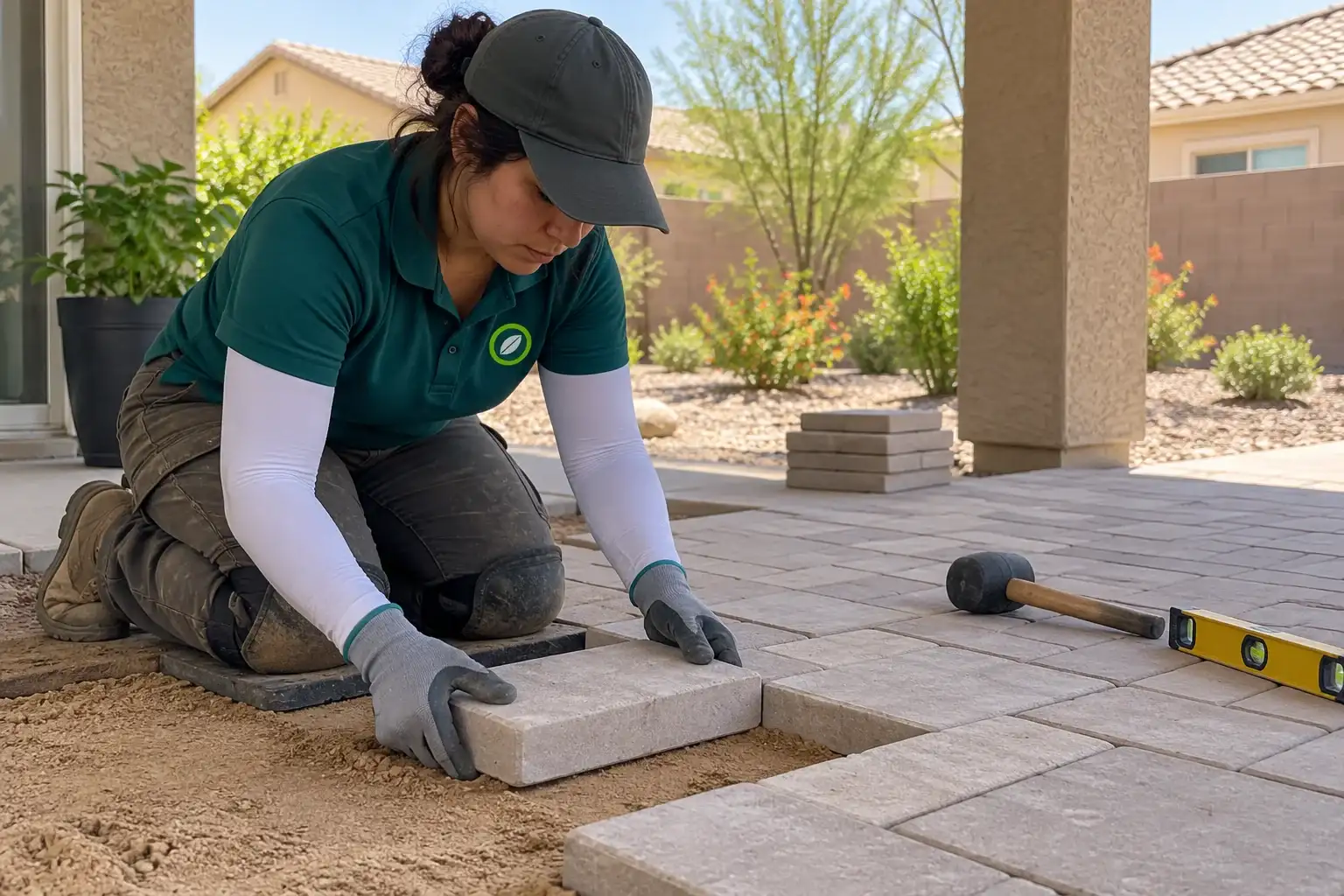
The area is measured, standing water is noted, and what is under the surface gets a look. The old material comes out, the ground is excavated to the depth the base needs, and crushed rock goes in lifts. Each lift is watered and compacted before the next one, and the grade is checked with a level so the finished surface sheds water. The weed barrier goes down, then the turf is rolled out and left to relax before it is cut. Seams are glued and taped, edges are pinned, and the infill is brushed in. Water is run over the surface to check drainage, the perimeter is walked for loose edges, and the area is left clean. A written scope names the turf product, the base detail and what happens to the old surface. Call (747) 243-2089 to ask about a measure.
04Turf
What is different about turf in a Chandler yard?
Heat, caliche and the monsoon set the rules here. A synthetic surface gets far hotter than grass in direct sun, so lighter colors and a shade structure matter on a west facing yard, and a pet that spends the afternoon outside needs water and shade nearby. Caliche under the base can stop drainage, so the subbase has to be evaluated before the rock goes in rather than after the first rain. Monsoon storms arrive fast and drop a lot of water, and a turf area that was graded flat can pond and lift at the seams. Chandler sits in zone 9b, with 25 to 30 F extremes on the 2023 map (USDA plant hardiness map (opens in a new tab)), so the material also has to handle a cold snap without cracking.
05Planning
What should I have ready before the first visit?
Have the area measured, or at least paced off, and know what you want the space to do. A play area, a pet run and a putting green are 3 different builds, and the base detail changes with each one. Pull the HOA rules first, because some Chandler associations limit how much of the front yard can be synthetic and some require approval of the color and the pile. Note where the dog goes, how many dogs and whether the area gets shade. Note any spot that stays wet after rain. Clear a path for the work and the material, and mention any utility boxes, cleanouts or irrigation lines in the footprint. Photos of the area from the roof line help more than a description.
06Turf
What goes wrong if turf is installed badly?
Many turf failures start under the surface. A base that is too thin or not compacted can crown and dip within a season, and the seams can show. No drainage layer over caliche means water sits under the surface and the area smells after rain. Edges that are not restrained lift in the heat and become a trip hazard. A weed barrier that is overlapped the wrong way lets nutgrass come through the seams. A pet area without a proper base holds odor that rinsing alone does not fix. Turf laid tight against a stucco wall can rub and trap heat. Each of these is a base problem, and base problems are expensive to correct after the surface is cut and glued.
07Timeline
How long does an artificial turf install take?
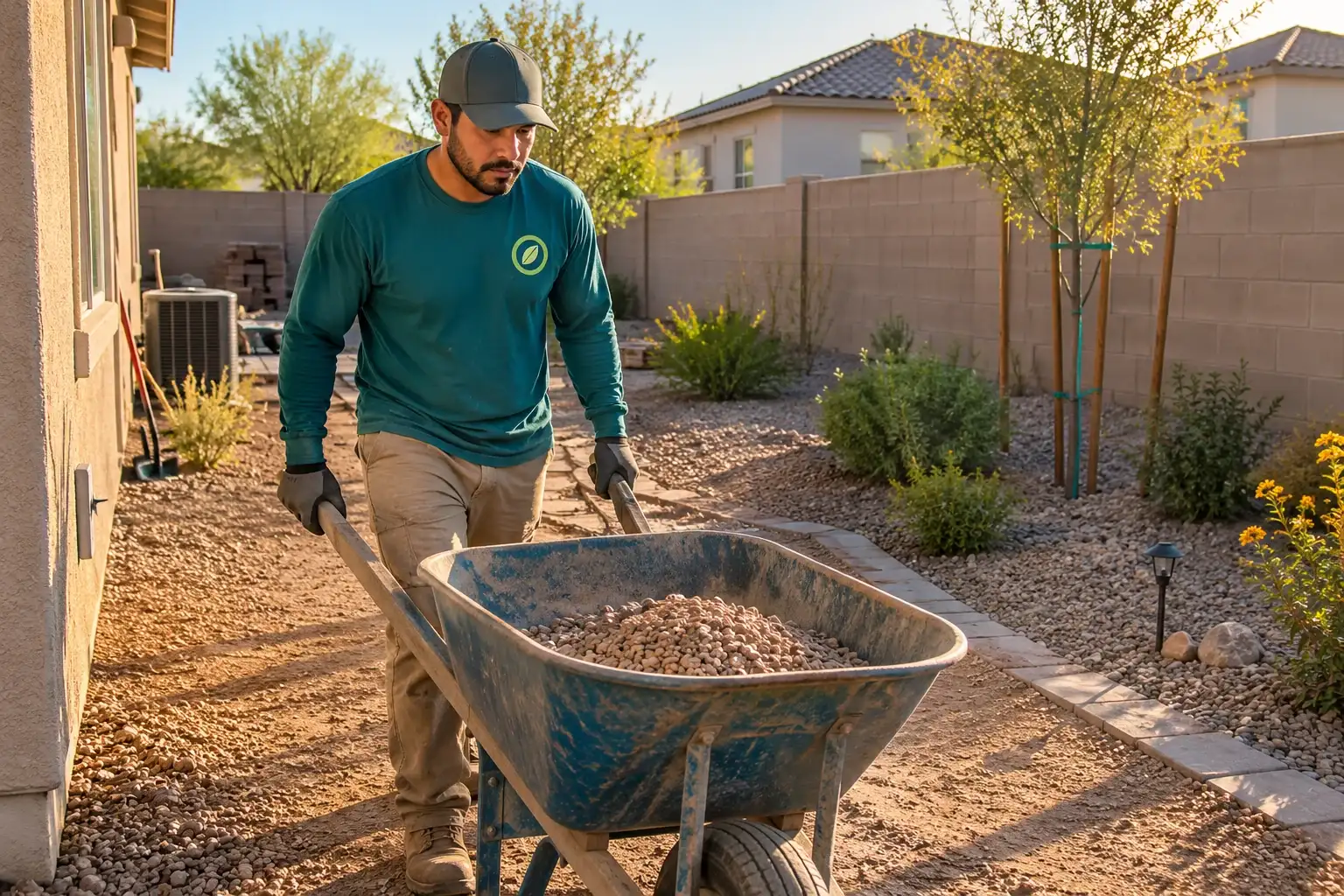
The schedule is set by the square footage, the depth of base the soil needs and how easy it is to get a machine and material to the area. Base work is the long part, because rock goes in lifts and each lift has to be watered and compacted before the next. A back yard reached through a narrow gate or a garage takes longer than one with side access, since the rock moves by wheelbarrow instead of by machine. Seaming and edge work come after the base is signed off, and the turf needs time to relax before the final cut. The order of work and the days that need access to water and power are set out up front, and dates are confirmed once the base plan is set.
08Turf
What maintenance does artificial turf need after?
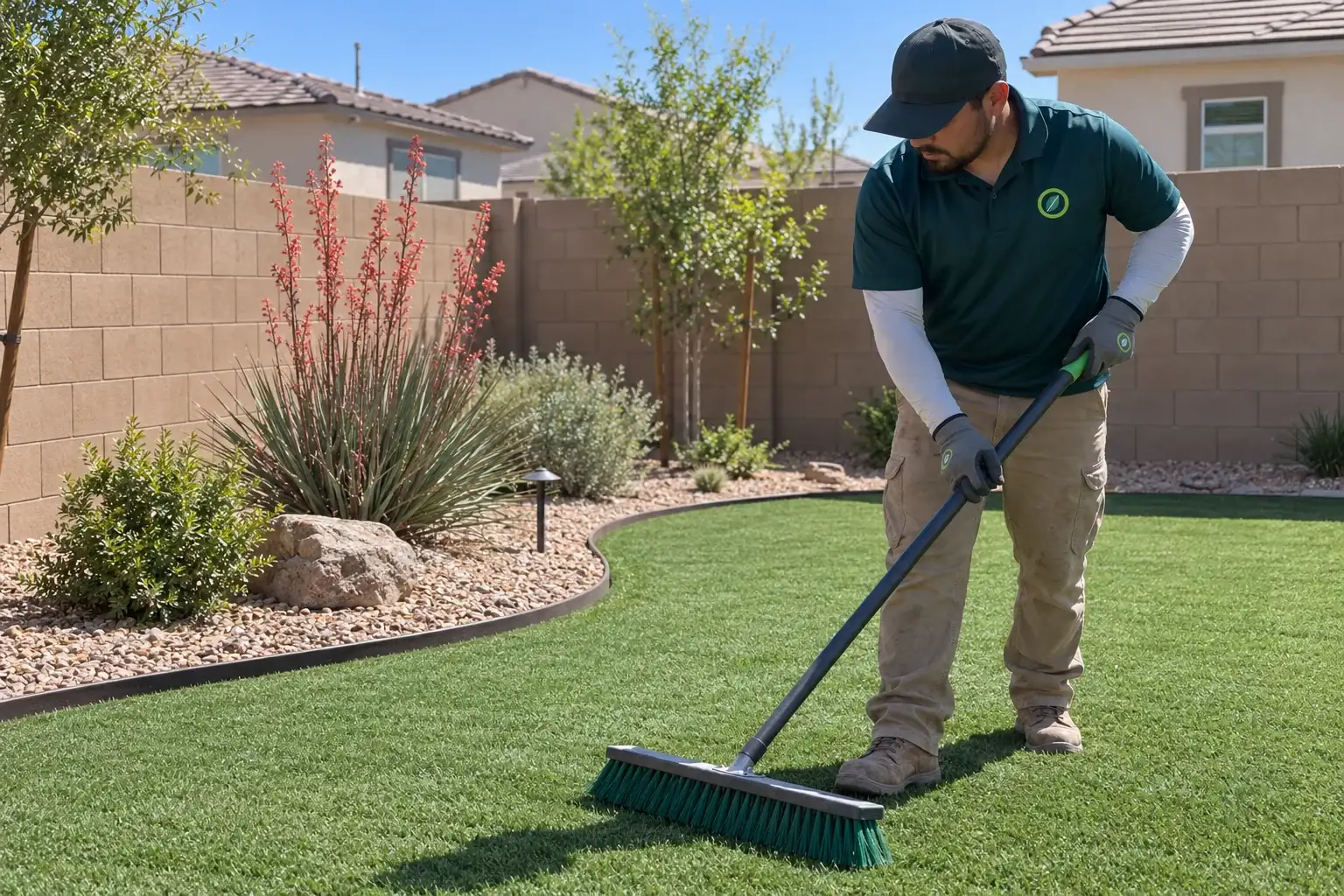
Turf needs less work than grass, but it is not maintenance free. Debris and leaves sit on top instead of breaking down, so a leaf blower or a stiff broom once a week keeps the surface clean. High traffic areas need a brush to lift the pile, and infill gets topped up where it has shifted. Pet areas need a rinse and a weekly pickup, and a mild rinse after rain keeps odor down. Check the seams and the perimeter twice a year, and after a monsoon, for lifting or gaps. Weeds that arrive at the edges can be pulled by hand. There is no mowing, no watering and no fertilizer, which is the point of the material. Keep a short note of what was done and when, because a seam that lifts later is easier to sort out with a date against it.
09Costs
Can turf be installed in stages to spread the cost?
Yes, and the common split is front yard then back yard, or pet run first and play area later. A stage line has to be planned before the first phase starts, because a seam in the middle of a lawn is visible and a base that stops at an open edge will unravel. The better approach is to build the base for the whole area in one pass and surface the part the budget covers, then return for the rest. That keeps the grade consistent and avoids a second excavation. If the second phase is a year out, cover the base so weeds do not take it. Keep the same turf product for both phases, because dye lots and pile heights change between runs.
10Costs
What is the difference between artificial turf and the cheaper version?
The cheaper version is usually a thinner product on a shallow base, and the difference shows up in the first few seasons. Face weight, pile height, backing and the quality of the infill all affect how the surface feels and how long it holds its shape. More important than the turf is the base: rock depth, compaction, drainage and edge restraint. A premium product on a bad base can fail, and a mid range product on a good base can last. What is under the surface, and whether the old material is hauled away, say more than the price of the roll. A price that skips excavation and hauling is not the same job. The base detail, the drainage detail and the haul off are the lines that show what a price covers.
11Turf
Which Chandler neighborhoods do you cover for turf?
We serve Chandler and the towns around it. On the south side that includes Ocotillo and the golf course and lake frontage lots around ZIP codes 85248 and 85249 (Ocotillo), where a small synthetic lawn can replace grass that was overwatered. On the west side are the older neighborhoods in 85224, 85225 and 85226 (West Chandler), where narrow side yards and mature trees make access the first question. Coverage also includes the historic blocks near downtown (Downtown Chandler), Gilbert and Mesa. Outside Chandler, water rules are set by that city's water department, so confirm the schedule before changing a controller. If a yard sits on a boundary, send the ZIP code, and someone from our team will call you back about which city's rules apply. Small areas count too, since a side yard or a strip beside a pool is often the first turf a homeowner tries.
125 questions
Questions people ask
Still have a question? Call (747) 243-2089 and describe the yard.
01Is artificial turf eligible for the Chandler rebate?
No. The city states that artificial turf is not eligible for the Grass to Xeriscape Rebate, and hardscape is not rebated either (Chandler rebate terms (opens in a new tab)). The rebate is for grass removed and replaced with low water planting, at $1.50 per square foot up to $2,000. Budget turf as its own project, separate from a rebated conversion.
02Does turf get too hot for a dog in Chandler?
It can. A synthetic surface in direct summer sun gets much hotter than grass, and paws are close to it. Lighter colors, some shade and a rinse before the dog goes out all help. A pet area also needs a base that drains, because heat and moisture together are what create odor. A drainage detail belongs in the scope.
03Can turf go over caliche?
Only with the right base detail. Caliche is a cemented layer that can restrict water movement (UA Extension, managing caliche (opens in a new tab)), so turf laid straight over it can pond and smell. The usual fix is to break the surface, build a compacted base with a slope and add drainage where the area is enclosed. The site walk is where that gets decided, before any material is ordered.
04How long does turf last in Arizona sun?
Sun exposure is the main factor, and a west facing area with no shade takes the most. Product quality and base work affect how the surface holds up, and so does use. A number of years depends on the product and the site, so the material's rating is the figure to compare like for like.
05Do I need HOA approval for artificial turf?
Many Chandler associations have a rule on it, and some require a submittal. Common conditions are a limit on the percentage of front yard in turf, an approved color range, and a border of real planting. Get the rule in writing before you order material. If the board has a plant list, the turf plan should match the same submittal drawing.