Message received
Thank You
Last updated
Your request reached us. Below is what happens next, what to have ready when the call comes, and how to call sooner.
Read the yard guides01How it works
What happens next?
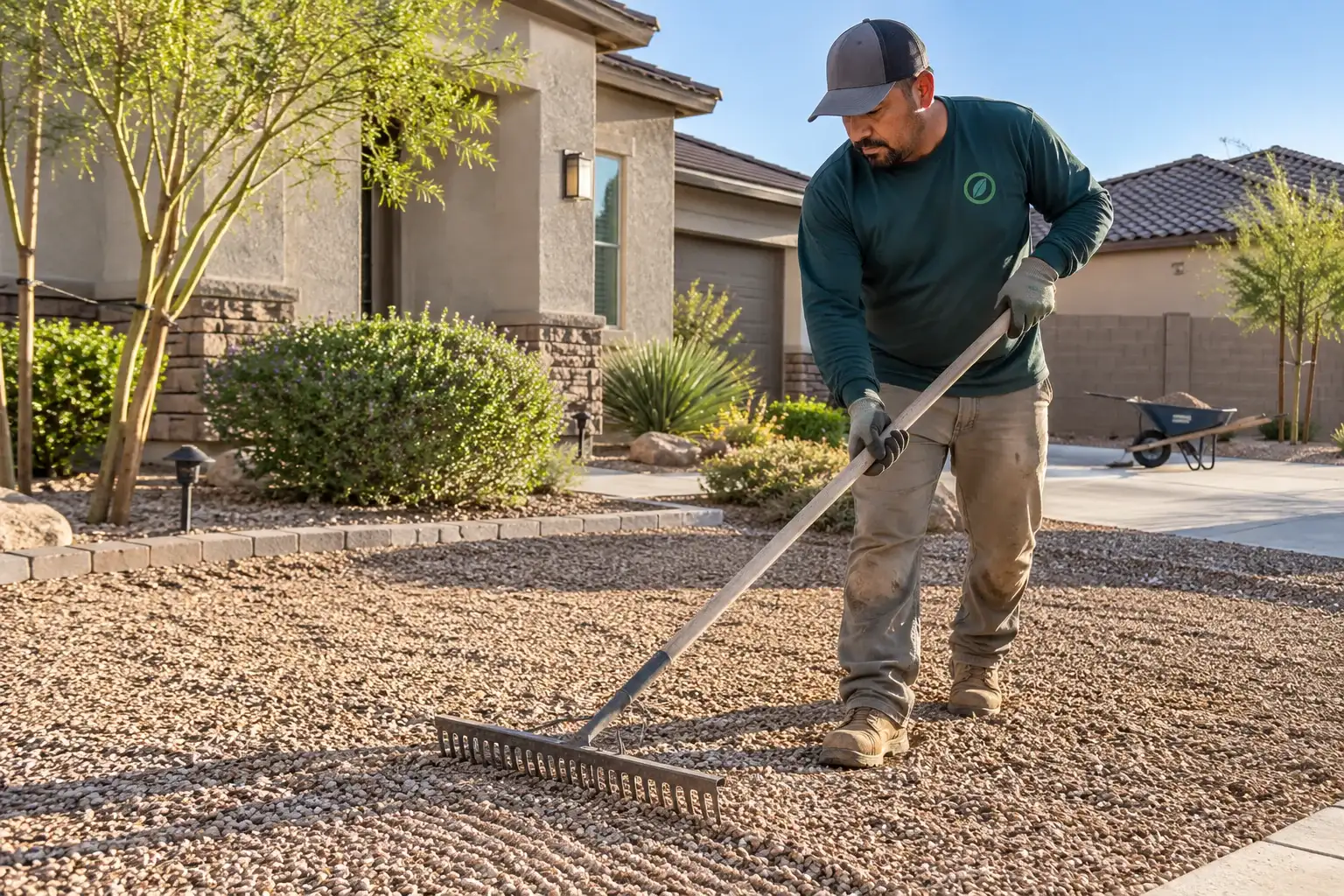
Someone from our team will call you back at the number you left. The call is short: what the yard is now, what you want changed, and which published range fits the work you described. If the job needs someone on site before it can be priced, the call says so and sets a time that works.
Nothing is scheduled and nothing is ordered before you have a scope you understand. If the project involves removing grass, the city step comes first, so the order of work may not match what you expected.
If the call is missed, a message is left with a number to call back, and you can also call the number below.
02Contact
What should I have ready for the call?
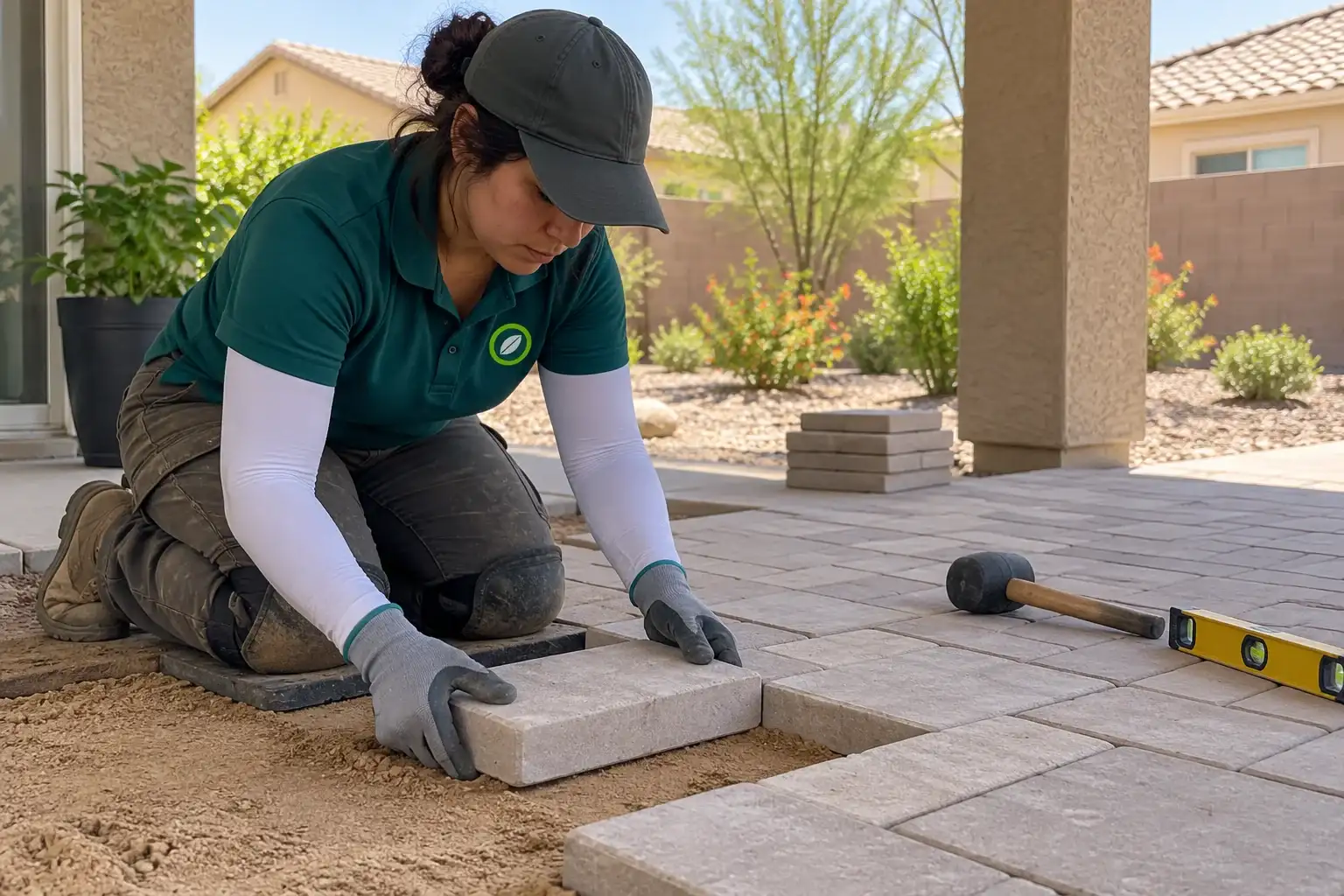
4 things make the call useful: the rough size of the yard or the area you want changed, 2 or 3 photos taken from the street and the back corner, a note on what stays (a tree, a wall, a patio), and the ZIP code.
If the yard is in a planned community, have the HOA design rules where you can find them. If grass is coming out, read the city rebate page (opens in a new tab) first, because the Notice to Proceed has to be issued before any grass is removed. Removing first and applying after costs you the whole rebate.
A budget range helps too. A range is enough to show whether the work fits in stages or in one pass.
03Good to know
What should I check in the yard while I wait?
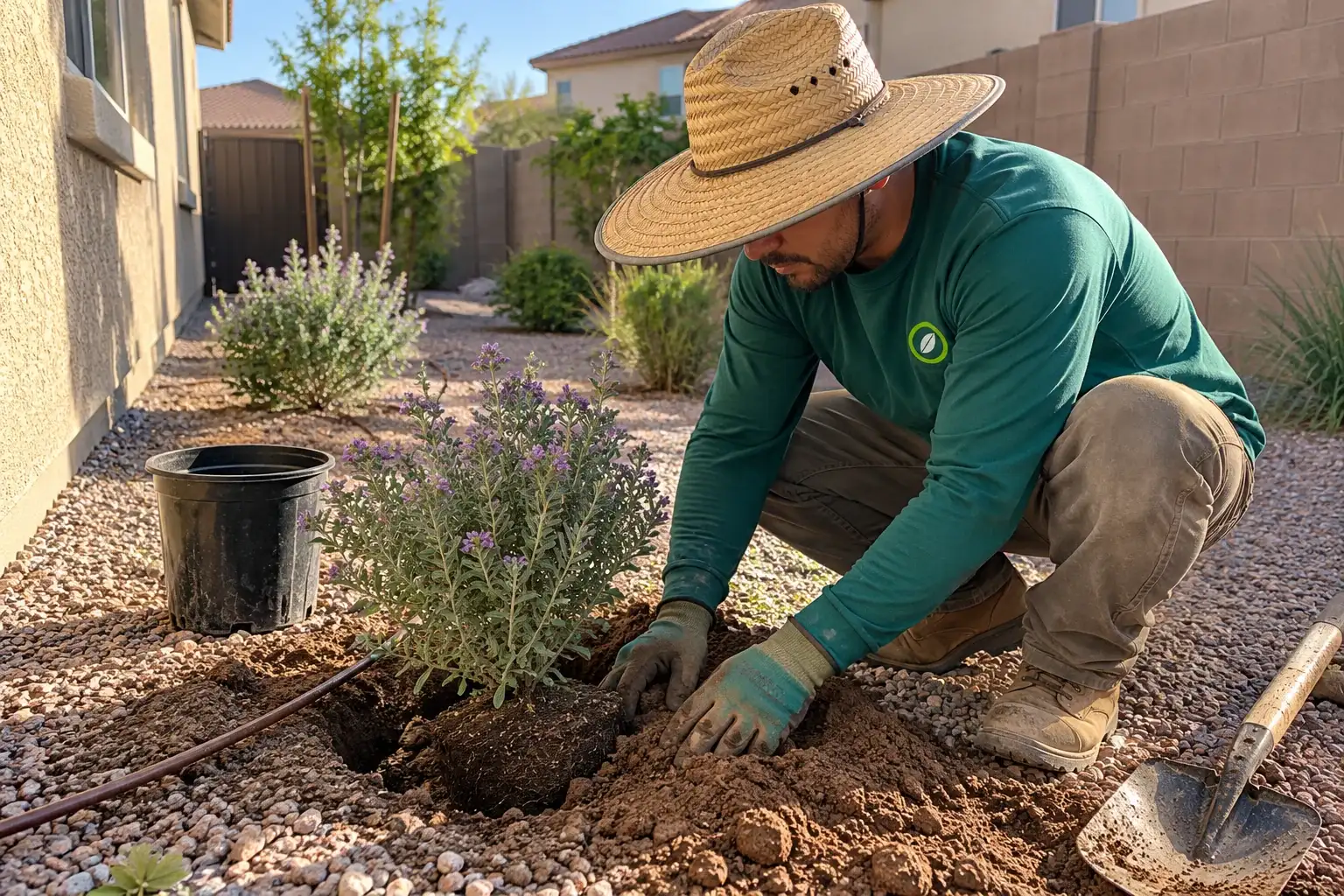
Walk the yard and note 3 things: where water stands after rain, which plants look healthy in full sun, and where the sprinkler heads are. Those notes turn a vague idea into a scope, they take about 10 minutes, and they help show whether the problem is the plant, the soil or the emitter.
The Chandler water schedule (opens in a new tab) is worth reading before you touch a controller. Established grass gets watered no more than 2 to 3 times each week, most plants once a week, and cycle and soak keeps water from running off the surface.
If the plan includes grass removal, the city rebate page (opens in a new tab) explains the $1.50 per square foot payment, the $2,000 cap, the 500 square foot minimum and the 50 percent plant coverage rule.
04Good to know
Can I talk to someone now?
Call (747) 243-2089 to talk through the project, the ZIP code and the published ranges, and whether the job needs a site visit before it can be priced.
Have the yard in front of you if you can. Sun exposure, slope and what is already planted are easier to describe standing in the bed than from memory, and the answers change the plan.
If the line is busy, leave a message or send the form again with a note and the best window to call, and someone from our team will call you back. The contact page explains what each field is for and what happens after you send it. In a message, leave the ZIP code and the project type.
053 questions
Questions people ask
Still have a question? Call (747) 243-2089 and describe the yard.
01How soon will I hear back?
Someone from our team will call you back at the number you left. If you need an answer sooner, call the number on this page.
02Can I change the details after I send the form?
Yes. Say so on the first call and the scope gets adjusted before anything is priced. Photos sent later are useful too, especially of the grade and the areas where water stands.
03What if I only want one small job?
Send it anyway. A valve replacement, a few broken heads or one replanted bed are normal requests, and the same published ranges apply to a small job as to a large one.