Guide 05 · 4 min read
Watering Your Chandler Yard in Summer
Chandler's water schedule asks for no more than 2 to 3 waterings a week on established grass and once a week on most plants, run in short passes so the water soaks in. Many summer lawn problems come from watering too often, not too little.
All yard guidesTimeline
How often should I water grass in summer?
The city's water schedule (opens in a new tab) says established grass should be watered no more than 2 to 3 times each week. That is fewer times than many homeowners expect, and it is deliberate: deep cycles push water past the surface roots, while daily light watering builds a shallow root zone that suffers in June. The schedule is a ceiling, not a target, and it assumes established grass rather than fresh sod. New sod needs more frequent attention while it knits to the soil. Once the lawn has been through a full season, move it to the 2 to 3 times a week pattern and watch the color rather than the calendar. If the grass shows footprints that stay flat for a minute or more, the root zone is dry, and the fix is a longer cycle rather than an extra day.
Water
How often do trees and shrubs need water?
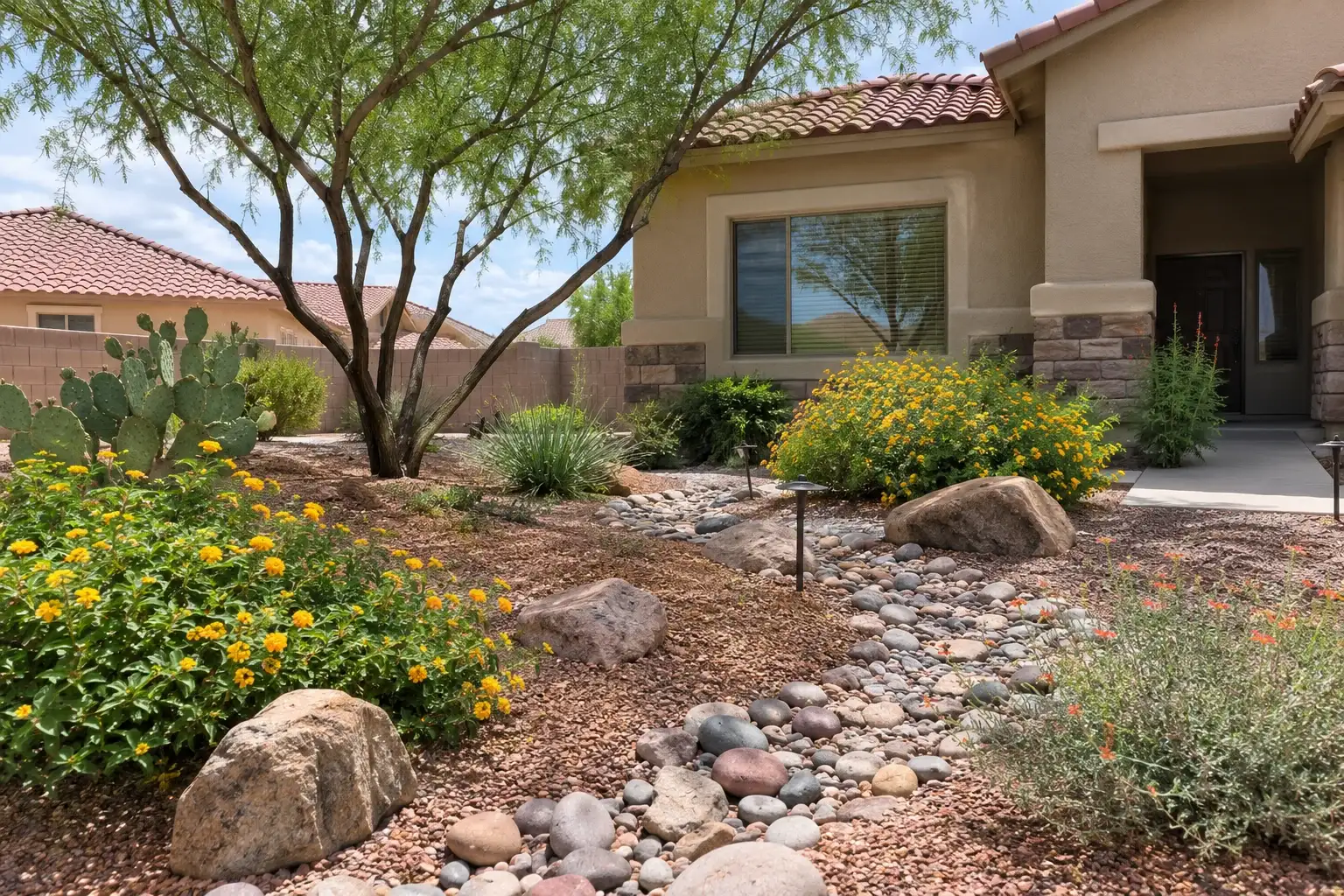
Most established plants in Chandler need water about once a week, per the same city schedule. That covers trees, shrubs and the desert-adapted perennials that make up a xeriscape bed. Once a week means a long, slow soak that reaches the root zone, not a short spray that wets the surface and evaporates. Trees want the water at the drip line rather than at the trunk, because the roots that take up water sit under the edge of the canopy. Shrubs want it at the edge of the canopy for the same reason. A drip system on a separate valve from the lawn is the simplest way to run 2 schedules, because grass at 2 to 3 times a week and plants at once a week cannot share a station.
Good to know
What is cycle and soak?
Cycle and soak is a controller setting that splits a run into shorter passes with a pause between them. The first pass wets the surface, the pause lets the water move down, and the second pass pushes it deeper before it can run off. On valley soil, and especially on caliche or a slope, a single long run can send much of the water to the sidewalk. 2 or 3 shorter passes with a pause between them put more water in the root zone with the same minutes on the clock. Many modern controllers have the setting built in, and the ones that do not can be programmed with 2 start times. If the controller has no such setting, use 2 start times an hour apart and cut each run in half.
Water
Why does water run off instead of soaking in?
Because the ground can only take water so fast. A dry clay or caliche surface sheds water like a roof once the top layer is saturated, and a slope makes it worse. Runoff is easy to spot: water sheeting across the sidewalk, a damp stripe at the low edge of the yard, or a puddle that stays for an hour after the cycle ends. Those are signs to shorten each pass and add a pause, not signs to run the station longer. The city schedule pairs the 2 to 3 times a week rule with cycle and soak for exactly this reason, and the pairing matters more than either rule alone. A yard watered this way for a month can take water faster, because the surface repels it less.
Water
How do I set the controller for July?
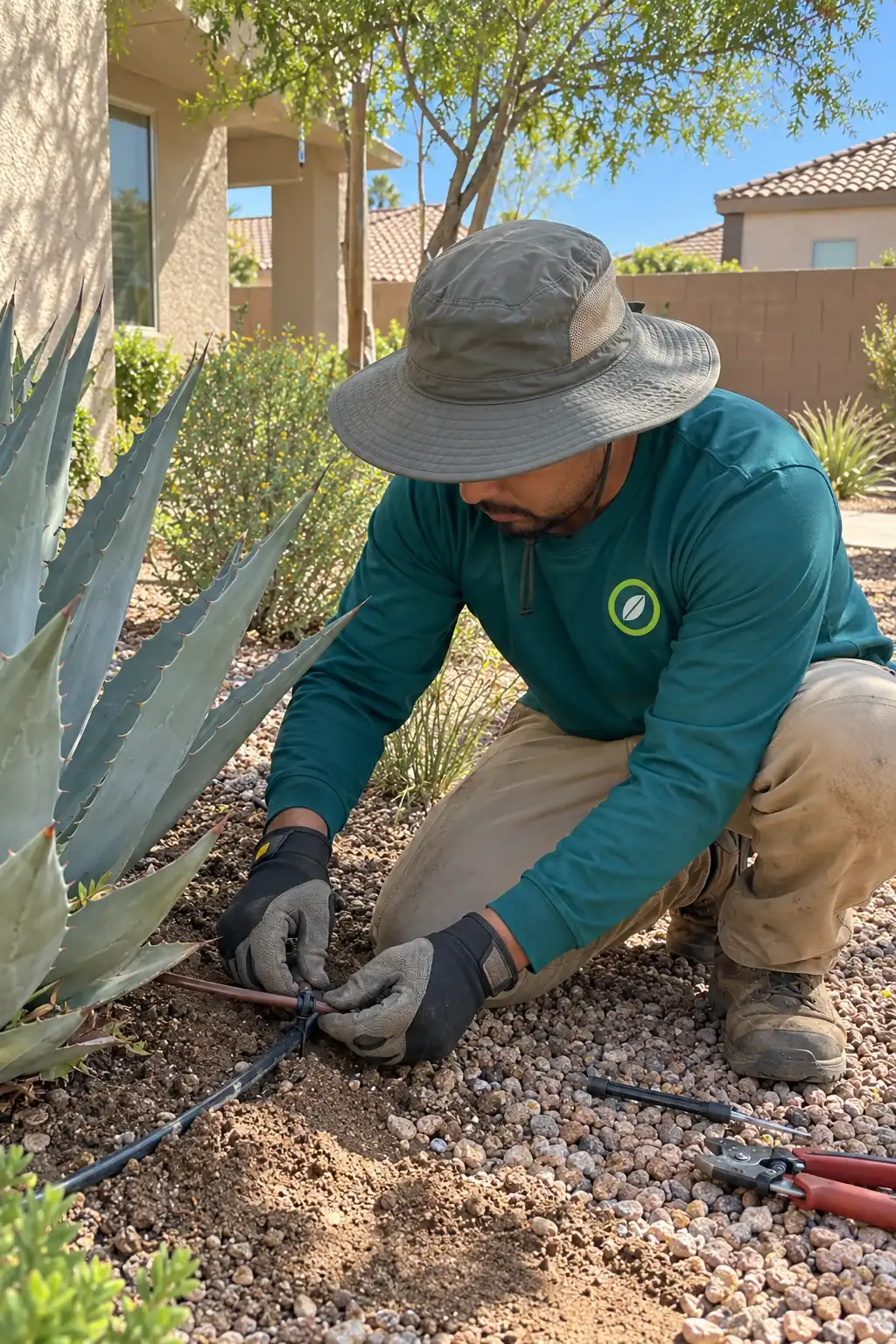
Set the lawn station to 2 to 3 days a week and the plant station to once a week, then split each run into passes. Water in the early morning, when the wind is down and the sun is off the surface. Check the system once by hand at the valve and once by walking the heads: a tilted head waters the wall, and a broken head waters the street. After the first week, look at the grass rather than the clock. A lawn that is still wet an hour after a cycle is being overwatered, not underwatered. Adjust minutes before adjusting days, and give a change a week before judging it. Write the schedule on a card inside the controller door so the next person who opens it knows what the zones are doing.
Ground
What should I check after a monsoon storm?
Monsoon storms bring wind, grit and branches, and the irrigation system takes the hit. Walk the yard after a storm and check 3 things: heads that are tilted or buried, valves that hiss or stick, and wet spots that stay wet when the station is off. A leak under a paver or a patio shows as a soft patch rather than a geyser, so press the surface with a foot. A national cost guide reports an average sprinkler repair of $278 across 36,233 projects, with most repairs between $137 and $422. Keep a spare head of each type in the garage, because the model matters and the store may not have it. A small fix is worth doing before a cracked lateral turns into a line replacement under finished work. Call (747) 243-2089 to talk through a valve that will not close.
3 questions
Questions people ask
Still have a question? Call (747) 243-2089 and describe the yard.
Can I water grass every day in July?
The city schedule says no more than 2 to 3 times a week for established grass. Daily short watering keeps roots shallow and sends water to the street. If the lawn looks stressed, lengthen the cycle rather than adding days, and check a head before changing the clock.
Does cycle and soak use more water?
No. It uses the same minutes split into passes with a pause between them. More of that water reaches the root zone and less runs to the street, so the station often needs fewer total minutes once the setting is in place and the soil has softened.
What time should I run the sprinklers?
Early morning, before the wind picks up and while the sun is off the surface. Watering at midday loses a share to evaporation, and evening watering leaves the grass wet through the night, which can favor turf disease.