Guide 02 · 4 min read
Xeriscape in Chandler, AZ: Grass to Desert
A grass to xeriscape conversion in Chandler can pay back $1.50 per square foot up to $2,000, but only if the city issues a Notice to Proceed before any grass comes out. The order of the paperwork matters as much as the planting plan.
All yard guidesPlanting
What does xeriscape mean in a Chandler yard?
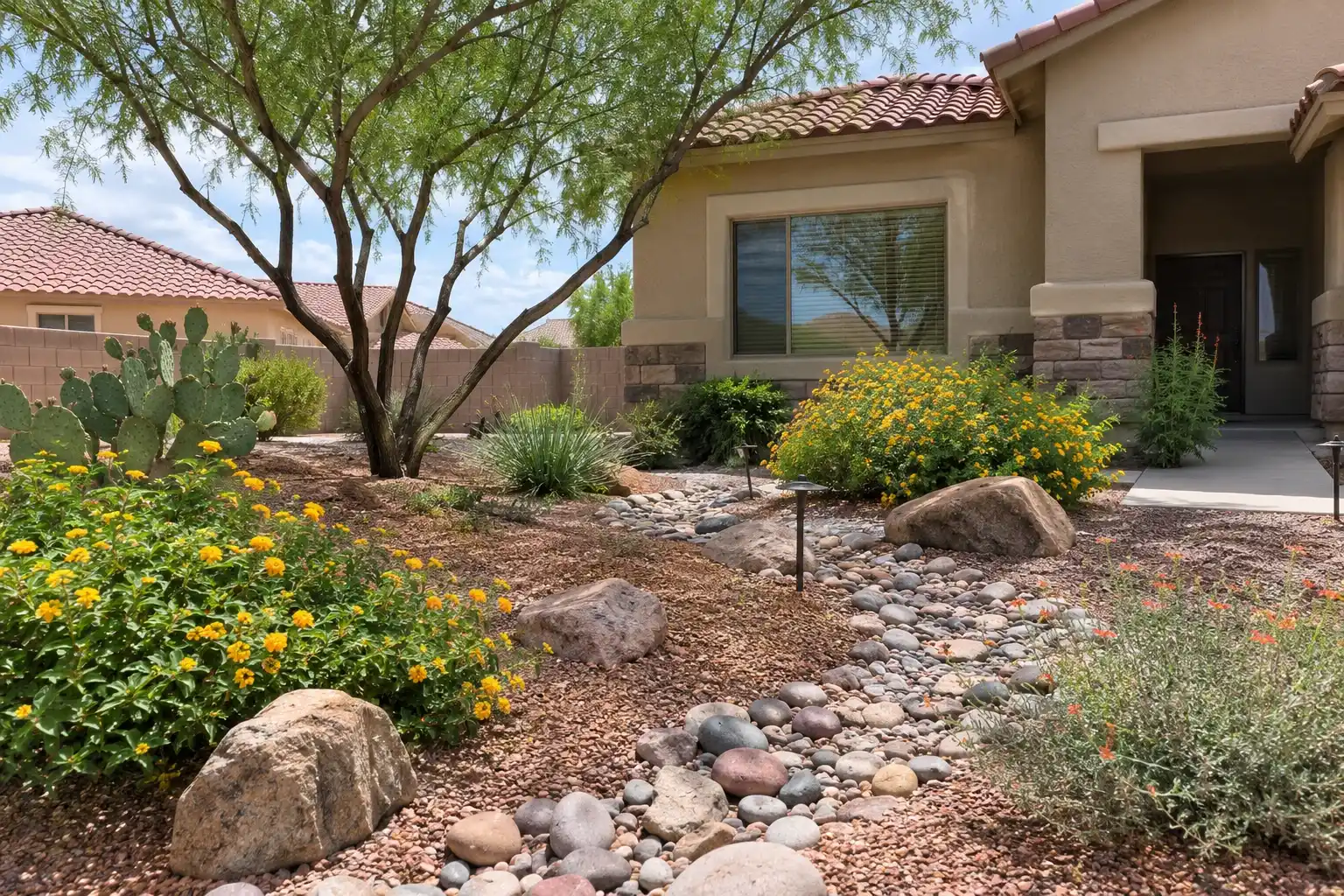
Xeriscape is a planted yard that lives on the water the desert gives it, not a yard covered in gravel. In Chandler that means a palette built for zone 9b (opens in a new tab), where the average annual extreme minimum sits at 25 to 30 F, so the plants have to take a light freeze in January and a long run of hot days in July. The look is usually a mix of trees for shade, shrubs with structure, accent plants, and a ground surface that is not lawn. Drip line runs to the plants, and the open areas are gravel, decomposed granite or mulch. Done well it reads as a garden with bones. Done badly it reads as a parking lot with 3 cactus in it, and it costs about the same to do either.
Costs
Does Chandler pay a rebate for removing grass?
Yes. The city's Grass to Xeriscape Rebate (opens in a new tab) pays $1.50 per square foot of grass removed, up to $2,000, and the minimum project is 500 square feet of grass. On a 1,000 square foot lawn that is $1,500 back. At 1,500 square feet the payment caps at $2,000. The rule that catches people is the order of work: a Notice to Proceed has to be issued before any grass comes out. Not after the demolition, not after the design is drawn, before. The application goes in first with photos of the existing live grass, the city does a pre-inspection, and the notice arrives. Grass removed ahead of that notice does not qualify, and there is no retroactive route to claim it. Keep the association approval and the notice together, because the files are separate and the city's page says the new design must comply with HOA rules.
Planning
Why does the Notice to Proceed have to come first?
Because the city is paying for a measured change, and it can only measure what is still there. The pre-inspection looks at the live grass while it is still there, and the application carries photos of it. Once the grass is gone, there is nothing to inspect and no way to confirm the square footage that came out. That is why the sequence is fixed: apply, get the notice, then remove. The same logic applies to the work schedule. Starting demolition on Monday while the application is pending trades the rebate for a week of schedule, which is a bad trade at $1.50 per square foot. Call (747) 243-2089 to talk through the order of work.
Service area
What does the rebate not cover?
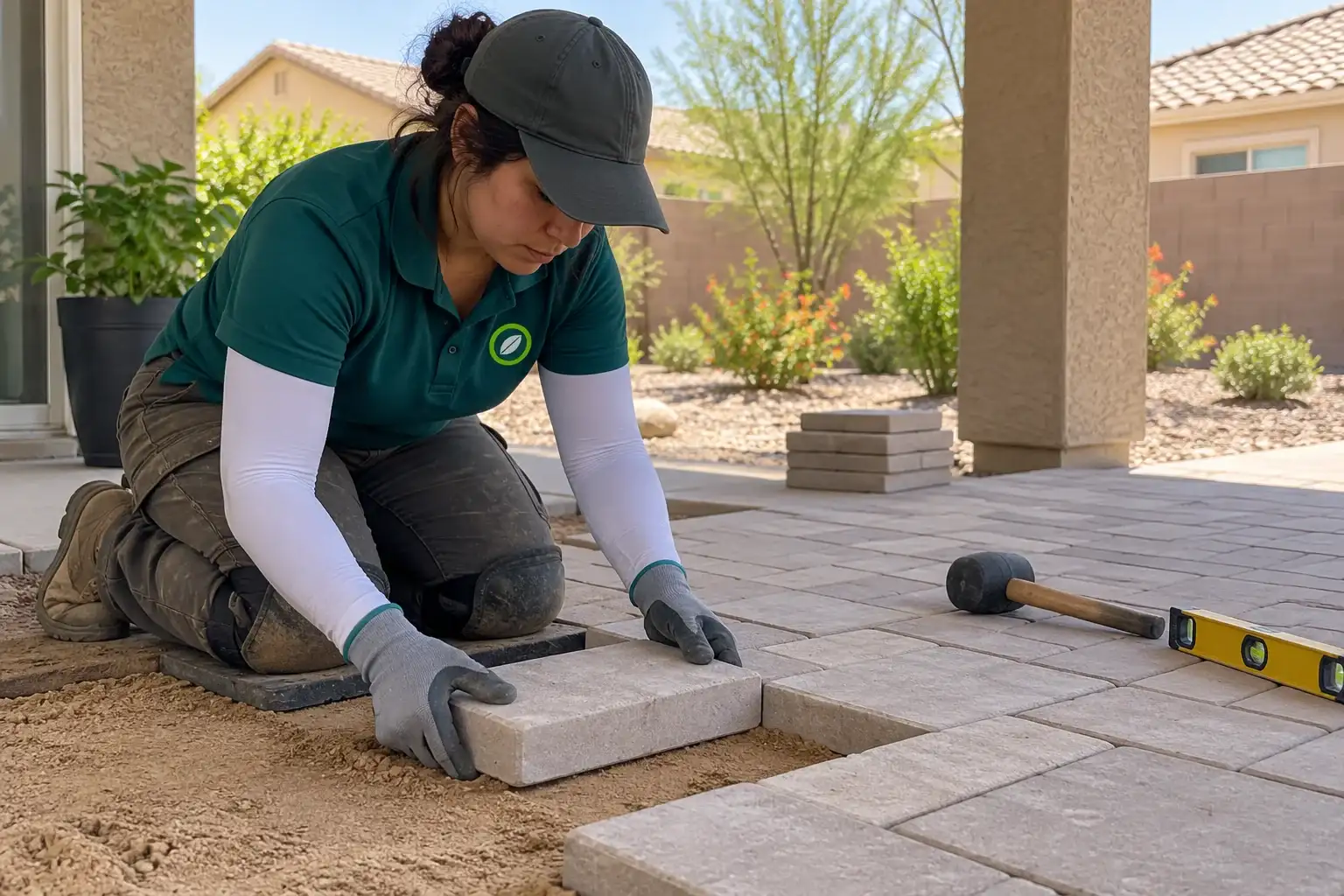
Artificial turf is not eligible, and hardscape is not rebated. A yard that replaces grass with turf and a paver patio does not qualify for the conversion payment, however much water it saves. The rebate is for living, low-water plants. That does not make turf or pavers a bad idea, and many yards mix all 3. It means the rebated area has to become a low-water planted landscape, and the turf and the patio are budgeted as their own lines. Plan the planted area first so it meets the coverage rule, then decide how much turf and hardscape fit around it. The order matters, because a plan built around a patio leaves whatever space is left for plants, and that is usually not enough.
How it works
What does the design have to include?
The design has to show 50 percent ground coverage with low-water plants at maturity. Maturity is the key word. The city measures coverage at the plants' full size, so a bed of 1 gallon plants counts for the area it will cover once grown, not the fraction it covers at install. Space the plants for the size they reach and show that mature width on the plan. Drip matched to the planting suits the design better than overspray onto gravel. A plant list with mature width for each species is the simplest way to prove the 50 percent and the simplest way to catch a plan that will look thin in year 1 and crowded in year 4. The final application asks for a list of what was planted and at least 2 photos of the finished conversion, and the city does a final inspection.
Costs
What does a conversion cost and what does it save?
On cost, published national data puts a front yard project at $1,500 to $5,000 and landscaping at $4.50 to $12 per square foot, with a 2 person crew at $50 to $100 per hour. A conversion is not cheaper than grass by the square foot, because the planting, the drip and the surface all cost money up front. The saving shows up on the water bill. The city reports that an average conversion saves 75,000 gallons a year. Add the rebate at $1.50 per square foot up to $2,000, and the payback is a mix of both. These are published national ranges, not a quote. The final price comes after someone sees the yard. The pre-approval application goes in before any work starts, and the final application follows the finished planting.
3 questions
Questions people ask
Still have a question? Call (747) 243-2089 and describe the yard.
Can I keep some grass and convert the rest?
The rebate is measured on the grass that comes out, with a 500 square foot minimum. A partial conversion can qualify for the portion removed if the application and the Notice to Proceed cover that area before work starts. Ask the city about the specific square footage before anyone lifts a shovel.
Does artificial turf count toward the planted coverage?
No. The rebate is for living low-water plants, and the 50 percent coverage is measured on those plants at maturity. Turf is not eligible for the rebate and does not count as planted area on the plan.
What happens if I remove grass before the notice arrives?
That grass does not qualify for the rebate, and there is no route to claim it later. Apply first, wait for the Notice to Proceed, then schedule the removal. The city's page also says the project must be completed in 90 days, so the removal and the planting belong in one window.