Guide 03 · 5 min read
Drip Irrigation vs Sprinklers in Chandler, AZ
Sprinklers throw water wide and fast, the way a lawn drinks. Drip delivers it slowly at the root. In Chandler the failure comes when lawn sprinklers outlive the lawn, drowning one side and starving the other.
All yard guidesGood to know
The short answer
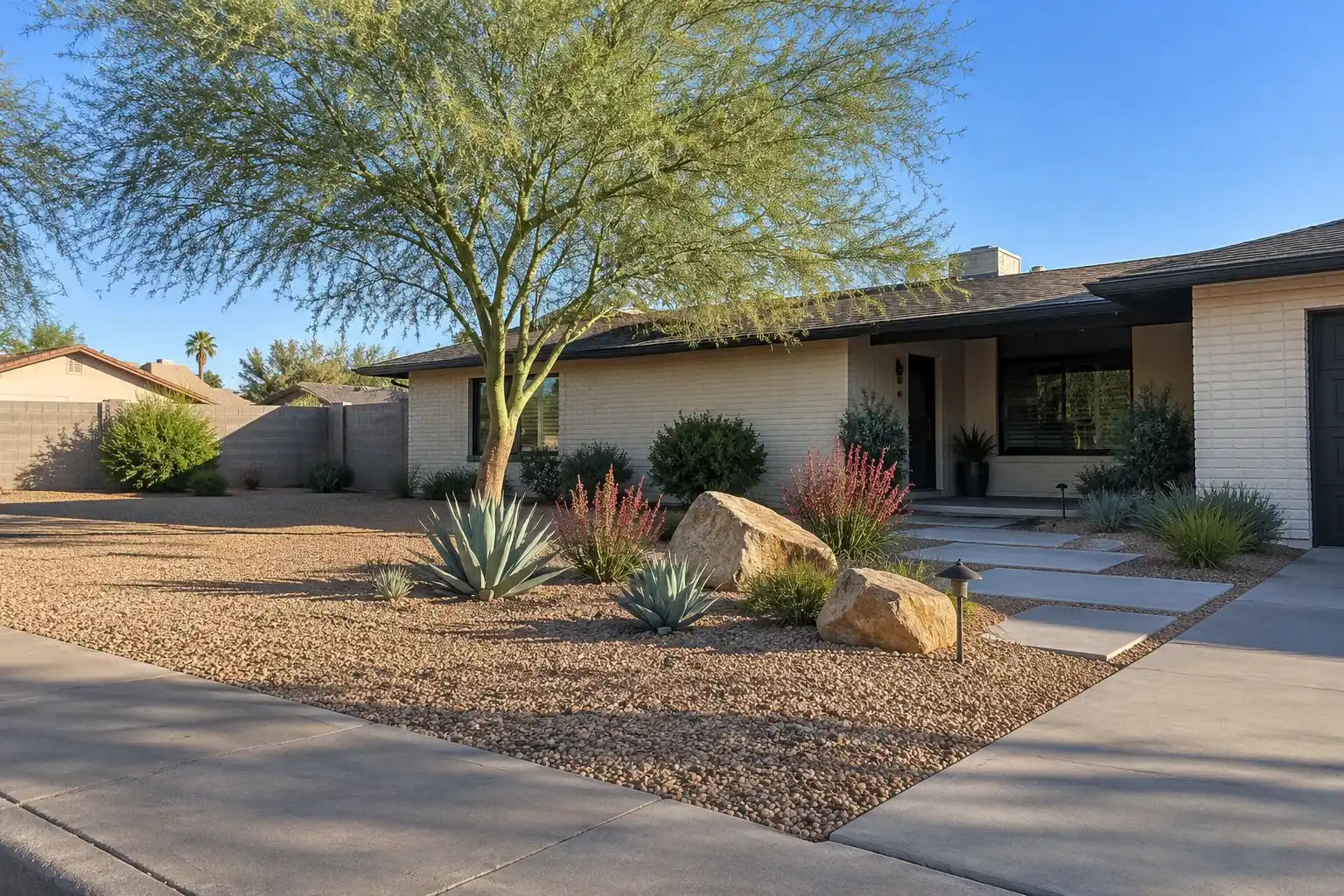
A lawn needs sprinklers, because grass drinks across a whole surface. Beds, shrubs, and trees need drip, because desert plants drink at the roots, slowly. The problem in Chandler is neither system, it is the handoff: yards convert to desert planting and the lawn sprinklers stay on the job. The right choice depends on the soil, the planting, and what the water actually reaches.
Water
Drip irrigation: what it actually is
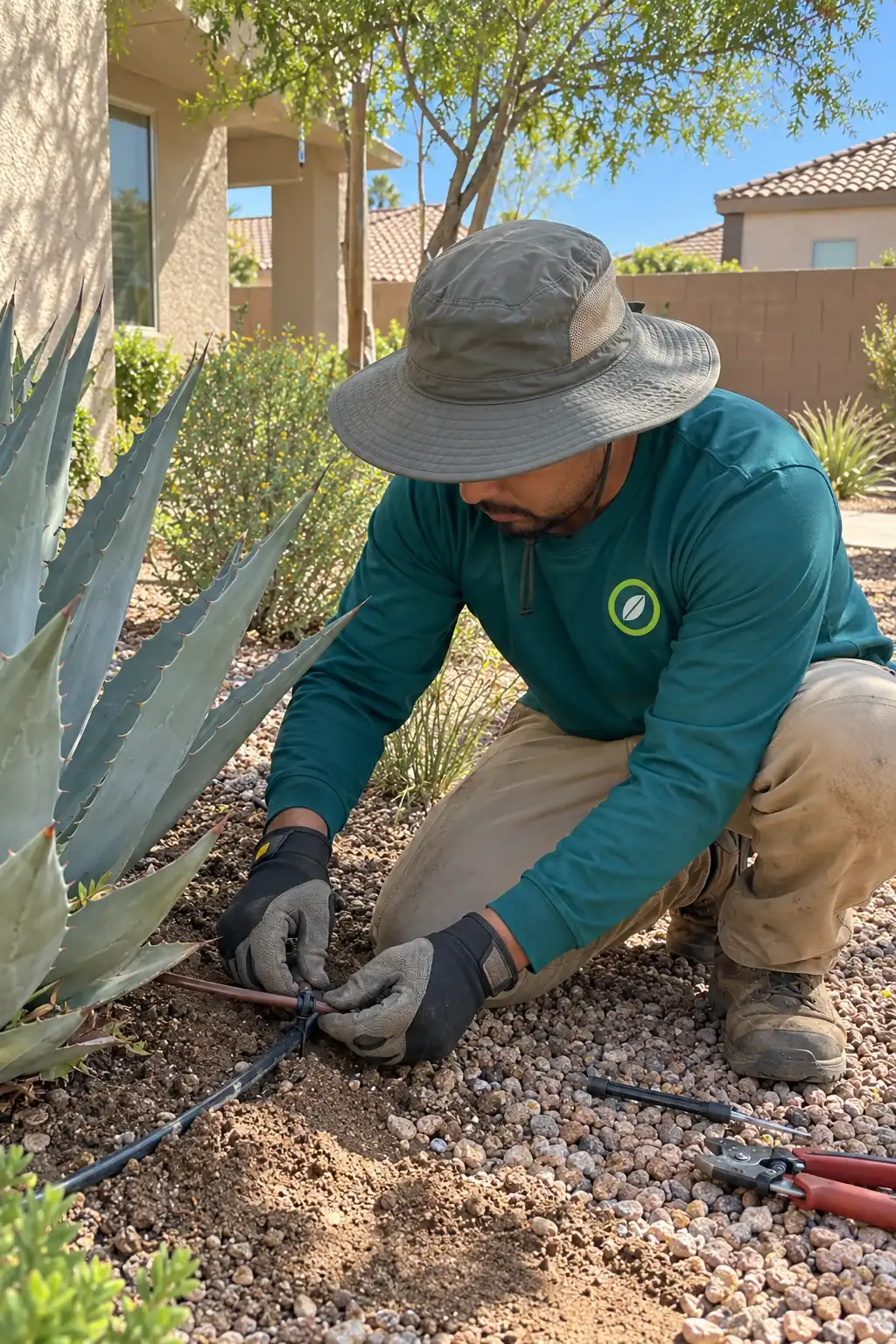
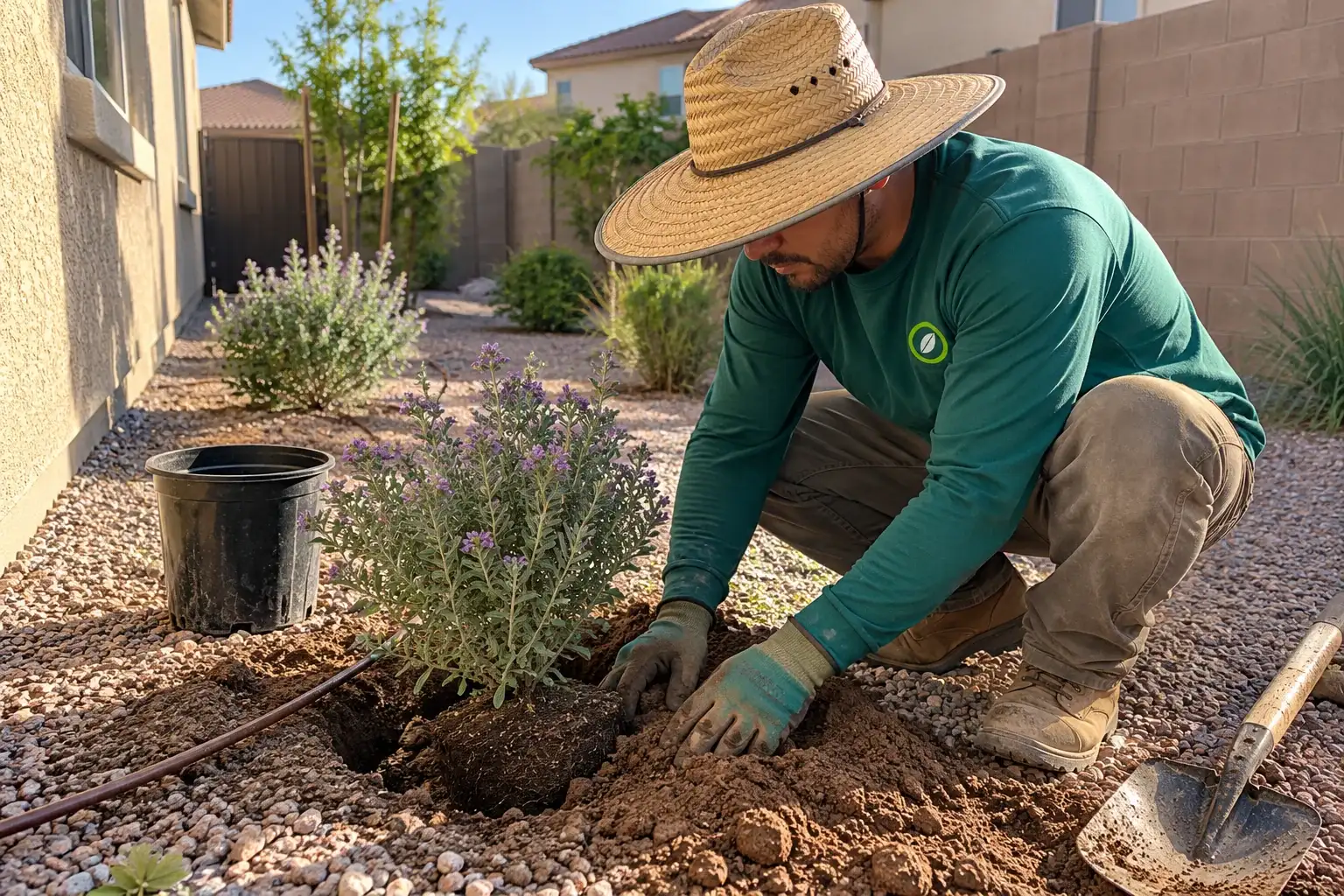
Drip is tubing with emitters placed at each plant, delivering water in gallons per hour instead of gallons per minute. The water goes straight to the root zone, slow enough to soak in, and almost none of it is lost to wind or evaporation. That slow deep soak is how zone 9b plants are meant to be watered.
The price of the precision is the sensitivity. Emitters are small, and they clog. Hard water leaves scale on irrigation hardware, and reclaimed water carries more salts, so an emitter that plugs quietly kills one plant at a time while the rest of the system looks fine. Drip also needs a filter and pressure regulation, and systems installed without them blow emitters off the line. Timing is part of the design. Zone 9b has two growing seasons, and the drip schedule that works in April under-waters by July and over-waters by October. A drip system without a seasonal schedule is a watering machine, not a water plan.
Water
Sprinklers: what they actually are
Sprinklers are heads that throw water in arcs across a whole area, gallons per minute, wetting everything they reach, plants, soil, walls, and windows. That is the right tool for turf, which drinks evenly across a surface and needs the coverage.
The waste is built in. On a July afternoon in Chandler, a share of every spray evaporates before it hits the ground, and the wind moves the rest off target. Hard water scale plugs the heads and skews the pattern, so one corner of the lawn drowns while the far edge browns. Sprinklers are the lawn's tool, and they only make sense while there is a lawn.
Water
Where drip fails here
Drip fails on water quality in Chandler, and it fails quietly. The water here is hard, and parts of the city irrigate with reclaimed water that runs saltier than drinking water. Scale and salts plug emitters one at a time, and a plugged emitter is invisible until the plant it served is dead. Nobody notices until the bougainvillea on the end of the line browns out in June.
Caliche is the second failure. Drip lines run shallow, and on Chandler's newer subdivisions the caliche layer blocks the slow soak from going deep, so water pools at the surface and the roots stay shallow and weak. Emitters placed without pressure regulation blow off the line and flood one spot while the rest of the zone gets nothing. And the monsoon trip-wire: a timer that keeps watering through a July storm wastes reclaimed water and drowns plants that were already getting rain. If the system is already limping, start with irrigation repair before converting anything. The emitter count matters more than people think. One emitter on a five-gallon shrub is fine in March and not fine in July, when the root zone has doubled and the heat is pulling hard. Drip systems fail in Chandler because they are installed to a snapshot and never revisited as the plants grow.
Water
Where sprinklers fail here
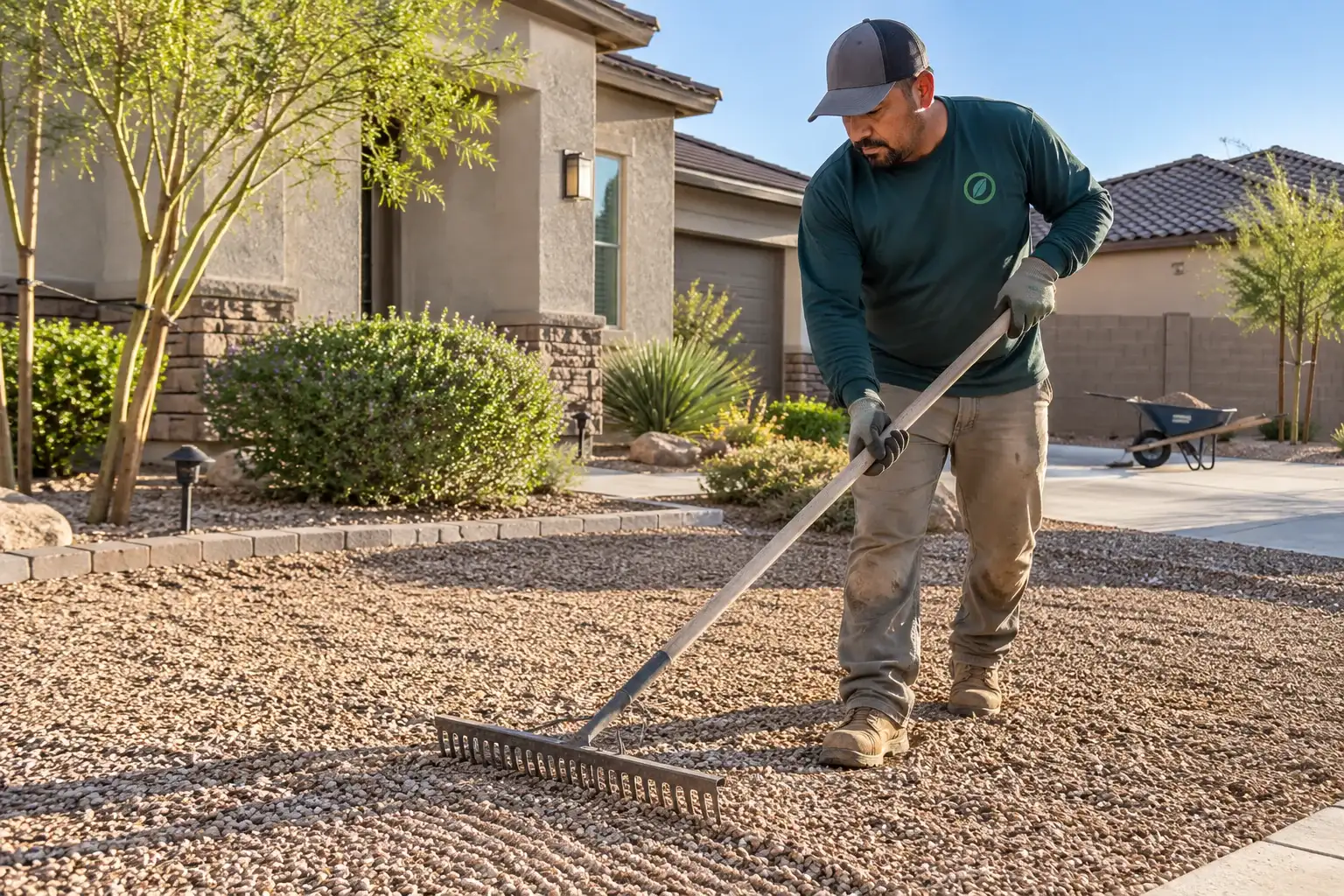
Sprinklers fail when the lawn goes away, which is the standard Chandler story. The heads were sized for turf, the yard converts to desert plants, and the heads stay. Now the plants get lawn water, gallons per minute where they need gallons per hour, and the failure is the classic one: one side drowns, the other starves, and the homeowner gets blamed for not watering when the real problem is a system that never changed jobs.
The rest is physics. July heat evaporates a share of every spray before it lands. Hard water scale clogs the heads and tilts the pattern. Spray against a hot west wall steams off, and the runoff from overspray feeds the weeds in the rock instead of the roots in the beds. A sprinkler system is not broken in that state. It is just the wrong tool, left on the job. Wind is the other thief. Summer storms and monsoon outflows move the spray off target, and a head that covers the lawn in calm air waters the sidewalk in a blow. The result is the same half-drowned, half-starved pattern, just with a different excuse.
Costs
What it costs and what drives the number
A sprinkler system runs by the zone, and a drip conversion runs by the line and the plant count, so the numbers only make sense per yard. What drives both: how deep the caliche runs and how much trenching it takes to lay lines, how many zones the timer already has, and whether the water at the street is potable or reclaimed. A full conversion costs less than re-sodding a dead yard twice, and the water math runs every month after. The rest of the line items sit in what landscaping costs in Chandler. A conversion quote should itemize the zones, because the savings are per zone. Reclaimed water zones, where Chandler pipes it, run cheaper on the monthly bill, and the salt load they carry makes the filter and the emitter choice matter more, not less. The system that looks cheapest at install is often the one that plugs first.
Good to know
What good work looks like in Chandler
- Auditing what is planted against what is actually watered, because the drowned side and the starved side are usually the same zone.
- Filtering and pressure-regulate drip from day one, so hard water and reclaimed water do not pick off the emitters one by one.
- Putting emitters per plant, not per zone, so a shrub gets shrub water and a tree gets tree water.
- Flagging reclaimed water zones and monsoon timing, so the timer stops fighting the rain.
6 questions
Drip Irrigation vs Sprinklers: your questions
Still have a question? Call (747) 243-2089 and describe the yard.
Is drip enough for a lawn in Chandler?
No. Grass drinks across a whole surface, and drip cannot cover it evenly. Lawns need sprinklers, and beds need drip, and the two should not share zones.
Do drip emitters clog in Chandler hard water?
Yes, that is the main failure mode here, and reclaimed water makes it worse. A filter and regular checks catch the clog before the plant on the end of the line pays for it.
Should I convert my lawn zone to drip after removing the lawn?
Yes, and that conversion is the moment most yards go wrong. Left as sprinklers, the zone drowns the plants that replaced the lawn. Converted to drip without a filter, the emitters plug.
Does drip really save water?
It saves what sprinklers waste: evaporation, wind drift, and overspray onto rock and walls. The savings are real, and they are largest in July, which is when the water budget hurts most.
Can drip lines run through caliche?
The lines can, but the water cannot soak through the caliche below them. Shallow lines over an unopened caliche layer pool at the surface, and the roots stay shallow.
Which is better for trees?
Drip, with enough emitters around the root zone and a slow deep soak. Sprinkler arcs aimed at a trunk waste water and rot the bark where it never dries.
Contact