Guide 06 · 4 min read
Pavers vs Stamped Concrete in Chandler, AZ
Stamped concrete is one slab with a stone pattern pressed into the top. Pavers are separate pieces with sand joints between them. In Chandler the stamped slab can crack with the ground and fade in the sun, while pavers flex and keep their color.
All yard guidesGood to know
The short answer
Stamped concrete buys the look of stone at something close to a concrete price, on one continuous surface. Pavers buy real joints that move with the soil and never need resealing. The catch: the stamp lives only in the top layer, and the sealer that protects it dies young in Chandler sun. The right choice depends on the soil, the sun exposure, and how you feel about a reseal cycle.
Good to know
Stamped concrete: what it actually is
Stamped concrete is a normal concrete slab, poured and finished, then pressed with rubber mats while the surface is still soft. The mats leave a stone or brick pattern, and the color comes either from pigment mixed through the pour or from a color hardener worked into the top. Once it cures, the whole thing is sealed.
The important part is where the color and the texture live. They live in the top eighth of an inch. Underneath is plain gray concrete, one monolithic slab that cracks the same way all concrete cracks. The pattern and the color do not survive the crack, and they do not survive the sun without regular resealing. The stamps themselves come from rubber mats pressed into the slab while it is still workable, and the pattern depth is shallow. That is why the look fades the way it does: the texture is a skin, and Chandler sun and foot traffic wear a skin down.
Hardscape
Pavers: what they actually are
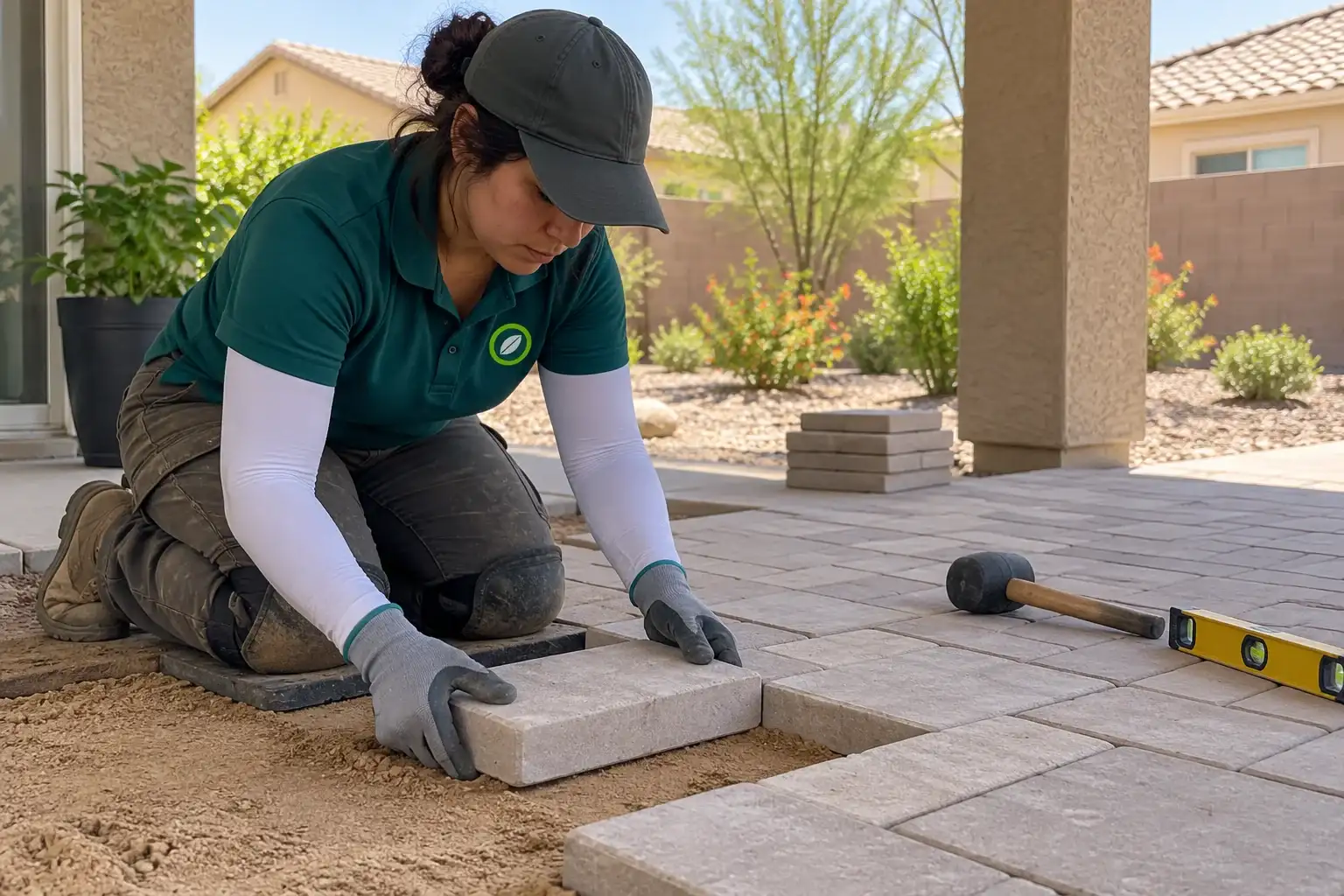
Pavers are manufactured units, usually concrete, with color carried through the full thickness of each piece. They sit one by one on a compacted base with sand joints between them. The joints absorb ground movement, so the units flex instead of cracking, and the color does not sit on a surface that can wear away.
A paver patio is a system: compacted base, screeded sand, edge restraint. Done right, a damaged unit gets lifted and swapped. Done wrong, the joints wash in monsoon rain and the edges walk outward. The material is forgiving, the details are not.
Mistakes
Where stamped concrete fails here
Stamped concrete fails on two Chandler conditions: sun and soil. Heat and UV age sealers and color faster here than the manufacturer's national average assumes. The sealer chalks and hazes, the color lightens, and the crisp stone look turns milky within a few seasons unless it gets resealed on schedule, which is a recurring cost, not a one-time one.
Then the ground moves. Expansive clay in the East Valley swells and shrinks through the monsoon cycle, and the slab cracks. On plain concrete a hairline crack is easy to live with. On stamped concrete the crack runs straight through the fake stone pattern and reads like a scar, because the pattern promises cut stone and the slab underneath admits it is not. Caliche under Chandler's newer subdivisions makes the subgrade question sharper: a slab poured over a base that was never prepped for caliche cracks sooner, and in a master-planned community a cracked stamped patio is visible hardscape. The monsoon lands on the sealer too. Ponded storm water on a stamped patio leaves mineral rings when it evaporates, and on Chandler's hard water the rings show up white against the color. The sealer that chalked in the sun looks worse with every storm, which is how a patio ages three years in one summer.
Hardscape
Where pavers fail here
Pavers fail on maintenance and heat in their own way. The sand joints wash out in monsoon downpours, and the sand that leaves has to be replaced or the units start rocking. Ants tunnel the bedding sand up through the joints. Weeds take root in the joints in March and come back all year. None of it is fatal, but all of it is upkeep a stamped slab never asks for.
Heat is shared. Pavers absorb sun all afternoon, and a dark paver patio in July is as hot underfoot as stamped concrete. Light units, shade, and some planted edge help. Pavers also cost more on day one than stamped concrete, which is the honest tradeoff: the savings on the stamp go back out on the paver units. Pavers also want the subgrade right, and Chandler's expansive clay does not skip the paver bid. A base that was not built to move heaves at the joints, the surface waves, and the patio settles unevenly. The difference is the repair: the paver patio can be lifted, re-bedded, and put back. The stamped slab cannot.
Scope
What it costs and what drives the number Then there is the line item nobody quotes: resealing stamped concrete every few years in Chandler sun, which pavers never need. Compare the base-prep reality on both in [what landscaping costs in Chandler](/blog/landscaping-cost-chandler/), and see the plain-slab version in [pavers vs a concrete patio](/pavers-vs-concrete-patio/). On Chandler lots the excavation line decides the total more than the material choice. Caliche under the newer subdivisions turns a shallow dig into a jackhammer day, and both surfaces need the same hole. The honest bid separates the dig from the finish, so you can see what you are actually paying for. Resealing deserves its own column in that comparison. In Chandler sun the stamped surface needs it on a schedule, and the schedule costs real money every cycle. Pavers have no reseal line, which is how the cheaper day-one surface catches up over time.
Good to know
What good work looks like in Chandler
- Checking the soil and caliche before the quote, because the subgrade decides when a stamped slab cracks.
- Flagging the sun exposure, so a west-facing stamped patio gets a realistic reseal schedule, not a surprise.
- Specifying edge restraint and sand joints on paver work, so the monsoon washes nothing out.
- Confirming the HOA hardscape rules before anything is ordered, since patio work is visible work.
6 questions
Pavers vs Stamped Concrete: your questions
Still have a question? Call (747) 243-2089 and describe the yard.
Does stamped concrete crack in Chandler?
It can, the same as any concrete, because expansive clay moves through the monsoon cycle. The difference is that on a stamped surface the crack cuts straight across the pattern and shows.
How often does stamped concrete need resealing?
More often in Chandler than in milder climates, because heat and UV break the sealer down faster. The schedule depends on the exposure, and a west-facing patio is the worst case.
Do pavers fade in the sun?
Less than stamped concrete, because the color runs through the whole unit instead of sitting in a surface layer. Dark units still heat up, but the color itself is not a coating.
Which is cooler to walk on?
Both get hot in July. Lighter colors on either surface help more than the choice of material, and shade does more than either.
Can stamped concrete be repaired if it cracks?
Not invisibly. The crack can be filled, but the pattern and color around it never match, and the repair reads as a repair.
Do I need HOA approval in Chandler?
In many master-planned communities, yes. Patios and hardscape changes are part of the design review, and the approval is supposed to come before the work starts.
Contact