Guide 02 · 4 min read
Artificial Turf vs Sod in Chandler, AZ
Sod is real grass rolled out in strips, cheap to put down and thirsty forever. Artificial turf is plastic carpet, expensive up front and thirsty for nothing. In Chandler the choice turns on your HOA and your water plan.
All yard guidesGood to know
The short answer
Sod gives you a real lawn today. Turf gives you a no-water yard for years at a higher first cost. The trap in either one is the same: skip the base prep or skip the HOA approval and the yard fails in the first summer. The right pick depends on the soil, the drainage, and what your community's plant list permits.
Good to know
Sod: what it actually is
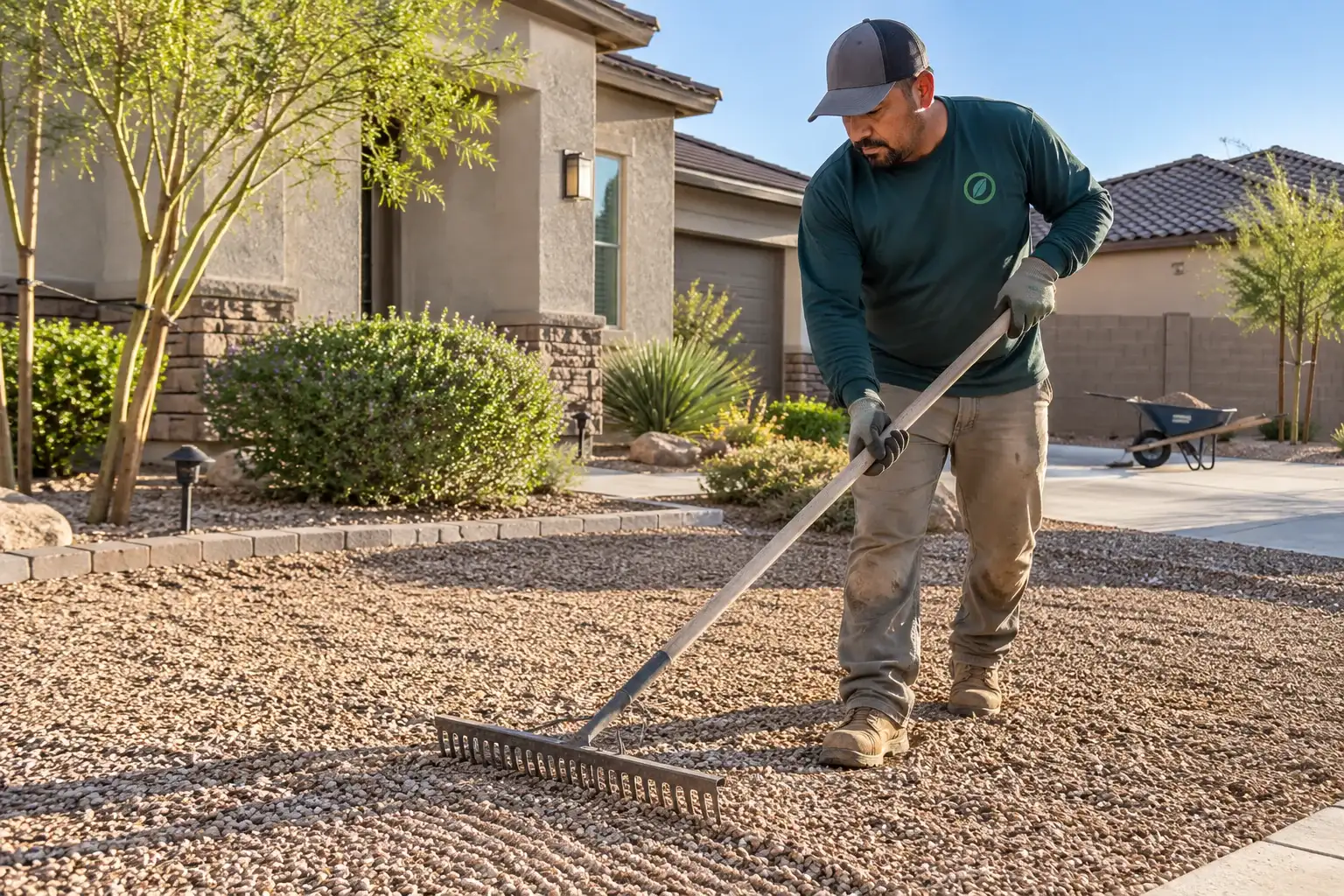
Sod is mature grass with live roots and a thin layer of soil, cut in strips at a farm and rolled onto your prepared ground. It has to root into your soil within days or it dies, so the first two weeks mean watering twice a day in summer heat. The strips knit together at the joints, and within a month you have a real lawn.
What you are buying is time. The grass is already grown, which is why sod works when the HOA wants groundcover in place quickly or when bare dirt cannot sit for six weeks. It is also why sod can fail: roots that never grabbed, joints that dry out, and a lawn that looks great for a month and then thins. A sod lawn in Chandler is usually bermuda, a warm-season grass that handles the summer but goes brown through January unless you overseed. What you are buying is the farm's growing season, and the farm grew it somewhere with easier water than your lot gets in July.
Turf
Artificial turf: what it actually is
Artificial turf is plastic blades sewn into a backing, laid over an excavated and compacted base with infill brushed on top. It has no roots and no soil biology, and it never needs water or a mower. It also never cools itself, the way living grass does through evaporation.
Everything depends on what is underneath. The base has to drain, and on Chandler caliche that means real excavation before the base goes in. Turf over unexcavated caliche is the install that becomes a hot plate and a weed farm through the seams.
Mistakes
Where sod fails here
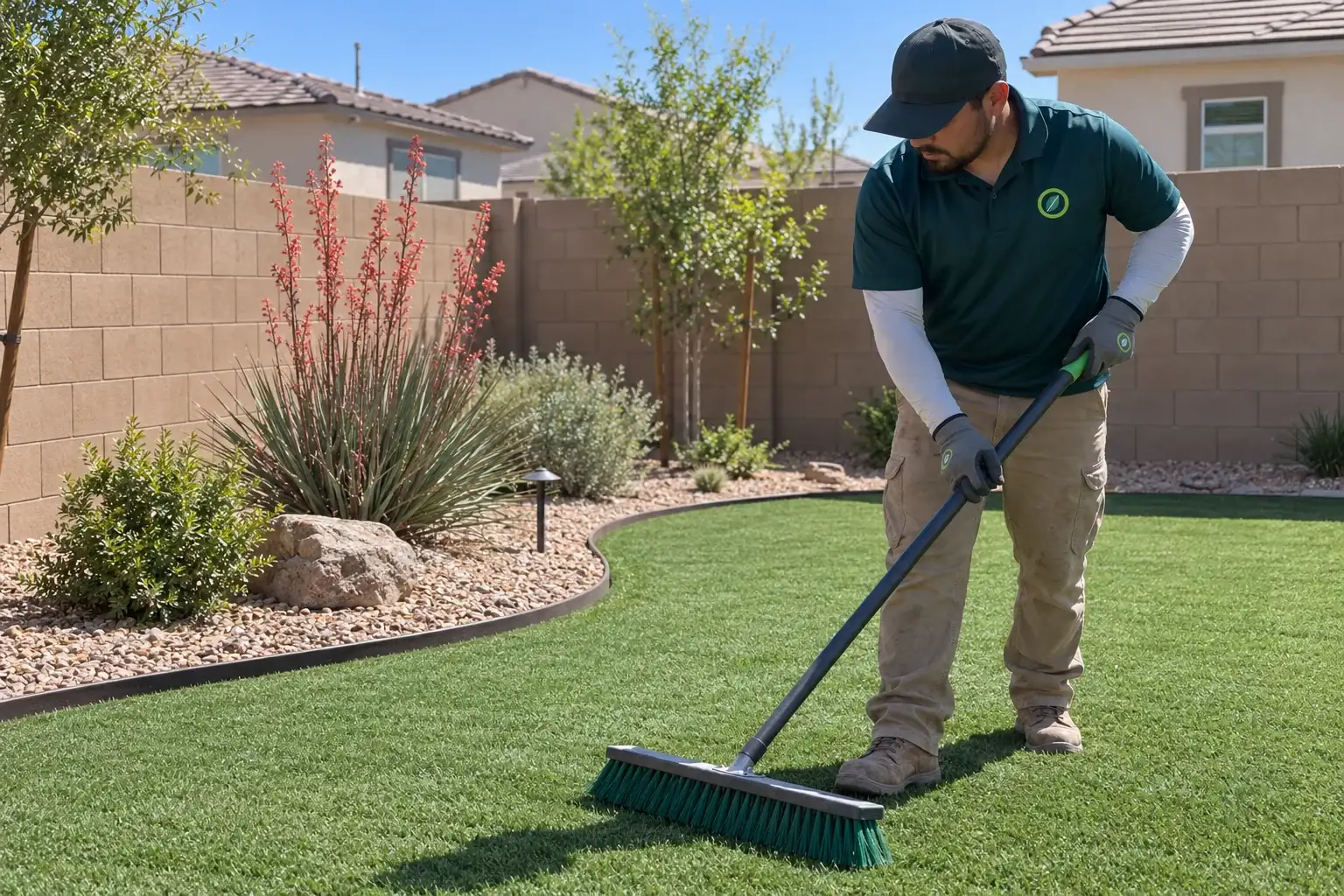
Sod fails on establishment water in a Chandler summer. A strip laid at 5 p.m. in July can cook by noon the next day if it is not kept wet, and the water bill for the first month is a shock nobody quotes up front. Parts of the city irrigate with reclaimed water, which runs saltier than drinking water, and new roots feel the salts before they grow deep. The monsoon adds its own failure. A July storm drops a month of rain in an hour, the new sod floats, and the joints between strips become the weak lines where it all lets go. By August the lawn that looked perfect in June has thin strips and dead joints, and the fix is more sod.
Caliche under the newer subdivisions makes it worse. If the topsoil was not prepped and the caliche not opened up, roots sit in a thin layer that dries out in a day and never reaches moisture. The sod thins, patches, and dies in year two. HOA neighborhoods push sod as the fast compliant groundcover, but fast groundcover on bad prep is just an expensive do-over. If you are choosing between artificial turf and real grass the prep question is the same.
Turf
Where artificial turf fails here
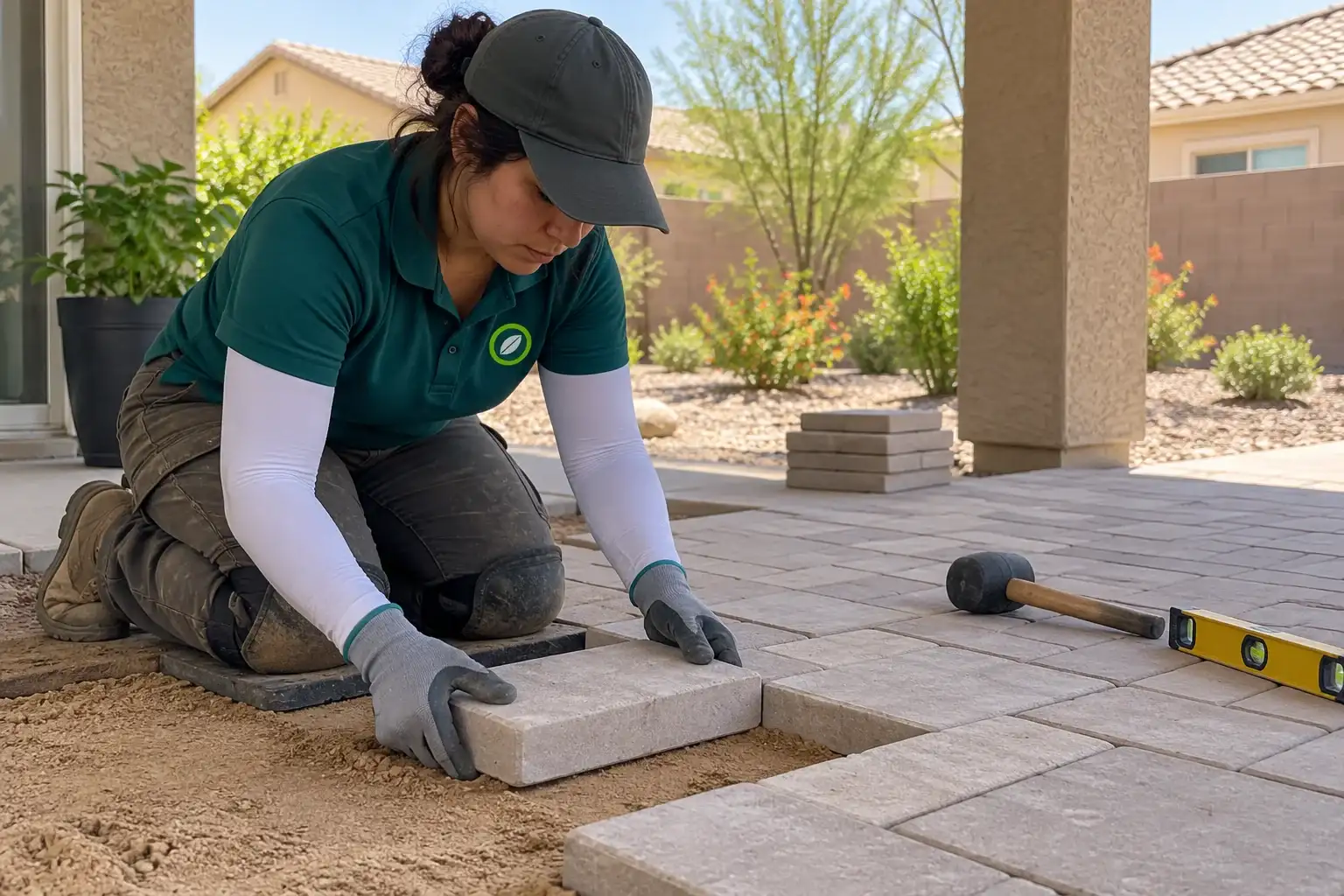
Turf fails on heat and drainage in Chandler. The plastic fibers and the infill absorb sun all afternoon, and with no evaporation the surface runs far above air temperature in July. Over unexcavated caliche, monsoon rain ponds under the carpet because the water cannot soak through the base, and the yard becomes a hot plate with a wet underside.
Weeds come up through the seams when the base and the barrier were skipped. Heat and UV age the backing faster than in milder climates, so a cheap turf fades and flattens within a few seasons. And in Chandler's master-planned communities the front yard is not yours alone to decide: many HOAs keep turf limits and plant lists, and artificial turf in a front yard is exactly the kind of change that needs approval before the work, not after. The irrigation question follows both choices around the yard. Turf needs none of its own, but the beds and the trees around it still do, and a system built for the old lawn will drown them with lawn water. That is the hidden second cost of every turf install in Chandler: the water plan has to change when the surface does.
Scope
What it costs and what drives the number Sod looks cheap on day one and bills you monthly for water and mowing. Turf stings on day one and then goes quiet. Neither price includes the cost of fixing a base that was never prepped. Sod's real price is front-loaded too, just differently. The material is cheap, the establishment water is not, and a summer install burns through it. Turf's price hides in the base. Ask for the base depth and whether caliche showed up in the dig, because that line item is where two quotes stop being comparable. The line items sit in [what landscaping costs in Chandler](/blog/landscaping-cost-chandler/).
Good to know
What good work looks like in Chandler
- Checking the HOA plant list and turf rules first, so whichever surface goes in passes the design review once.
- Opening the caliche conversation before anyone quotes, because turf and sod both fail on a base that cannot drain.
- Planning the establishment water for sod and the drainage for turf, so neither one dies in its first monsoon.
- Flagging reclaimed water and hard water, because both eat heads, emitters, and young roots.
6 questions
Artificial Turf vs Sod: your questions
Still have a question? Call (747) 243-2089 and describe the yard.
Can sod survive if it is installed in July?
It can, but it needs water twice a day until the roots grab, and the first month's bill is the price of the shortcut. Spring and fall are kinder windows in zone 9b.
Does artificial turf save water in Chandler?
It saves irrigation water, yes. The plants around it still need water, and the turf itself still needs a base that drains, or the saved water just ponds underneath.
Will the HOA approve turf where sod is standard?
It depends on the community. Chandler's master-planned neighborhoods keep plant lists and turf limits, and the approval comes before the work. Guessing here is how a yard gets done twice.
Which fails first, sod or turf?
Sod fails first when the prep was skipped, usually in the first or second summer. A badly built turf base fails slower but costs more to redo, because the whole carpet comes up.
Can I put turf in the back and sod up front?
That split is common in Chandler, and it often fits the HOA rules, which care more about the front yard. The catch is the irrigation: one system has to serve both surfaces, or one of them dies.
Do I need new base prep if I am replacing sod with turf?
Almost always. The grass roots and thatch have to come out, and on Chandler caliche the base needs excavation and drainage work before turf goes down.
Contact