Guide 01 · 5 min read
Artificial Turf vs Real Grass in Chandler, AZ
Real grass is cooler and cheaper up front, but it drinks water all summer. Artificial turf needs none, yet over Chandler caliche with no drainage it becomes a hot plate. Choose by soil, drainage, and HOA.
All yard guidesGood to know
The short answer
If you will water, mow, and feed it, real grass stays cooler to the touch and costs less to put in. If the lot is small, the sun is direct, and you know you will not keep up with irrigation all summer, artificial turf wins on upkeep. Either one fails fast when the base or the water plan is wrong. The right choice depends on the soil under the yard, the drainage, and the plant list your HOA keeps.
Turf
Artificial turf: what it actually is
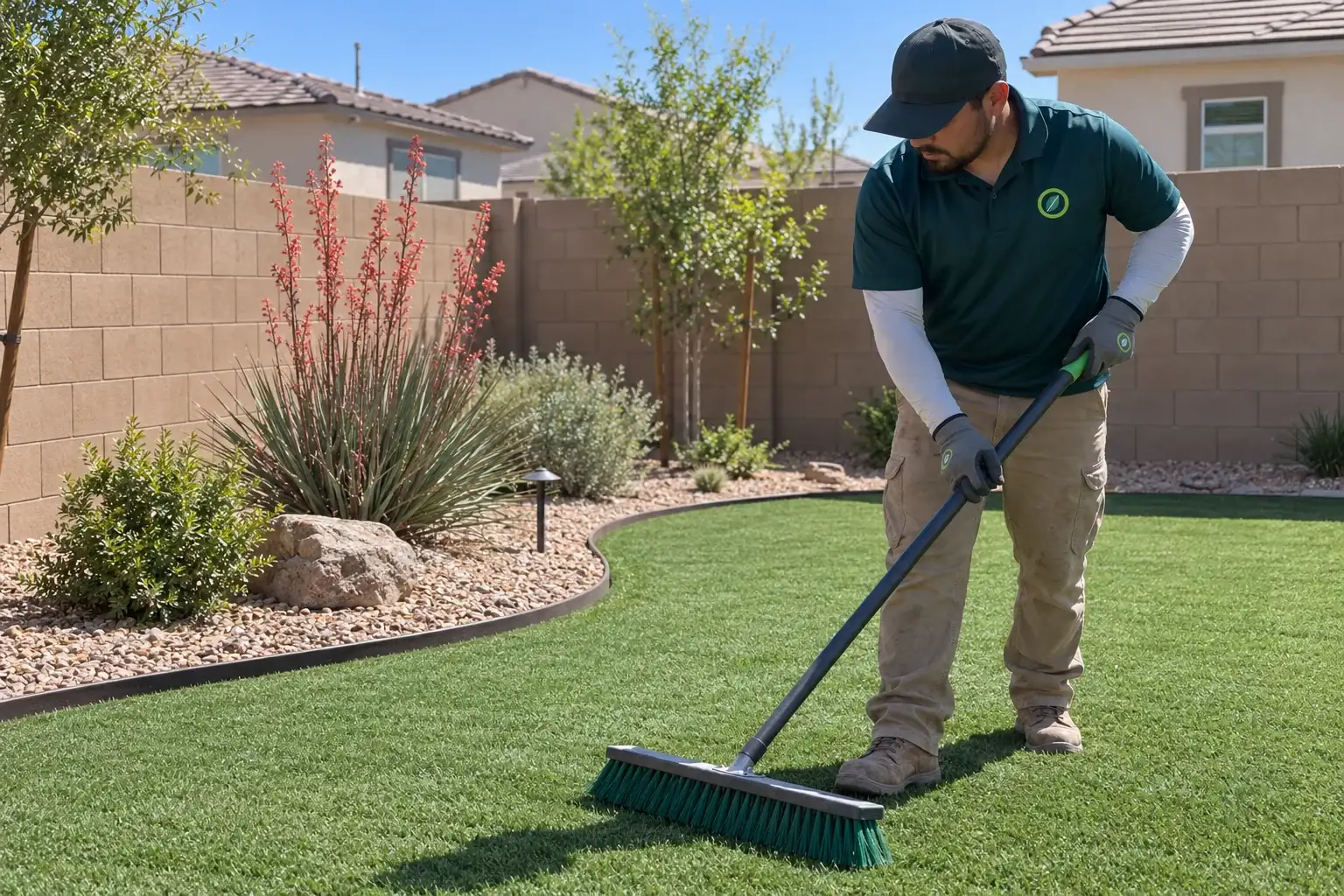
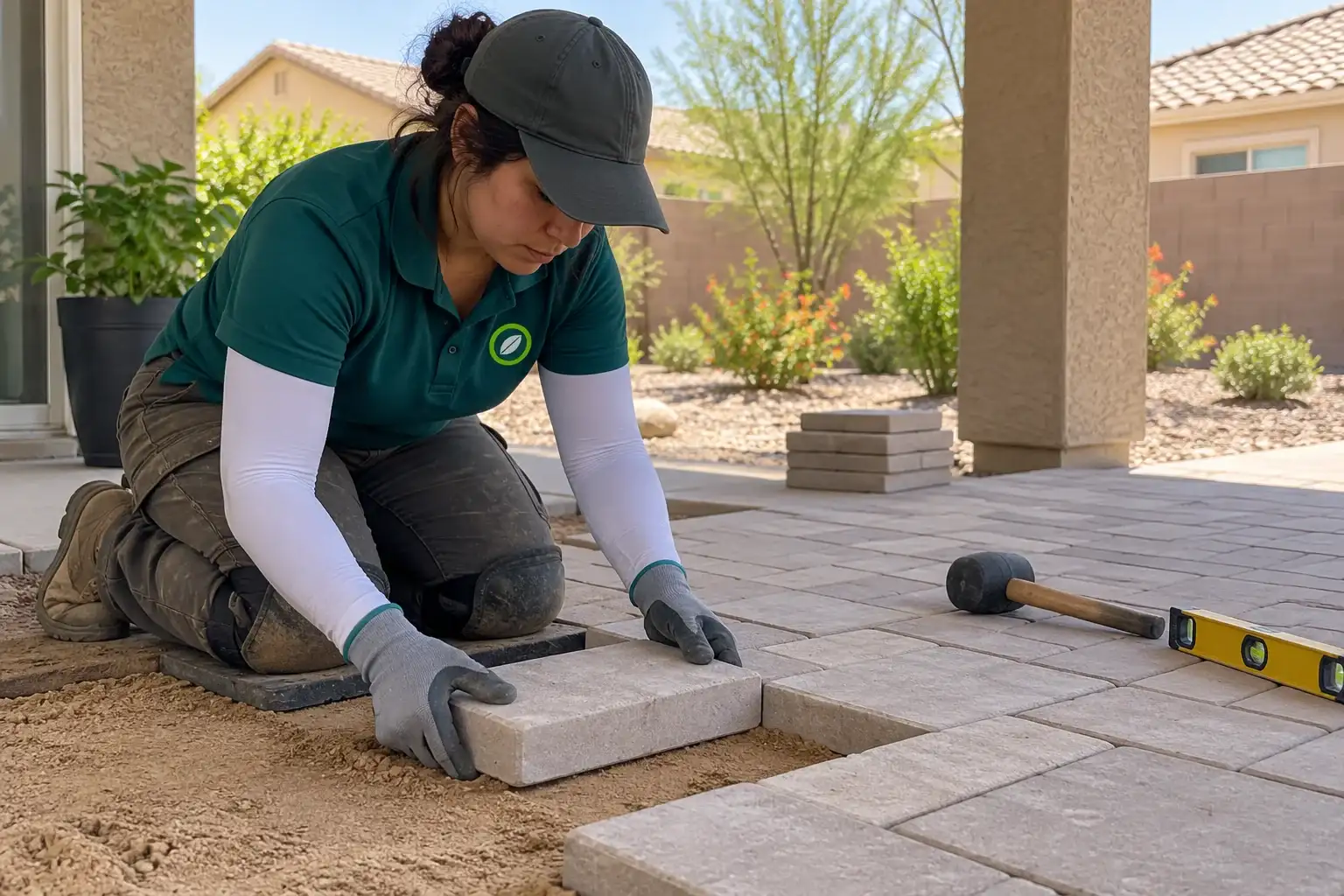
Artificial turf is a carpet of plastic blades sewn into a backing, laid over a built base. A proper install digs out the native soil, compacts road base or decomposed granite, and only then rolls the turf and brushes in infill. The infill, sand or rubber, is what holds the blades up. That layer is what your feet actually land on.
There is no soil biology under turf. No roots, no evaporation, no cooling. Water that lands on it has to drain through the backing or run off to a drain, and the base decides whether that happens. The turf itself never grows, never browns, and never feeds on anything. It is a permanent surface, not a plant. The seams are the other story nobody tells you at purchase time. Every turf lawn is strips, and the strips join at seams that heat and traffic work loose over time. Weeds come through the seams first, and in Chandler they come through fast, because the monsoon gives them exactly the water they were waiting for.
Turf
Real grass: what it actually is
Real grass is a crop. Roots in the soil pull water and nutrients, and the plant evaporates water through the blades, which cools the air right above the lawn. In zone 9b that means a warm-season grass like bermuda, which loves July heat and goes brown and dormant through a cold January unless you overseed with rye.
Grass needs the whole maintenance loop: mowing on a schedule, fertilizer, and irrigation tuned to the season. Miss the water in June and a green yard turns to straw in about ten days. That loop is the real cost of grass, not the grass itself. It is also the part nobody budgets for.
Turf
Where artificial turf fails here
Chandler's newer subdivisions sit on caliche, the cemented carbonate layer that stops water from soaking in. When a turf base gets compacted on top of unexcavated caliche, monsoon rain has nowhere to go. The turf becomes a hot plate: dark fibers and dark infill in direct sun run far above air temperature, and the water trapped underneath has no exit.
Heat and UV age the plastic fast here. Seams lift, blades flatten, and weeds push through the seams because the base was never dug deep enough. A cheap install skips exactly that step, which is why the same base logic decides artificial turf vs sod. And in a city of master-planned communities, the front yard often sits on an HOA plant list. Turf limits are common. Work done before the design review can get flagged, and then the yard gets redone on the owner's dime. July and August are when it shows. The monsoon brings the first ponding, the first weeds through the seams, and the first afternoon when nobody wants to stand on the yard. A turf that felt fine in March reads differently by Labor Day, and by then the install is paid for and the fix is another install.
Turf
Where real grass fails here
Real grass fails on water in Chandler. July demand peaks at the same moment the monsoon drops rain in bursts that run off instead of soaking in. Parts of the city irrigate with reclaimed water, which runs saltier than drinking water, and hard water scale plugs sprinkler heads. One clogged head and one side of the lawn browns out while the other side drowns.
Summer is the fight: the water bill, the mowing schedule that never quits, and the restrictions that tighten when demand peaks. Cool-season grasses from other climates check out by June. HOA turf limits and plant lists still apply, and an overseed is a fall expense nobody enjoys. If you are deciding how to establish the lawn in the first place, sod vs seed runs through the tradeoff. Zone 9b also hands you two growing seasons, which sounds like good news and is a trap. The grass pushes hard in spring and again in fall, so the mowing never stops, and the warm-season bermuda that survives July goes brown in January unless you overseed. A real lawn in Chandler is a year-round job wearing a summer face.
Scope
What it costs and what drives the number The number moves with base depth, infill choice, and whether the dig hits caliche and turns into a jackhammer job. Real grass costs a fraction of that to put in, seed or sod, but it keeps billing: water, fertilizer, mowing, and an overseed every fall. Turf front-loads the cost. Grass spreads it across every month you own the house. Water is the number nobody quotes. A full lawn on potable water through July is a monthly line item that swings with the rate schedule, and reclaimed water, where Chandler pipes it, is cheaper but saltier. The turf saves the water and pays it back in base work. Which one wins depends on how long you stay in the house. The full picture of both sits in [what landscaping costs in Chandler](/blog/landscaping-cost-chandler/).
Good to know
What good work looks like in Chandler
- Checking the HOA plant list and turf rules before anything gets recommended, so the front yard passes the first time.
- Looking for caliche and planning drainage before anyone talks turf, because the base decides whether the yard cooks in July.
- Sizing irrigation for what is actually planted, not for a lawn that got ripped out.
- Flagging reclaimed water and hard water so heads get cleaned and plants get chosen that can take the salts.
6 questions
Artificial Turf vs Real Grass: your questions
Still have a question? Call (747) 243-2089 and describe the yard.
Is artificial turf too hot for Chandler summers?
It can be. Dark infill over a compacted caliche base is the worst case. Light infill, some shade, and a base that drains take most of the heat out of the equation.
Does the Chandler HOA allow artificial turf in the front yard?
It depends on the community. Many of Chandler's master-planned neighborhoods keep front yard plant lists and turf limits. Approval comes before the work, not after, so check first.
Does real grass die in a Chandler summer?
Warm-season grass like bermuda holds up if it gets watered on schedule. Cool-season grasses are gone by June. The grass usually fails on water, not on heat alone.
Which costs more over ten years?
Turf costs more up front. Grass costs more over time through water and upkeep. The gap depends on lot size and how hot your exposure runs.
Do weeds grow through artificial turf?
They grow through the seams when the base was not excavated and the weed barrier was skipped or torn. No infill fixes a base that was never built.
Does turf drain during the monsoon?
Only if the base is excavated, sloped, and clear of the caliche that blocks infiltration. Over compacted caliche it ponds, and the ponding is invisible under the carpet.
Contact