Guide 04 · 5 min read
Landscaping Rocks vs Mulch in Chandler, AZ
Mulch cools the soil, rots in a Chandler year, and needs topping off. Rock lasts forever and cooks the yard. Around Chandler's master-planned communities the HOA plant list often decides, and full rock coverage kills plants by year two.
All yard guidesGood to know
The short answer
Around plants, mulch, because it feeds the soil and keeps roots cooler. On big open areas where nothing grows, rock, as long as it is edged and compacted so it stays put. Full rock coverage around plants is the classic Chandler mistake, and the plants pay for it in the second summer. The right choice depends on the soil, the exposure, and what your community's front yard rules allow.
Good to know
Landscaping rocks: what they actually are
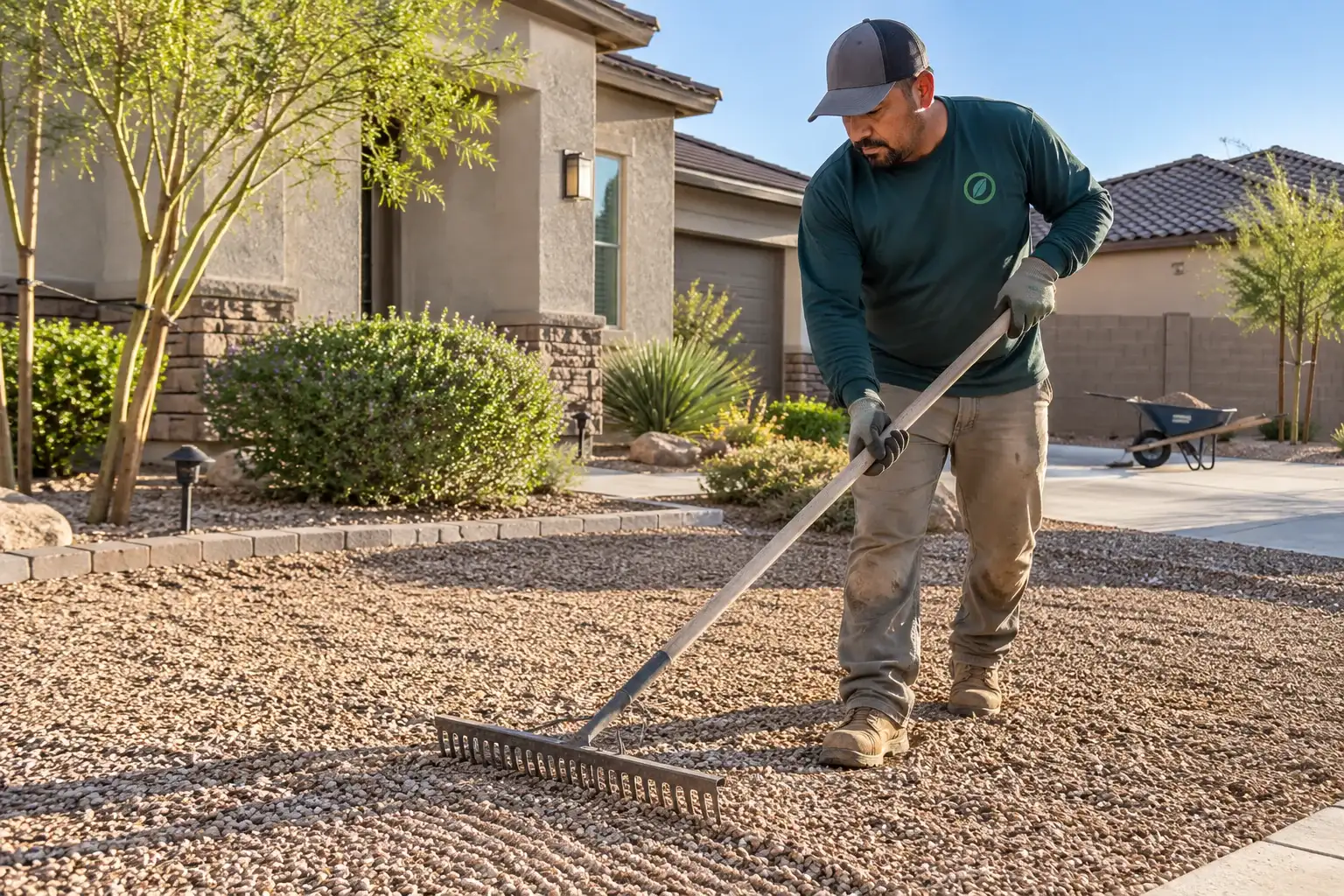
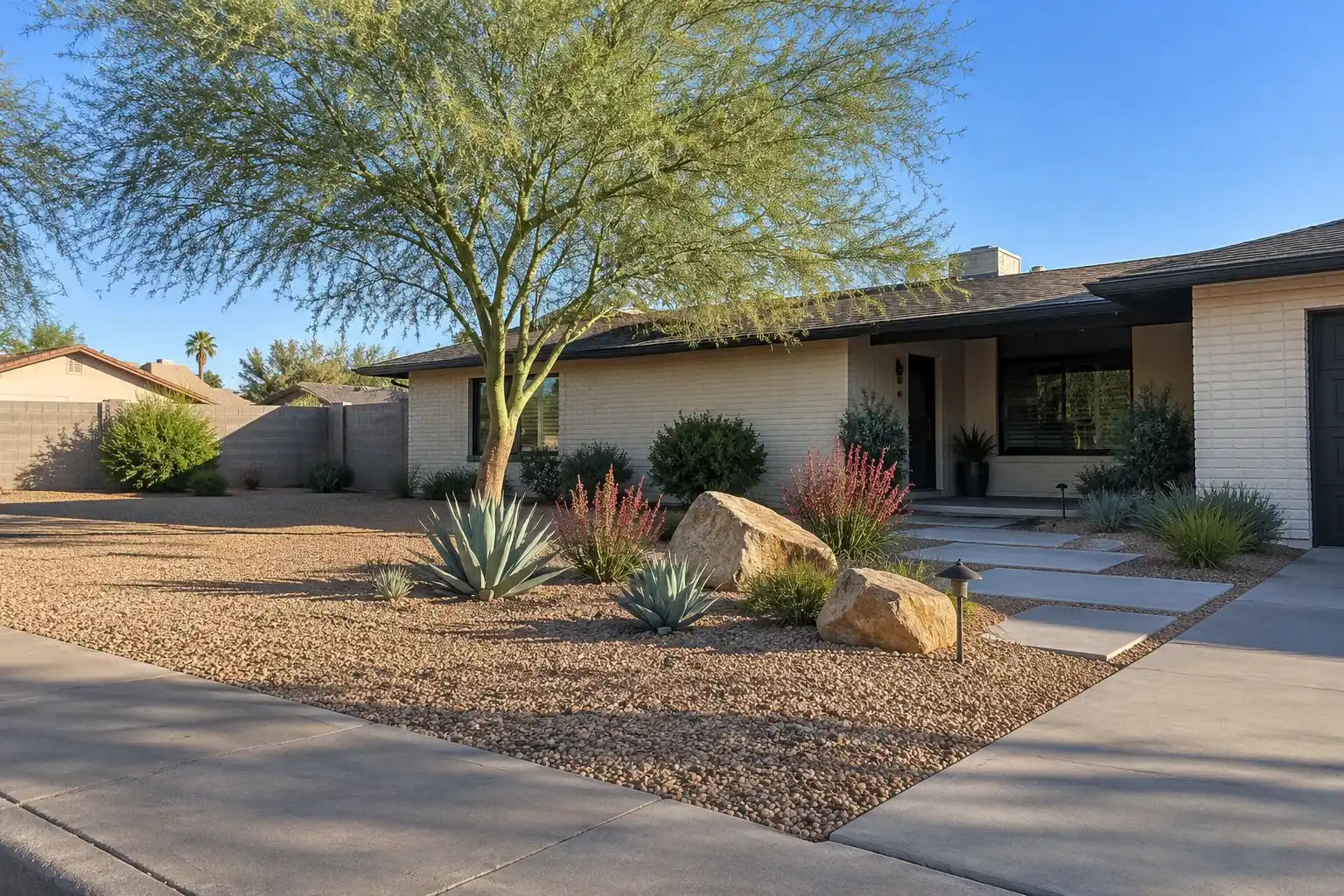
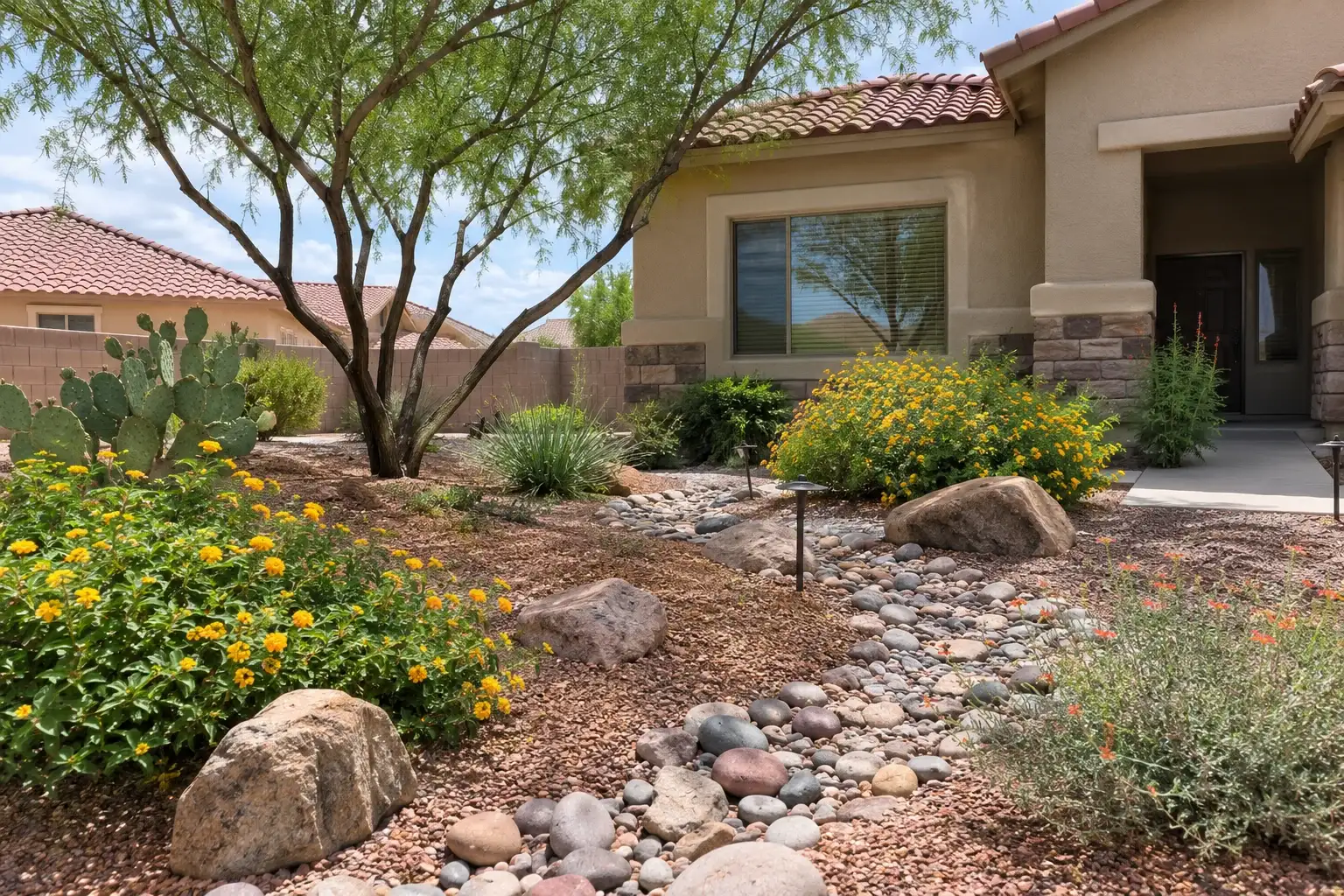
Landscaping rock is crushed or screened stone, granite, decomposed granite, or river rock, spread over landscape fabric or bare soil. It never breaks down, never feeds anything, and never needs replacing. That permanence is the whole sales pitch.
The physics is the catch. Rock absorbs sun all day and re-radiates heat into the soil and up against the plants after dark. It holds none of the moisture that organic material would, and it heats the root zone of anything planted in it. It also moves: without edging and compaction, granite and decomposed granite walk out of the beds into the pool, the driveway, and the neighbor's yard. Decomposed granite is the one that migrates worst. It is small and angular and it travels with every storm, into the pool, the driveway, and the neighbor's yard. Edging and compaction slow it down. Nothing stops it entirely, which is why pool yards usually want the bigger stone.
Good to know
Mulch: what it actually is
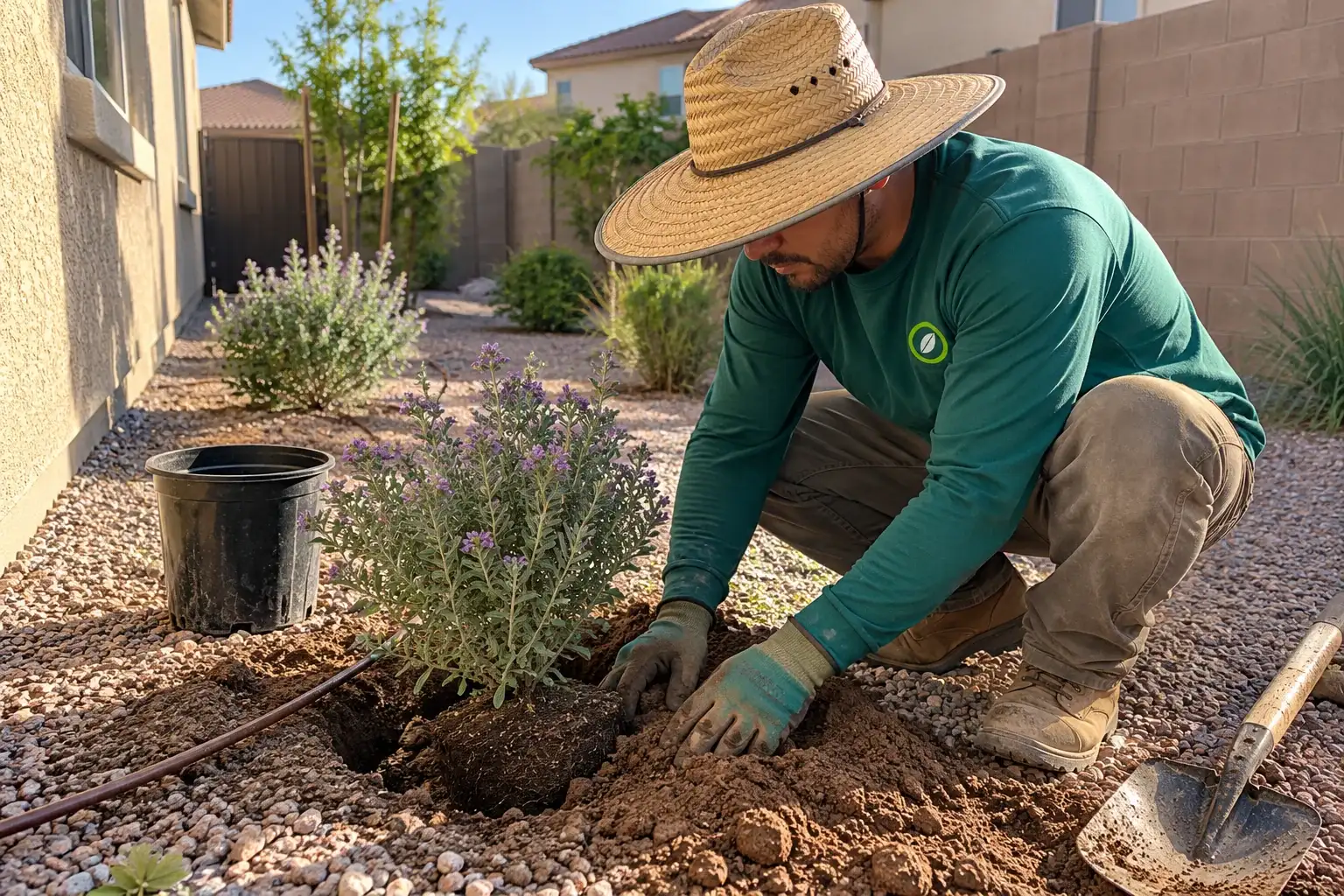
Mulch is shredded bark or wood spread in a layer over the soil. It shades the soil surface, holds moisture, and cools the root zone, and as it breaks down it feeds the soil. Around a drip line or a tree base, it is the closest thing a desert yard has to shade for the roots.
The tradeoff is that mulch is temporary. Chandler heat breaks it down in a season, so it needs topping off once or twice a year. Monsoon downpours float it, and a hard storm carries bark into the pool and the street. It is a recurring line item, not a one-time purchase.
Mistakes
Where rock fails here
Rock fails on heat in Chandler. Full rock coverage absorbs and re-radiates heat all night, and plants set into it never get a break: the reflected heat off the stone hits the foliage, the soil underneath bakes, and the plants that looked fine in year one die in the second summer. That failure mode is the reason the plant list matters more than the stone color.
Rock also fails on movement. Monsoon water runs along the surface and carries decomposed granite with it, and without edge restraint the rock migrates onto the patio, into the pool, and against the neighbor's wall. And in Chandler's HOA-governed master-planned communities, the front yard rock ratio is often regulated, sometimes mandated, sometimes capped. The approval comes before the work, not after, so a rock bed that violates the plant list is a redo. The heat has a second victim: the house. Rock against a west wall absorbs sun all afternoon and radiates it back at the stucco through the evening, and the AC inside works against it. The rock bed is not just hot to look at. It is a heat source parked next to the living room wall. The xeriscape vs gravel page runs through how a rock yard is not automatically a xeriscape.
Mistakes
Where mulch fails here
Mulch fails on the monsoon and the calendar. A July storm floats shredded bark out of the beds and into the pool, the street, and the storm drain, and the layer you put down in March is thin dust by October because the heat breaks it down that fast. That means topping off twice a year, which is the recurring cost nobody mentions when mulch is quoted as the cheap option.
Mulch also fails where it is piled wrong. A volcano of mulch against a trunk rots the bark and hides the root flare, which is how a tree planted too deep finishes itself off in year three. And in a front yard facing a west wall, thin mulch over bare soil dries out in a day, so the water savings mulch is supposed to deliver never arrive unless the layer is deep and shaded. Then the monsoon moves it. Shredded bark floats, and a strong July storm pushes the front bed's mulch into the street and the neighbor's yard, which is a cleanup job and a topping-off job in the same week. Mulch in Chandler is cheap to buy and relentless to keep.
Costs
What it costs and what drives the number
Rock runs from a few cents up to about a dollar per square foot installed, with the type, the depth, and the edging moving it. Mulch is cheap by the bag or by the yard but recurring: in Chandler heat it goes down twice a year, every year, which closes the gap with rock faster than the per-square-foot numbers suggest. Fabric, edging, and delivery sit in what landscaping costs in Chandler, and the plants themselves are the expensive part if the rock cooks them. The depth matters more than the material. A thin rock layer shows dirt through it by month two, and a thin mulch layer is gone by month four, so both quotes should name the depth. Delivery, fabric, and edging move the total more than the per-bag or per-ton price.
Good to know
What good work looks like in Chandler
- Designing plant-first, then choose the groundcover, so nothing gets planted into full rock that will kill it by year two.
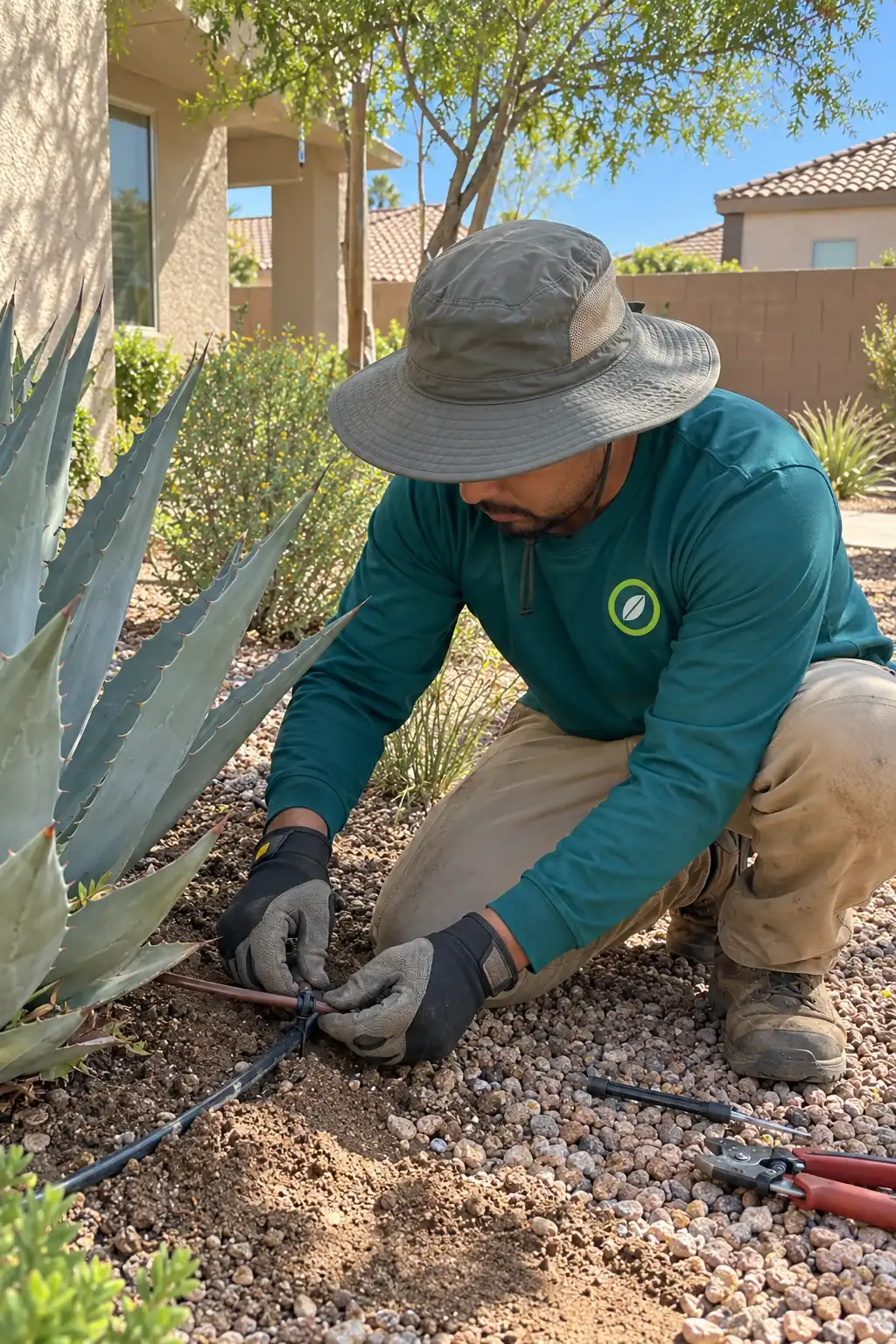
- Edging and compact granite and decomposed granite, so it stays in the bed through the monsoon instead of migrating.
- Matching the mulch depth to the exposure, because a west-facing bed dries out twice as fast as a shaded one.
- Checking the HOA plant list and rock rules before anything gets ordered, since front yards in Chandler are governed.
6 questions
Landscaping Rocks vs Mulch: your questions
Still have a question? Call (747) 243-2089 and describe the yard.
Which keeps the soil cooler, rock or mulch?
Mulch, clearly. It shades and insulates the soil and holds moisture. Rock absorbs heat and radiates it back into the soil and the plants all night.
Does the HOA in Chandler require rock in the front yard?
Some communities mandate or cap rock coverage through their plant lists, and others leave it open. It varies by subdivision, which is exactly why the plant list gets checked before the work.
Does mulch attract termites in Chandler?
Wood mulch can host them, mostly when it is piled wet against the house or a stump. Keeping it a few inches off the foundation and off the trunks takes most of the risk away.
Does rock last forever?
The rock does not break down, but the bed does not last without maintenance. Edges fail, fabric tears, weeds come through, and the rock migrates. Forever is the material, not the install.
Do I need landscape fabric under both?
Under rock, fabric suppresses weeds but also slows drainage on caliche, so the choice depends on the bed. Under mulch, fabric is optional since the mulch itself suppresses weeds while it is deep.
Which costs less over five years?
Rock usually, if the bed is done once with edging and the plants survive. Mulch costs less per application but bills twice a year, and dead plants in a hot rock bed erase any savings fast.
Contact