Guide 08 · 5 min read
Xeriscape vs Gravel in Chandler, AZ
Xeriscape is a water-saving design system built around desert plants and drip irrigation. Gravel is one material, a groundcover, and a gravel yard is not a xeriscape. In Chandler the difference decides whether your yard lives through its second summer.
All yard guidesGood to know
The short answer
If you want low water use and living plants, xeriscape, which is a whole design approach, not a look. If you want zero plants and a surface that never needs a drip line, gravel, and accept that the yard will cook. The confusion is the trap: a yard of gravel with two cactus in it gets sold as xeriscape and fails as both. The right choice depends on the soil, the exposure, and what your community's plant list allows.
Planting
Xeriscape: what it actually is
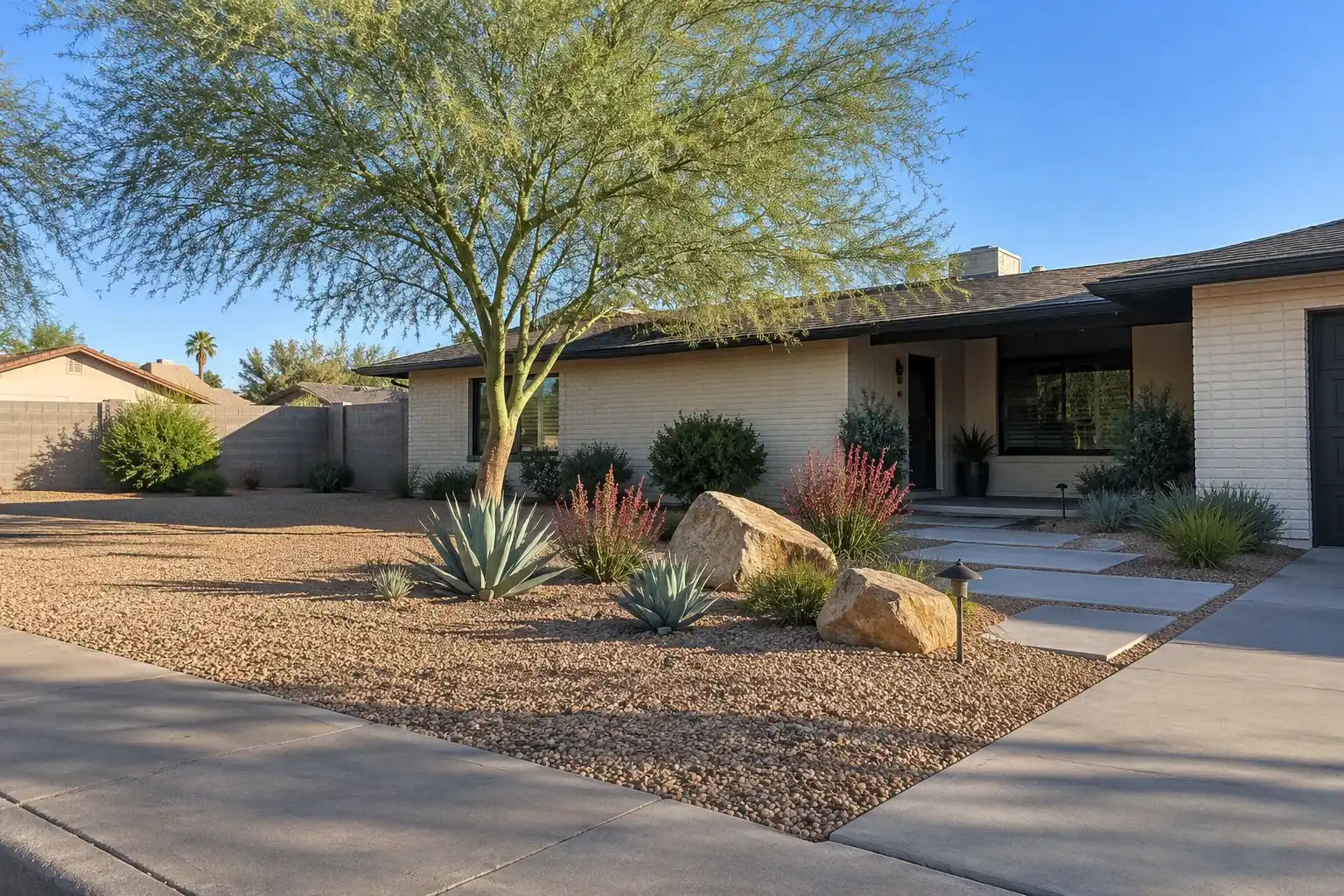
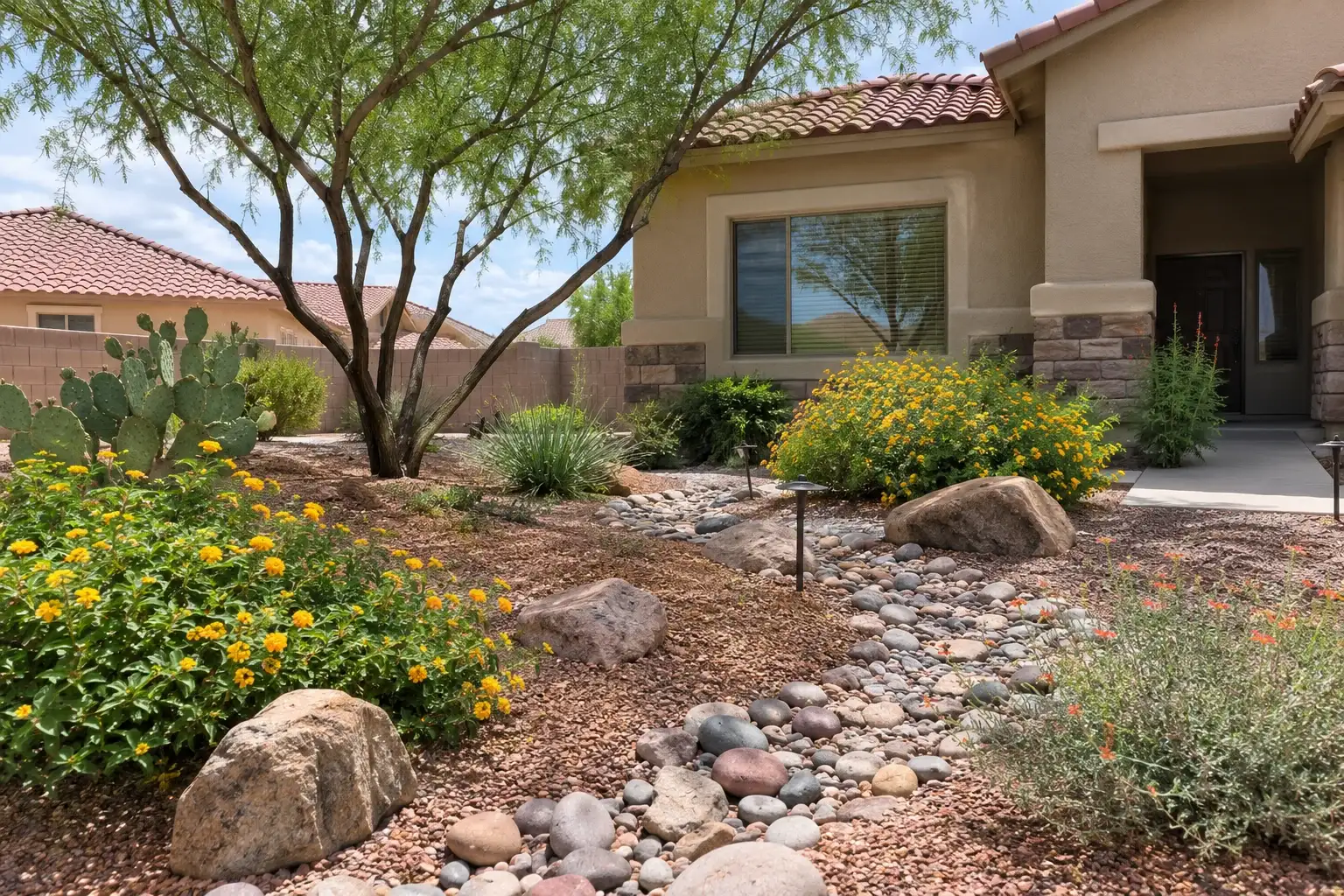
Xeriscape is a method, not a material. It means grouping plants by water need, using plants adapted to zone 9b heat and alkalinity, running drip irrigation instead of broadcast sprinklers, prepping the soil, and mulching the surface. Water use drops because the design stops watering empty space and plants that never belonged here.
The system is what matters, not the palette. A xeriscape in Chandler can be lush and green if the plants are the right ones. The word gets abused: gravel with a saguaro is not a xeriscape, because nothing about it manages water. A real xeriscape decides where the water goes and why. The name gets borrowed by the wrong projects, which is why the confusion exists. A yard with rock and a cactus is not a xeriscape. It is a rock yard with a cactus. The test is the water plan: if nobody can explain where the water goes and why, the design is not a xeriscape, whatever the sign says.
Good to know
Gravel: what it actually is
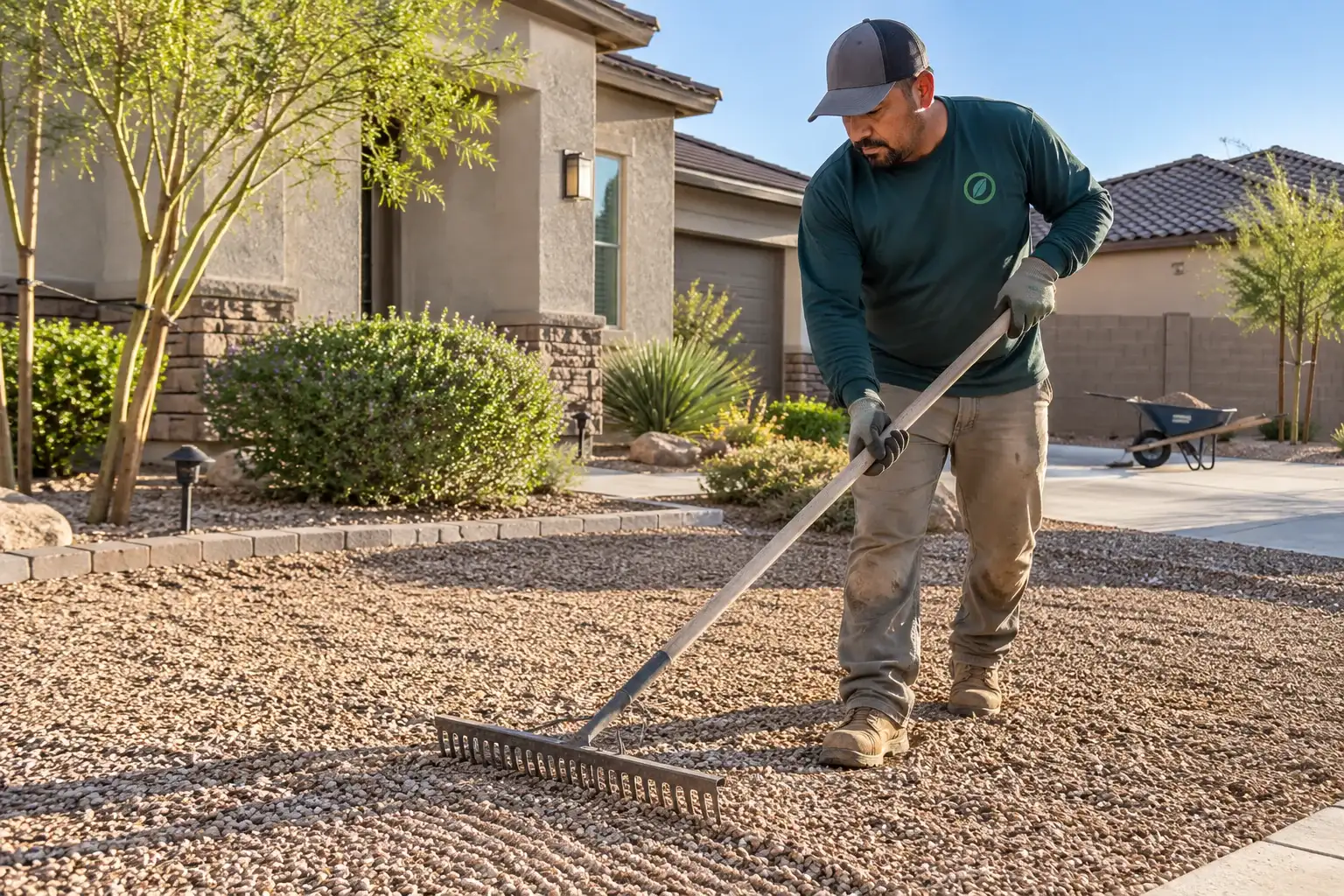
Gravel is crushed stone, one material, spread as a groundcover. It replaces the soil surface entirely. Nothing is planted in it by design, nothing grows in it except weeds through the fabric, and nothing about it saves water, because there is nothing left to water.
The physics is simple. Gravel absorbs sun all day and re-radiates heat into the air and against the walls after dark. It is a heat sink, and in a Chandler summer it makes the yard hotter, not cooler. It is also a maintenance surface: weeds come through, it migrates without edging, and monsoon water sheets across it faster than across soil.
Planting
Where xeriscape fails here
Xeriscape fails in Chandler when it is done halfway, and halfway is the common version. The yard gets rocks and a couple of cactus, the lawn sprinklers stay in place, and the plants get lawn water through heads sized for turf, which drowns one side and starves the other. The plants were never selected for alkalinity and reflected heat, so the ones against the west wall burn and the ones in the shade rot. That is the conversion that dies in year two.
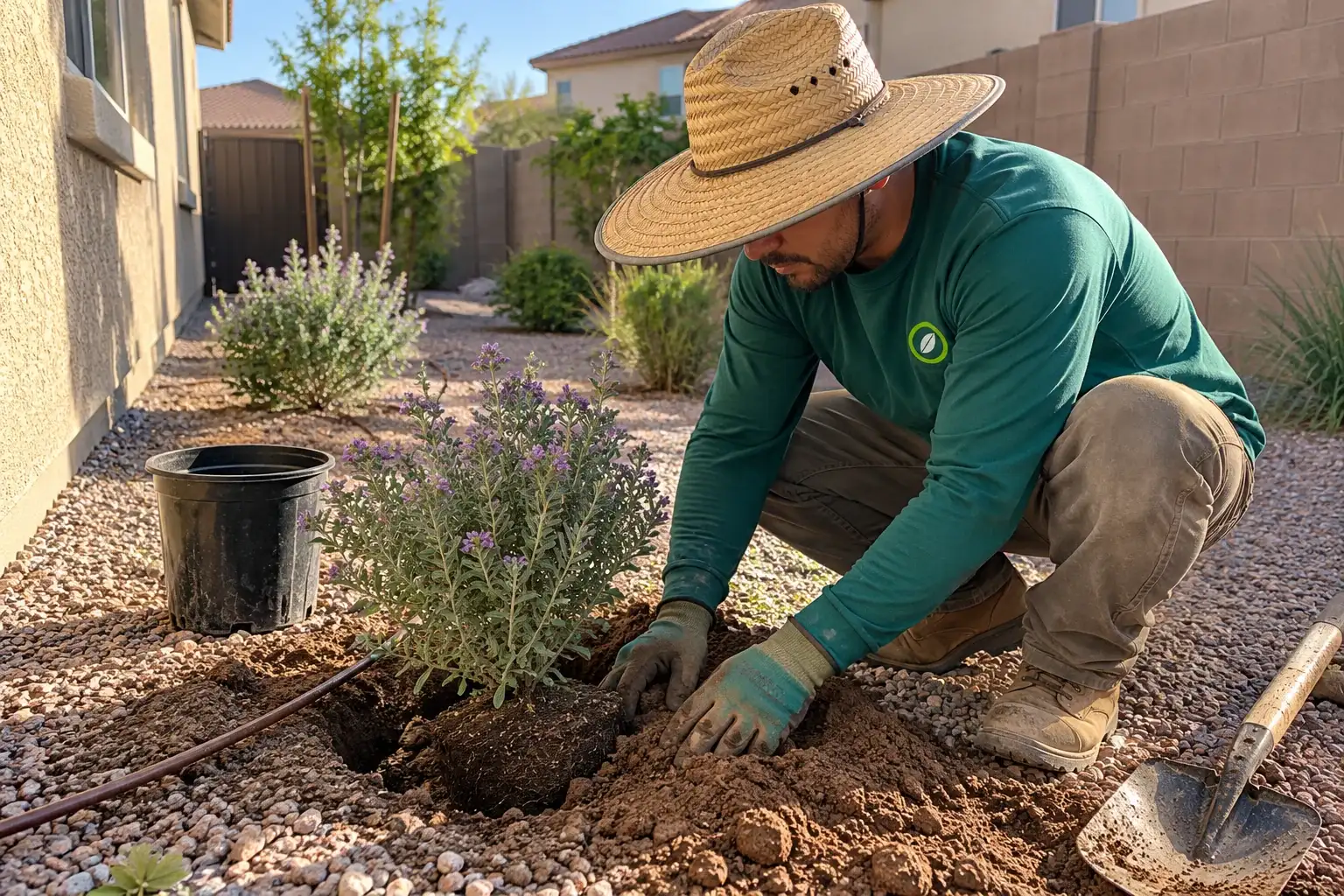
The HOA piece is real too. Chandler's newer master-planned communities keep detailed plant lists, and a xeriscape conversion has to match the approved palette or it gets flagged after the fact. Caliche under the newer subdivisions adds the last failure: planting holes drilled into caliche hold water like buckets, and plants drown in their own hole through the first monsoon unless the caliche is opened up below the root zone. The plant choice is where the conversion lives or dies. Zone 9b plants are adapted to heat and alkalinity, not to rich wet soil, and a palette picked from a catalog instead of the HOA list fails twice: once on the climate and once on the review. The plants that survive both are the ones on the list.
Mistakes
Where gravel fails here
Gravel fails on heat and movement in Chandler. Full rock coverage absorbs and re-radiates heat all night, and nothing planted in it survives the second summer, because the reflected heat off the stone never stops. The yard becomes hotter than bare soil would be, and the house wall next to it absorbs the extra load.
Then the monsoon arrives and the gravel moves. Water runs along the surface and carries the fines with it, and without edging and compaction the granite walks into the pool, the driveway, and the neighbor's yard. In HOA neighborhoods there is one more trap: some communities regulate rock coverage in front yards, so a gravel front yard can violate the plant list the same way the wrong plants do. The yard ends up redone twice, once for the heat and once for the rules. Gravel also creates its own weed problem. The fabric under the stone eventually tears, the fines trap dust and seeds, and by year three the gravel bed grows a green haze that has to be sprayed or pulled. It is not the zero-maintenance surface it gets sold as. Compare the groundcover math in landscaping rocks vs mulch.
Costs
What it costs and what drives the number
Gravel is cheap per square foot, which is why it wins every cheap bid. A planted xeriscape costs more up front because plants, drip lines, and soil prep are real line items, and plant size, one-gallon or five-gallon, moves the number more than anything. The honest math runs the other way over time: the gravel yard bills for weed control, edging, and re-rocking after every monsoon, while the xeriscape pays for water it no longer wastes. The plant sizes drive the xeriscape number. A yard planted in one-gallon starts costs a fraction of the same design in five-gallon and box sizes, and the difference shows up at year two, when the small starts have caught up anyway. Patience is a real line item in a xeriscape budget. The full breakdown sits in what landscaping costs in Chandler.
Good to know
What good work looks like in Chandler
- Designing plant-first, so the yard is a system with water zones, not rock with a cactus dropped in.
- Checking the HOA plant list before the first hole is dug, so the front yard passes review once.
- Opening the caliche below the root zone, so planting holes drain instead of filling like buckets.
- Putting drip on from day one, sized per plant, not per lawn zone.
6 questions
Xeriscape vs Gravel: your questions
Still have a question? Call (747) 243-2089 and describe the yard.
Is gravel cheaper than xeriscape?
Up front, yes, and that is the whole sales pitch. Over time the gravel yard bills for weeds, edging, and re-rocking, while the xeriscape mainly bills for water it no longer wastes.
Does xeriscape mean zero water?
No. It means much less water, aimed at roots through drip, with plants grouped by need. Zero water in zone 9b means dead plants, and a dead plant is not landscaping.
Will the Chandler HOA approve a xeriscape?
Most communities have an approved plant list, and a xeriscape built from that list usually passes. The failure case is the list never being checked, and the yard getting flagged after the money is spent.
Can plants survive in gravel?
Rarely through a second summer. Gravel radiates heat into the root zone all night, and the plants cook. A plant-first design with mulch around the roots is how plants live in this climate.
Which is cooler for the yard?
Neither is a cooling system, but a planted xeriscape shades and transpires, which cools the air a little. Gravel absorbs heat and re-radiates it, which makes the yard hotter.
Do I need drip irrigation for xeriscape?
Yes, that is the mechanism that makes it a xeriscape. Broadcast sprinklers sized for a lawn drown one side and starve the other once the lawn is gone. See drip irrigation vs sprinklers for the detail.
Contact