Help guide · 4 min read
Low Maintenance Desert Landscaping in Chandler, AZ
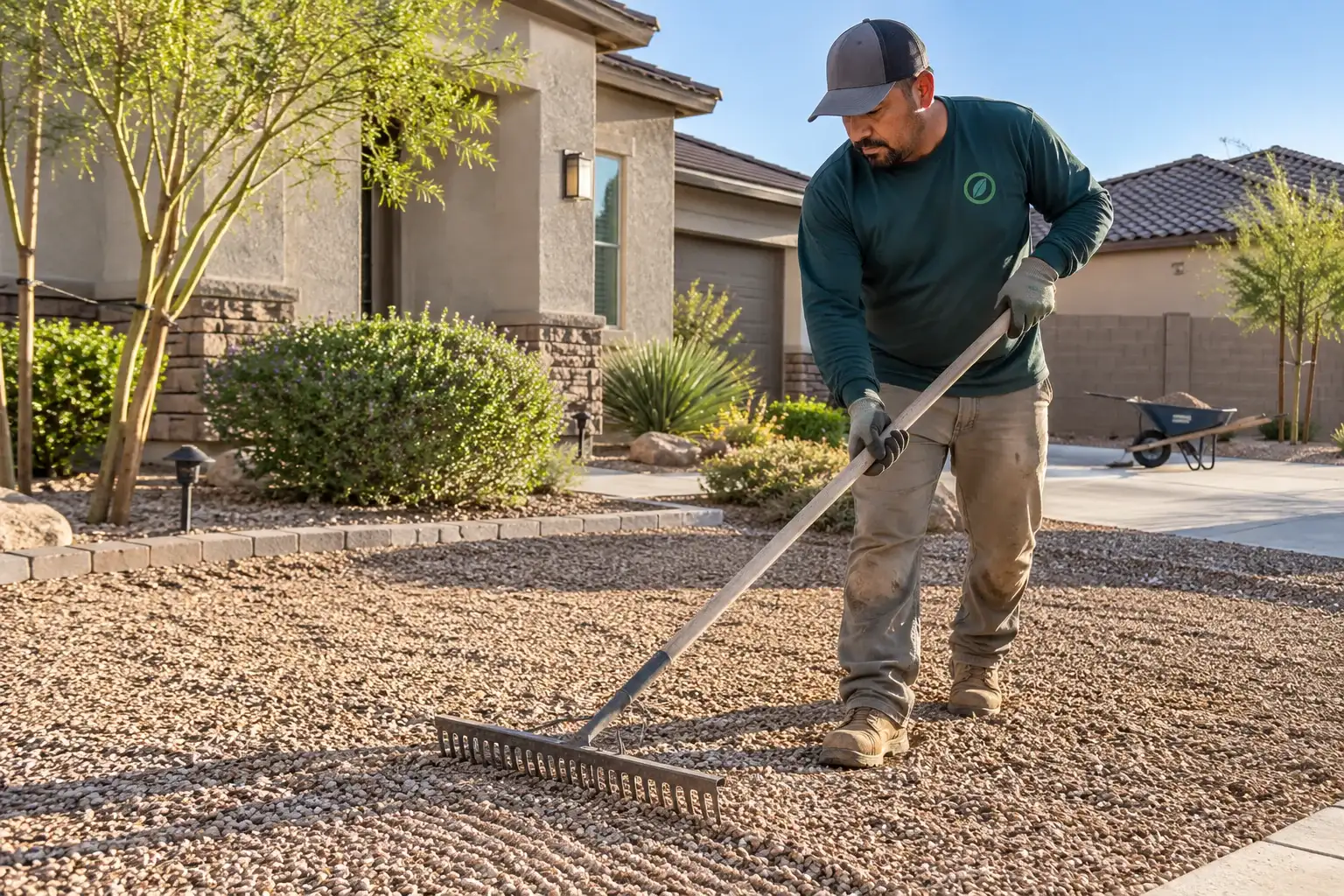
A low maintenance desert landscape is a yard built to do less of everything: less mowing, less pruning, less water, fewer hours of upkeep. In Chandler the recipe runs through 4 things a generic desert yard never has to deal with: the HOA plant list, the caliche under the topsoil, the city water schedule, and the grass to xeriscape rebate. Get those 4 right and the yard mostly takes care of itself. Here is how each one is handled, in the order the work actually happens.
All yard guidesRules
The HOA comes first
In Chandler the HOA is the first gate, not the last. The city has more than 112,000 housing units (City of Chandler housing (opens in a new tab)), and a large share sit inside subdivisions with an architectural review step, so the approved plant list and the maximum hardscape percentage decide what a front yard can even be before a single hole is dug. Boards usually want a drawing that shows where turf, plants and hardscape land, a plant list with mature sizes, the wall or fence height, and where water drains. Turf color and pile height can come up too. Submit before buying material, because a change after approval means resubmitting. See landscape design for how the plan is drawn.
Ground
Caliche under the lawn
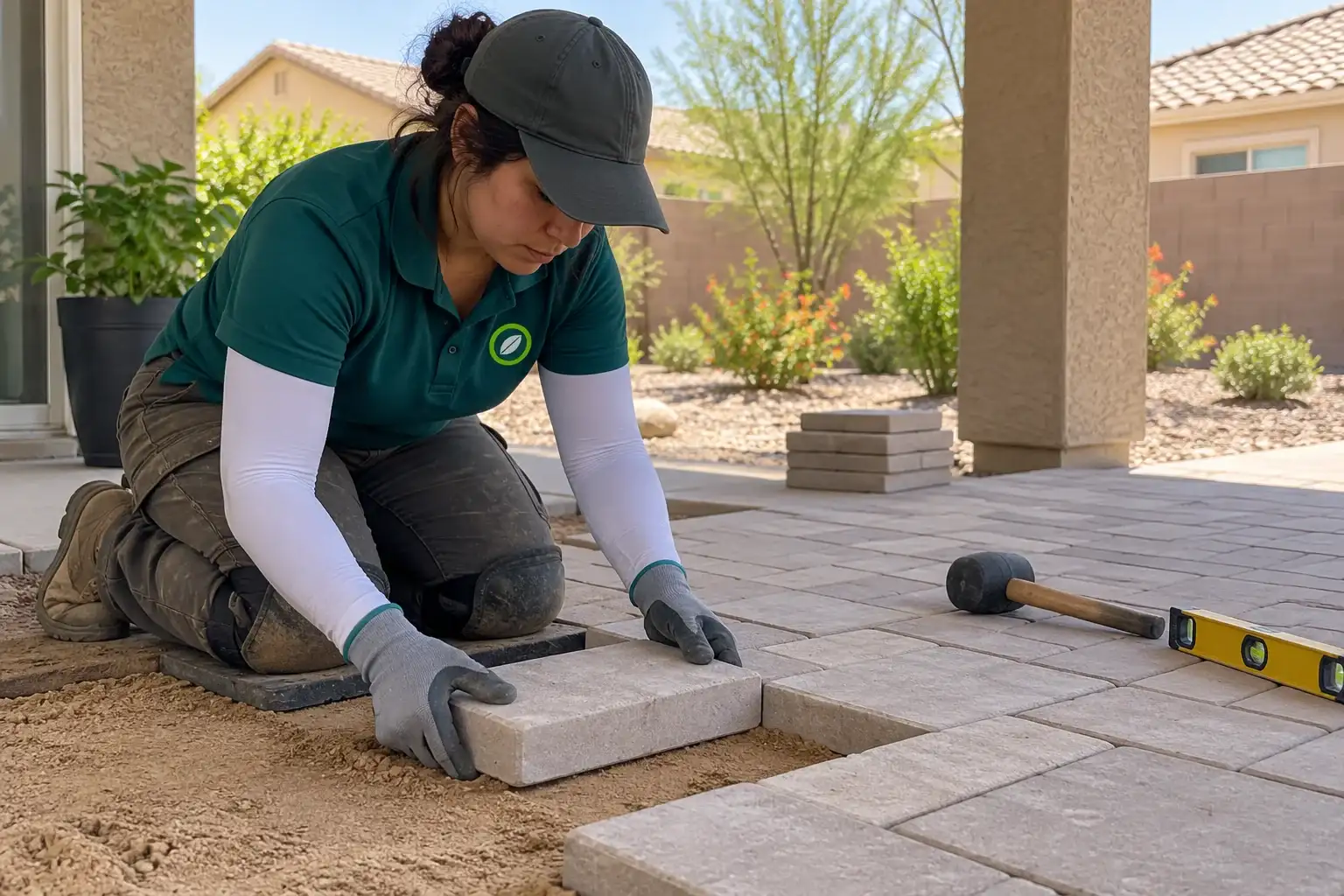
Caliche is a cemented layer common under Chandler's soil, and it is the hidden line item in a conversion. Planting holes drilled into caliche hold water like buckets, and a plant drowns in its own hole through the first monsoon unless the layer is opened up below the root zone. The same layer turns a shallow trench for drip lines or a turf base into a breaker job. The fix is to dig wider, check drainage, and break the layer before anything goes in, because a plant in a shallow hole over caliche can struggle by midsummer. University of Arizona Extension walks through managing caliche in the home yard (opens in a new tab), and a plan that ignores it looks fine in spring and struggles by July.
Timeline
The water schedule that shapes the design
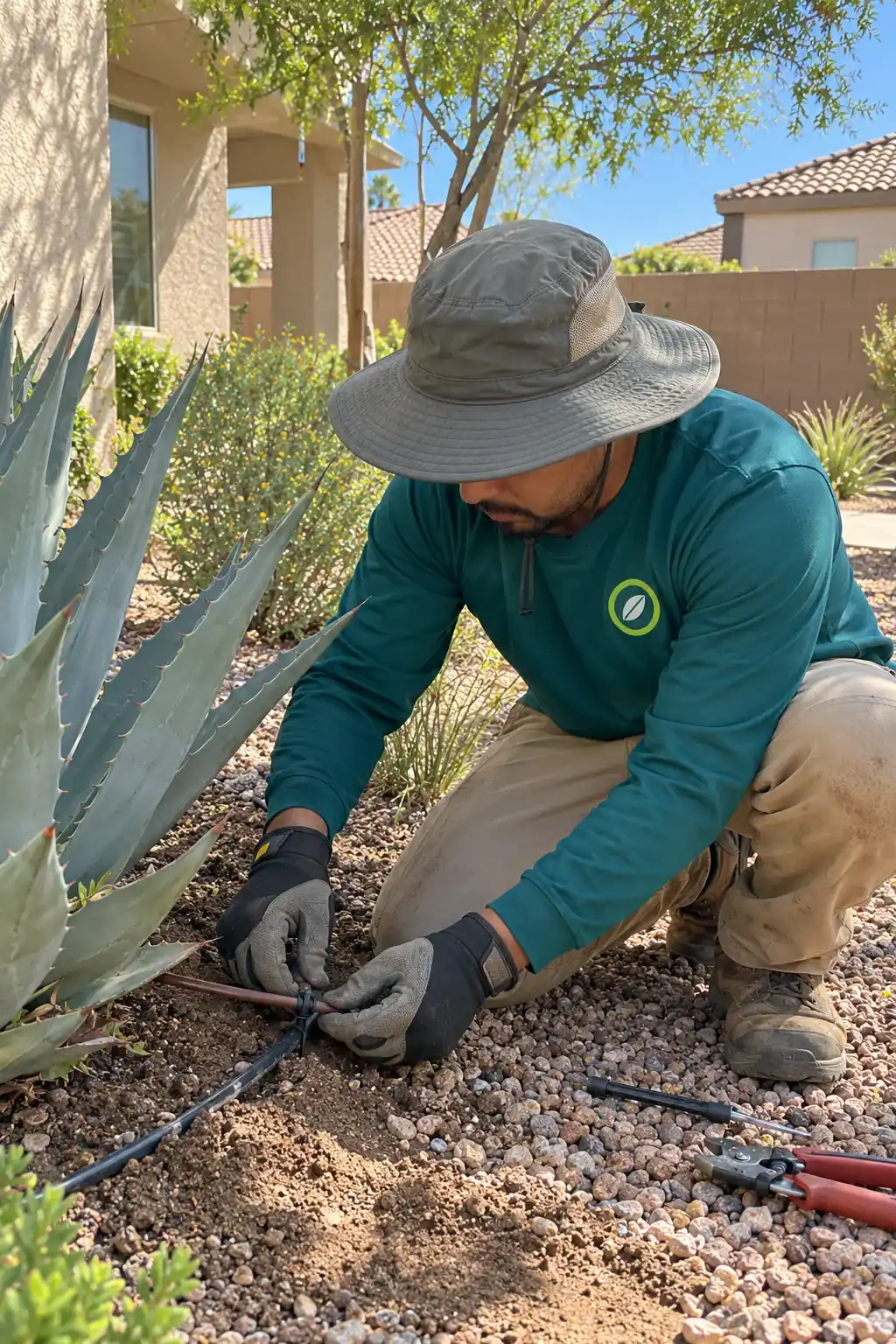
Chandler's water schedule is the design constraint most yards skip. The city asks for established grass watered no more than 2 to 3 times a week and most plants once a week, with cycle and soak so water sinks in instead of running off. On caliche and clay one long run pushes most of the water past the root zone and toward the street, so the controller splits a run into short bursts with a pause between them. A low maintenance yard is built to that schedule from day one: plants grouped by thirst, drip on its own valve from any turf, and a surface that holds moisture. The city publishes the current schedule, and it changes with the season.
Turf
The Chandler grass to xeriscape rebate
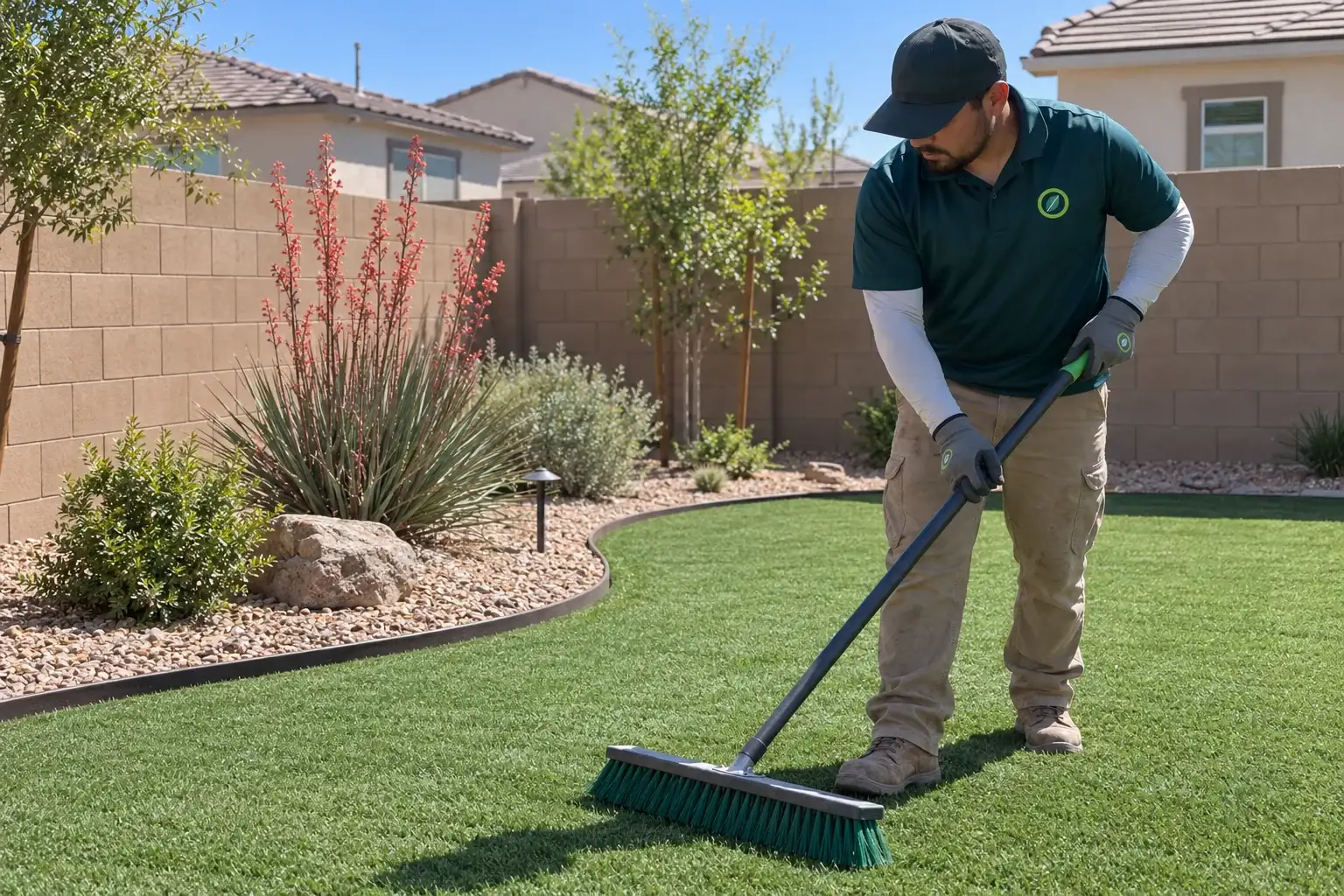
The city pays to take grass out, but only in the right order. The Grass to Xeriscape Rebate pays $1.50 per square foot up to $2,000, for at least 500 square feet of living grass removed. The plan has to show at least 50 percent ground coverage with low water use plants at mature size, and the plants have to come from the Phoenix AMA low water use list. A Notice to Proceed is required before any grass comes out, the project has to finish within 90 days, and artificial turf does not qualify. The rebate took effect January 1, 2026 and is first come, first served while funds last, so check the city's rebate page (opens in a new tab) before pulling anything. The watering schedule guide covers run times.
Planting
Plant groups that fit Chandler
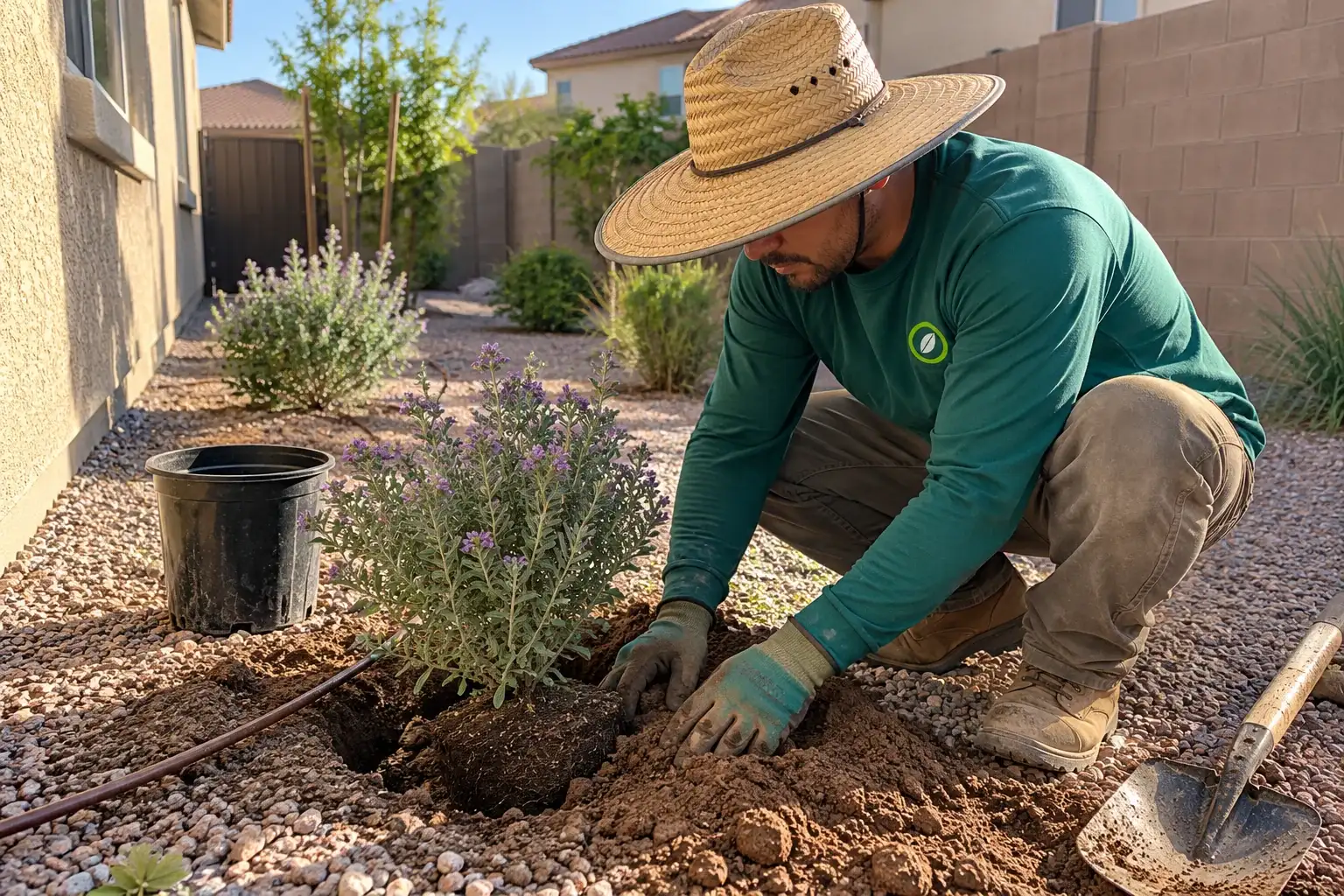
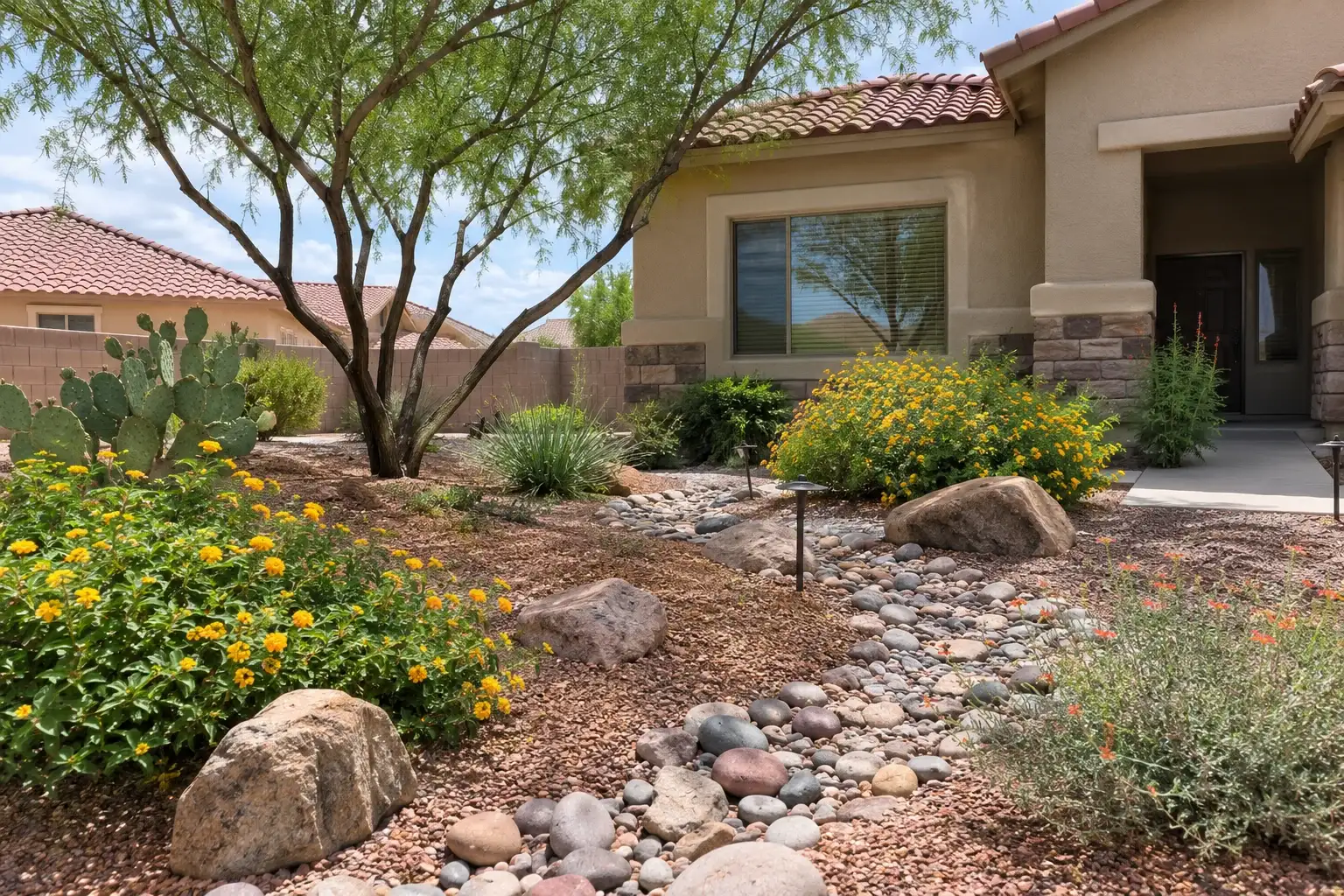
Chandler sits in USDA zone 9b, which means a plant has to take a light freeze and a long hot summer in the same year. The plants split into 3 groups. Shade trees: palo verde, mesquite and desert willow, placed west of the house to cool the wall. Accent plants: agave, ocotillo, desert spoon and red yucca, which give the yard its structure and need almost no pruning. Ground layer: brittlebush, desert marigold and globe mallow, which fill the gaps and flower on rainwater once rooted. Plants like these are common picks from the Phoenix AMA low water use list, which is the list the rebate requires.
A tree is the one planting decision that sets how much pruning the yard needs later, and the small yard tree list covers the three that stay under 25 feet.
Costs
What drives the cost
The cost of a low maintenance desert landscape in Chandler moves on 4 lines: the base and the rock or granite surface, the plant sizes, the irrigation conversion from sprinklers to drip, and the demolition of the old lawn and its pipe. Caliche adds a 5th line where the layer is thick, because the excavation has to go deeper. The published ranges behind every number are on the landscaping cost page. Call us at (480) 658-2536 to go over your HOA list, your soil and your water bill together.
4 questions
Questions people ask
Still have a question? Call (480) 658-2536 and describe the yard.
What is low maintenance desert landscaping?
A yard built to need less mowing, pruning and water. In Chandler that means gravel or decomposed granite on a proper base, a native plant list that clears the HOA, and a drip system that waters each plant at the roots instead of sprinkling the air.
Does the Chandler HOA approve a xeriscape yard?
Many Chandler communities have an approved plant list, and a yard built from that list is the version a board can approve. The failure case is the list never being checked, and the yard getting flagged after the money is spent.
How much is the Chandler grass to xeriscape rebate?
The rebate pays $1.50 per square foot up to $2,000 for at least 500 square feet of living grass removed. It requires 50 percent ground coverage with low water use plants, a Notice to Proceed before removal, and completion within 90 days. Artificial turf does not qualify.
Why does caliche matter for a desert yard in Chandler?
Caliche is a cemented layer common under Chandler's soil. Planting holes drilled into it hold water like buckets and drown plants unless the layer is opened below the root zone, and it turns shallow trenching into a breaker job.