Help guide · 5 min read
Winter Yard Care in Chandler: Watering Schedule, Frost Nights and What Not to Prune
A Chandler yard needs about one deep watering a month from December to March, and nothing pruned until the plant starts growing again in spring. The two jobs that matter are cutting the schedule back without shutting the water off, and leaving frost damage alone until the plant tells you what lived. Call (480) 658-2536 or send the form with the ZIP code and someone will call you back about the winter schedule.
All yard guidesCosts
How much less water does a Chandler yard need in winter?
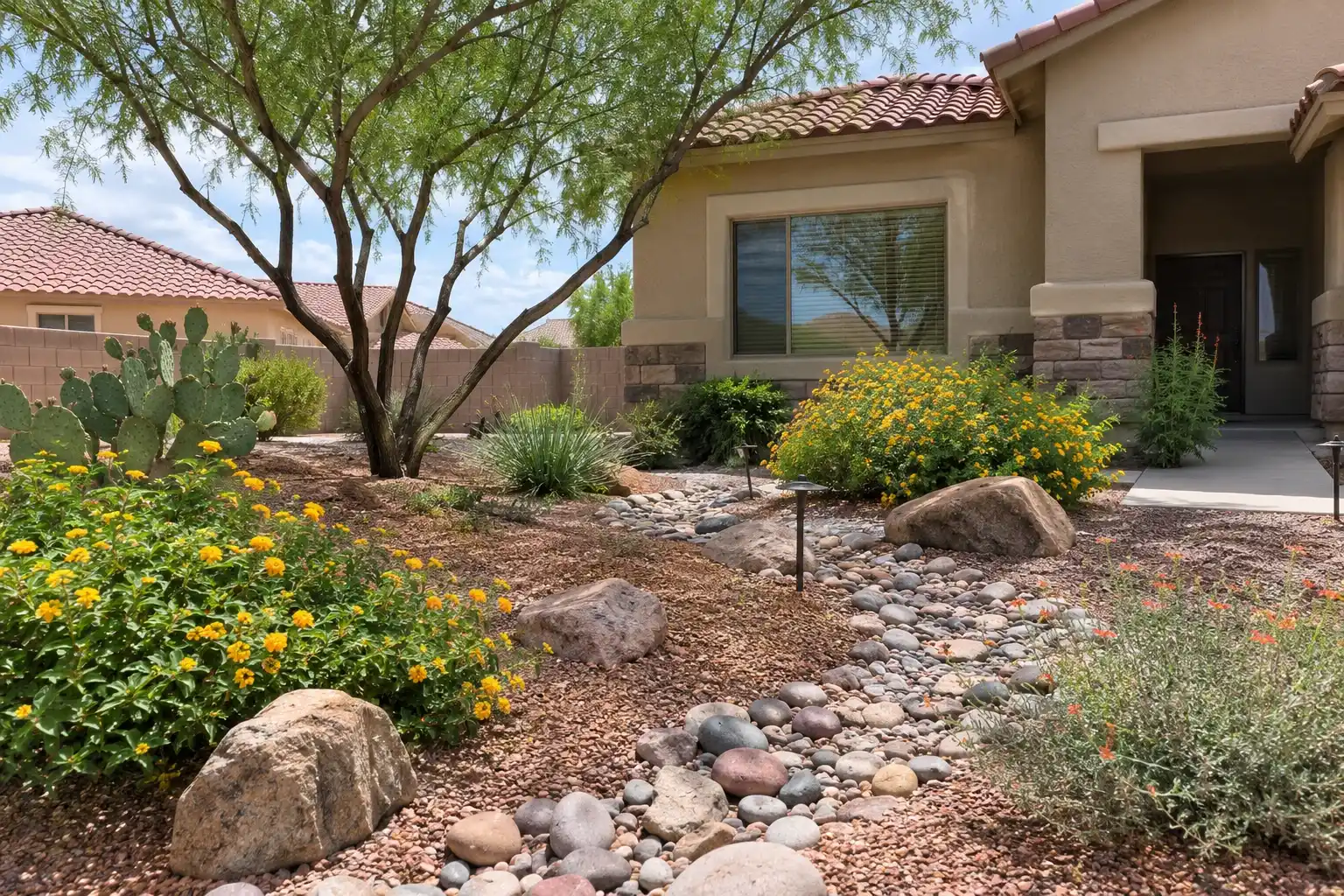
A lot less, and the city's own guide puts numbers on it. Desert adapted trees and shrubs go to a 30 day interval from December to March, high water use plants to 10 days, and cacti and succulents get water only if they need it (City of Chandler (opens in a new tab)).
The same guide puts the same plants on a 7 day interval in summer. Going from every 7 days to every 30 is four soaks a month down to one, so a yard that was watered four times in July gets watered once in January, and the run time per soak does not change.
That last part is where most winter watering goes wrong. The temptation is to shorten every run because it is cool out, which leaves the deeper root zone dry while the surface looks damp. Change the interval, keep the run time, and let the soil dry between soaks.
Climate
When are the frost nights in Maricopa County?
There is no single date, and the county range is the honest answer. The average first frost runs from November 21 in Buckeye to December 12 in central Phoenix, and the average last frost from February 7 in central Phoenix to April 3 in Mesa (University of Arizona Extension (opens in a new tab)).
Chandler is not named on that page, so treat late November to mid December for the first frost and early February to early April for the last as a rough window. The record low for Phoenix is 16 F, set on January 7, 1913, which is the number that explains why a plant rated to 20 F is at risk here and a plant rated to 0 F is not.
Cold air also flows downhill like water and collects at the bottom of a slope. The low corner of a yard freezes first and hardest, which is usually where the young tree went.
Planting
Which plants are actually at risk?
Hardiness is the lowest temperature a plant is rated to survive, and the rating is on the plant's own page. On a night near 15 F the yard splits into plants that are inside their rating and plants that are past it.
| Plant | Rated to | What a hard night does |
|---|---|---|
| Cascalote | 20 F | Past its rating, and it is evergreen so damage shows |
| Baja fairy duster | 20 F | Past its rating |
| Texas sage | 10 F | Inside its rating |
| Foothills palo verde | 15 F | At its rating, and it is semi-evergreen |
| Desert willow | 0 F | Inside its rating, and already bare |
Ratings come from the AMWUA plant pages listed under Sources. The risk list on a Chandler lot is short and it is mostly the plants bought for a tropical look, so the low corner and the north side are where they should not go.
Climate
What do you do the day before a frost night?
Water first, cover second. Extension says to keep plants well watered, because frost injury happens when ice crystals form on the leaf surface and draw moisture out of the tissue, and a drought stressed plant is hurt worse (University of Arizona Extension (opens in a new tab)).
Then cover with cloth, a sheet or a frost blanket, never plastic, and drape it all the way to the ground so the heat coming out of the soil is trapped under it. Take the cover off in the morning once the air under it warms, because Extension says covering a plant all winter can be harmful in southern Arizona.
A few practical points for a small Chandler yard. Put frost sensitive plants in a sheltered spot, since south and west exposures tend to be warmest. Wrap the trunk of a young citrus with cloth or paper rather than plastic. And do not over protect: a plant kept hardened to the cold comes through better than one coddled all winter.
Good to know
What should not be pruned until spring?
Frost damaged wood, and that includes branches that look dead. Extension says not to prune frost damaged, woody growth until the plant begins growing in spring.
The damage usually looks worse than it is. New growth often comes out of tissue that looked finished, so a hard cut in January removes wood that would have leafed out in April. Wait for the buds, then cut back to where the plant is growing.
The same patience applies to a bed that looks finished in February. A dormant Bermuda lawn is supposed to be straw coloured, and a leafless desert willow is supposed to be bare.
Water
What about the grass and the controller?
Chandler's water conservation page asks residents to skip the winter seed and go yellow, which it says conserves water and saves money (City of Chandler (opens in a new tab)). A dormant Bermuda lawn on the city guide's winter interval gets watered once every 15 days, not once a week.
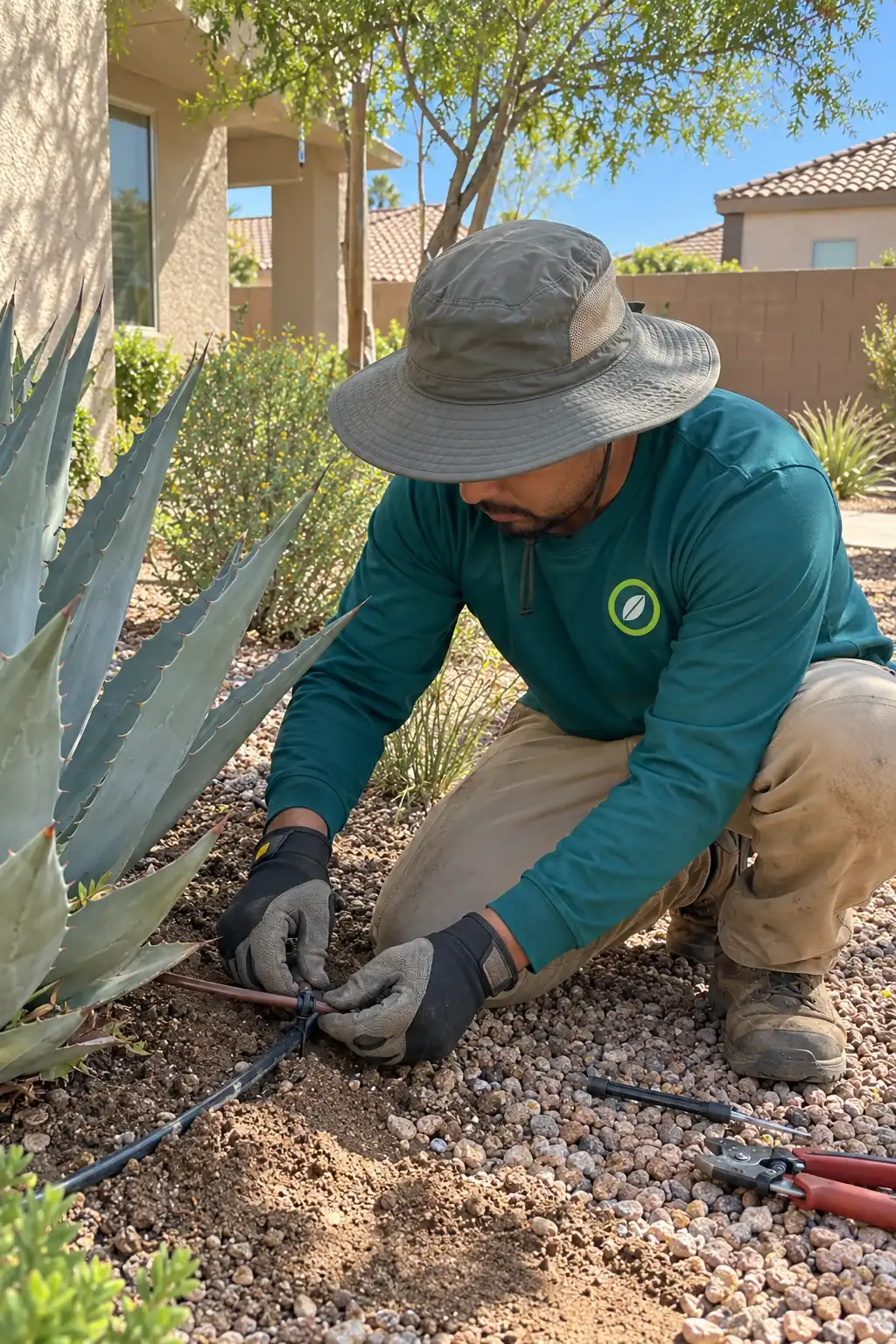
The controller is the other half of the job. Set the seasonal adjust down, keep the interval change deliberate, and check the drip and the valves before the first freeze, because a cracked head or a split line in December leaks all winter under a yard nobody is watching. The irrigation repair scope covers the valve and line side, and the summer schedule is in watering a Chandler yard in summer.
6 steps
The winter checklist
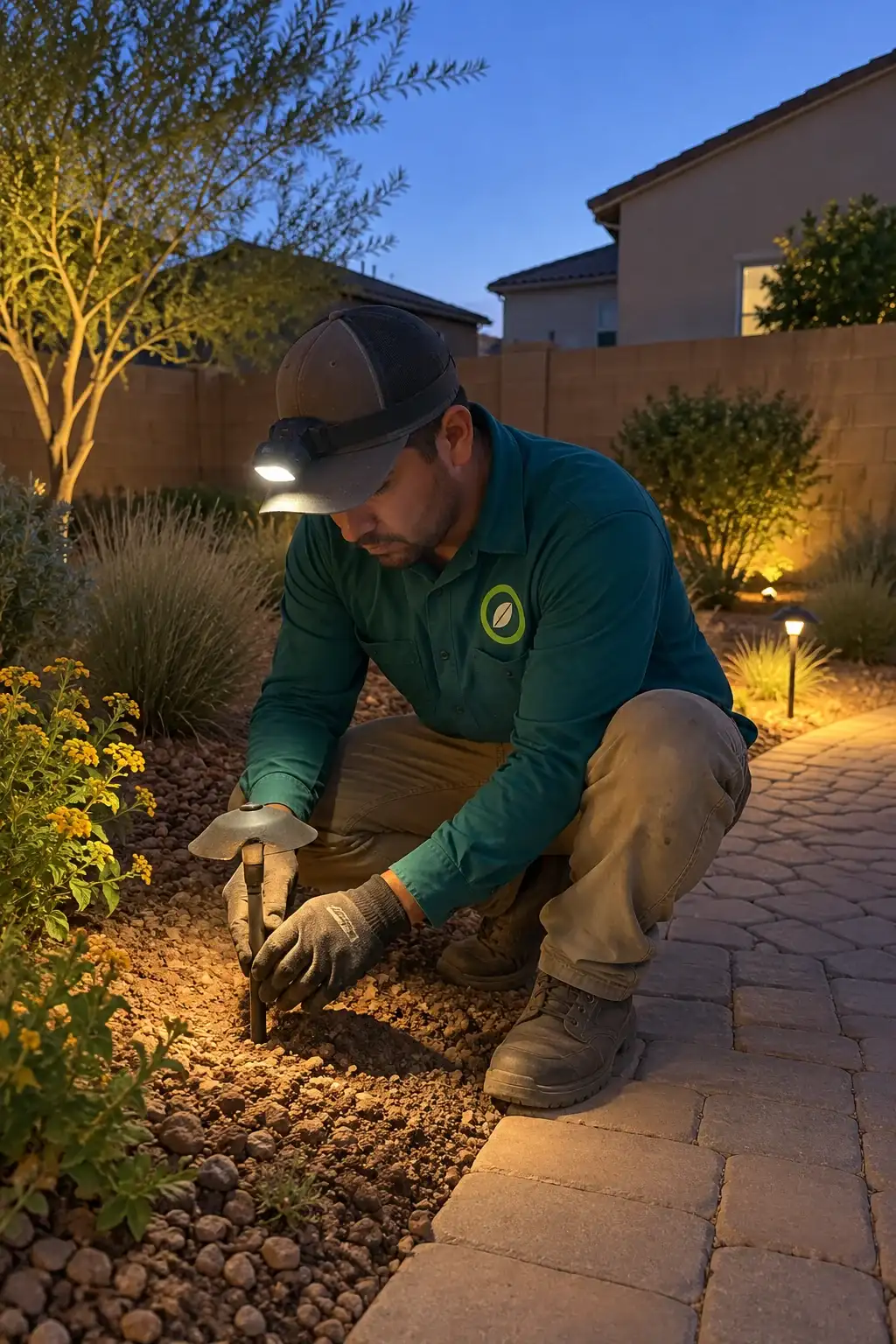
Move the controller to the winter interval, and leave the run times alone.
Walk every zone and fix the heads and emitters that failed in summer.
Water the day before a forecast freeze.
Keep cloth, sheets and a frost blanket by the door.
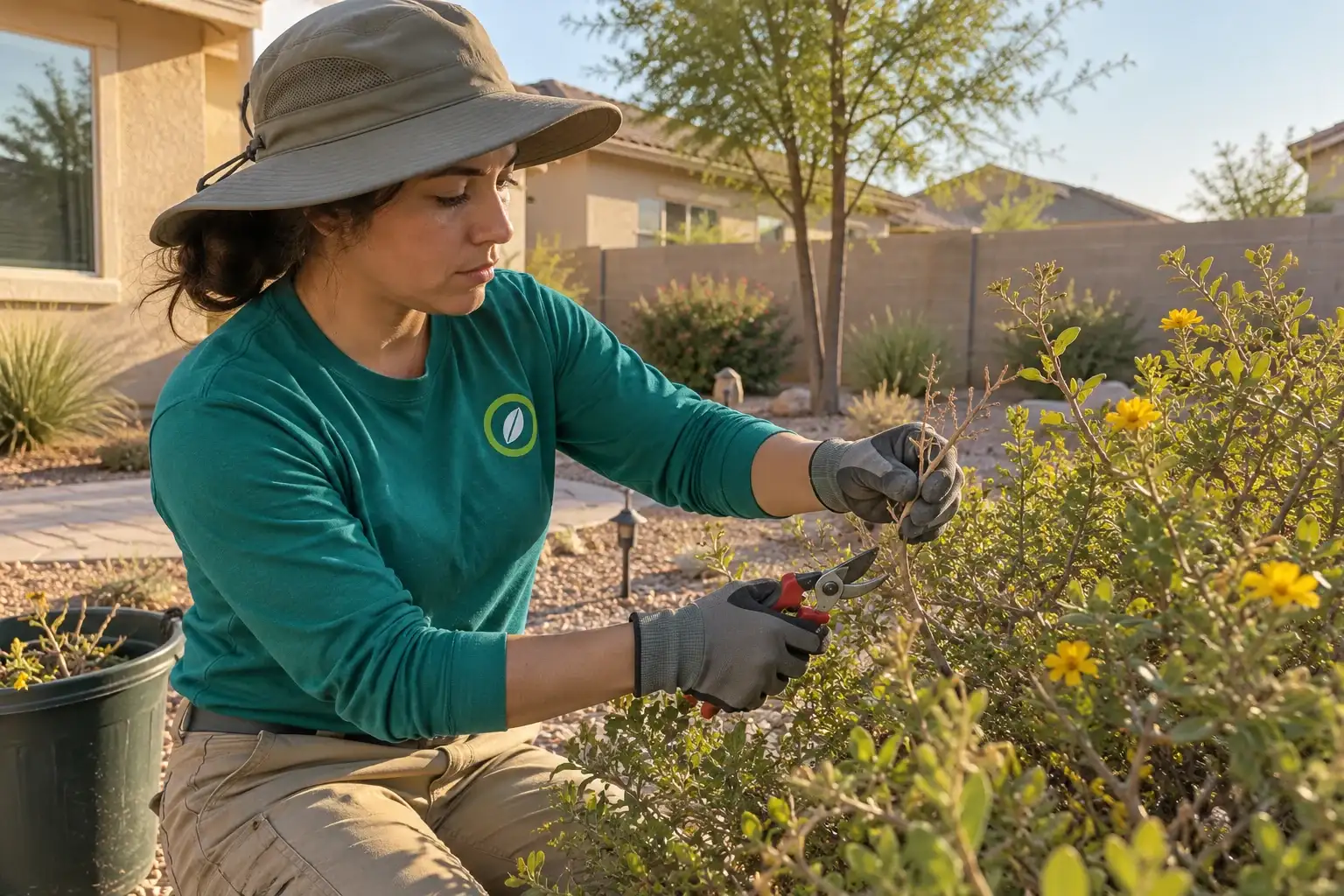
Hold the pruners until new growth shows.
Skip the winter overseed, and let the Bermuda go dormant.
Planning
What decides it for your yard?
The plant mix, the exposure of each bed, whether there is a lawn, and how low the yard sits relative to the street. A bed against a south facing wall stays noticeably warmer than the low corner of the same lot, and the plants in each spot have to match it.
Someone reading the yard in person can tell which beds are the cold ones and which plants are already rated too close to the line. Call (480) 658-2536 or use the form and someone will call you back, then go over the winter plan with you. The wider seasonal picture is in the Chandler landscaping guide.
3 questions
Questions people ask
Still have a question? Call (480) 658-2536 and describe the yard.
Should I water in winter if it rained?
Check the depth first. A light rain may only wet the top of the soil, so a rainy week replaces at most one soak, not the month.
Will my plant come back after a freeze?
Often, and slower than you want. Wait for new growth in spring before deciding, because Extension says to wait for spring growth before pruning damaged wood.
When is the last frost in Chandler?
Between early February and early April on the county averages, with central Phoenix at the early end and Mesa at the late end. Chandler is not named on the Extension page.